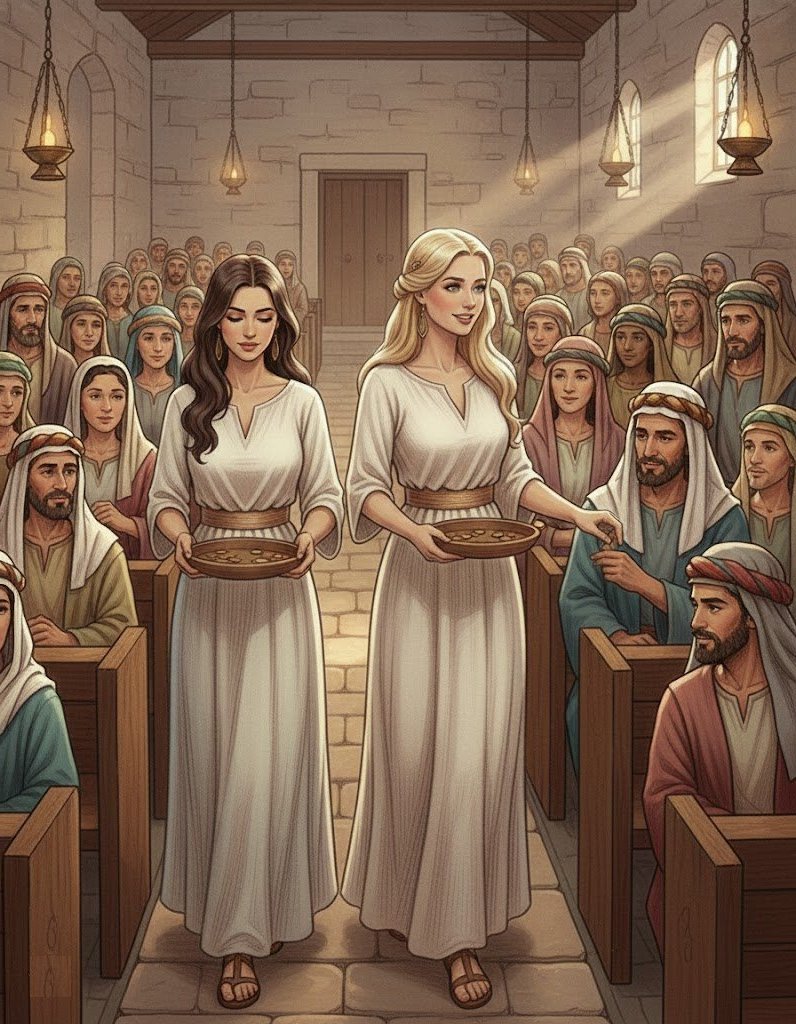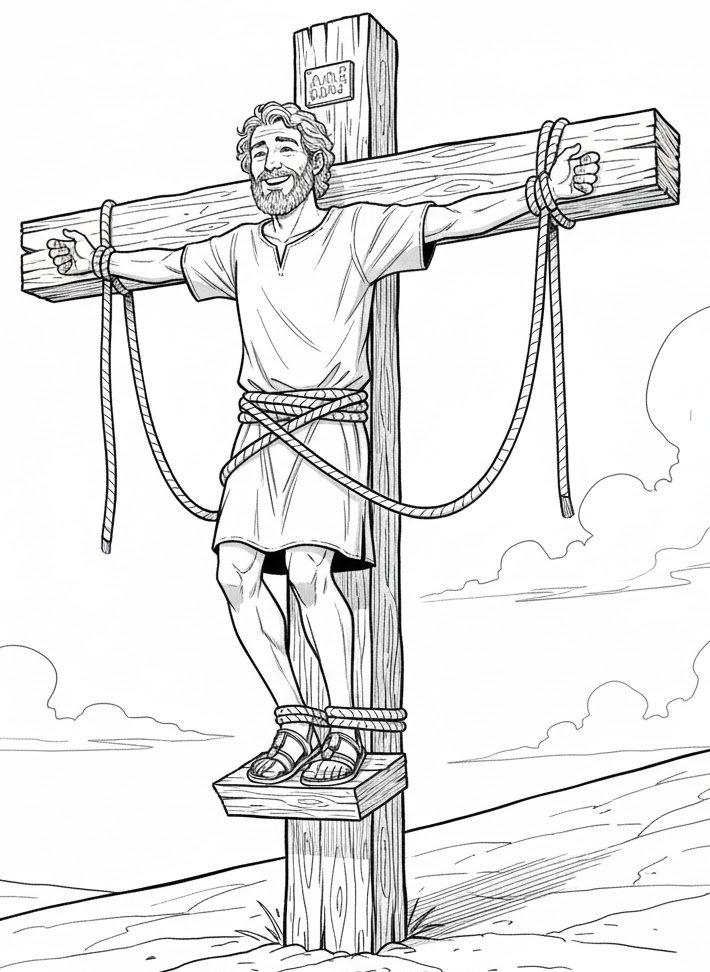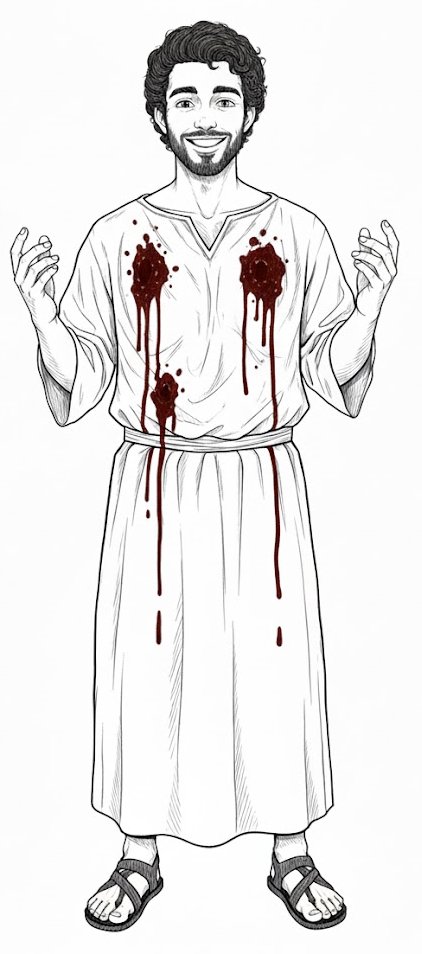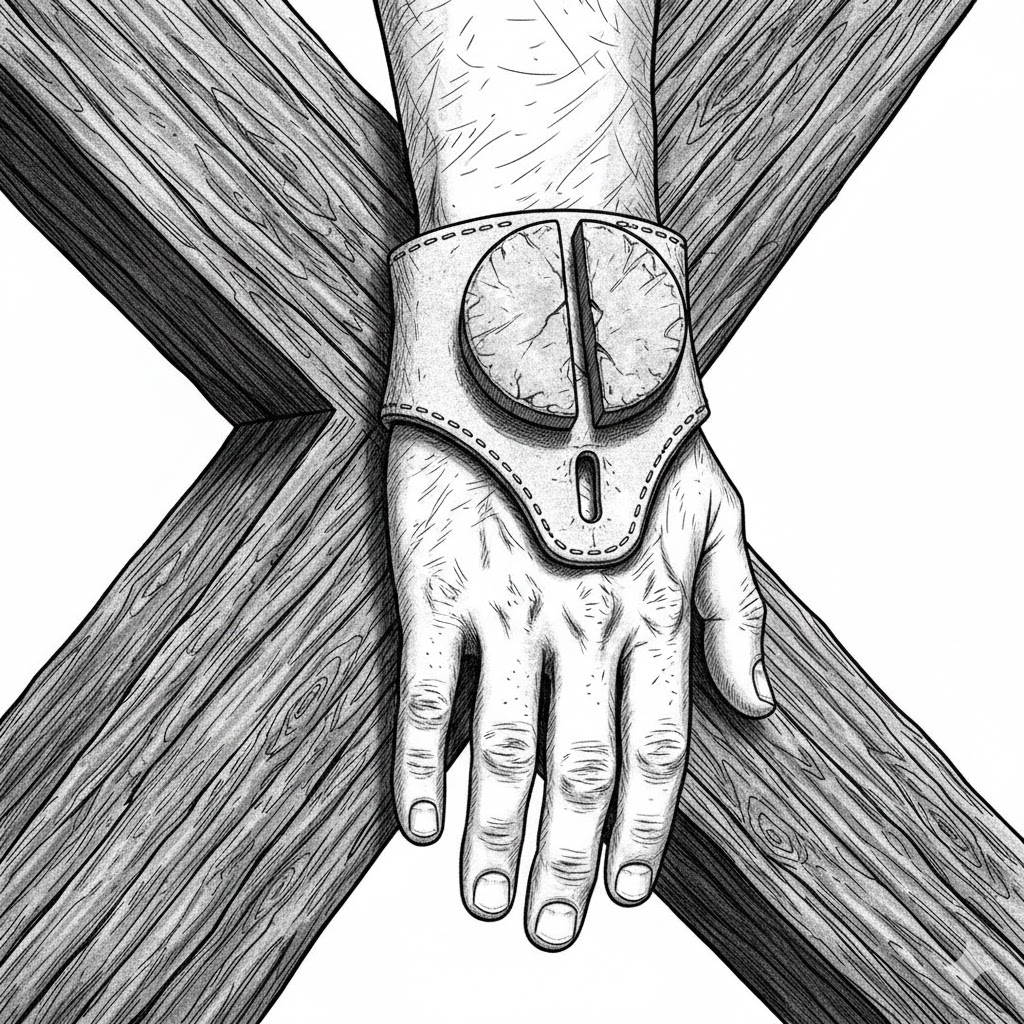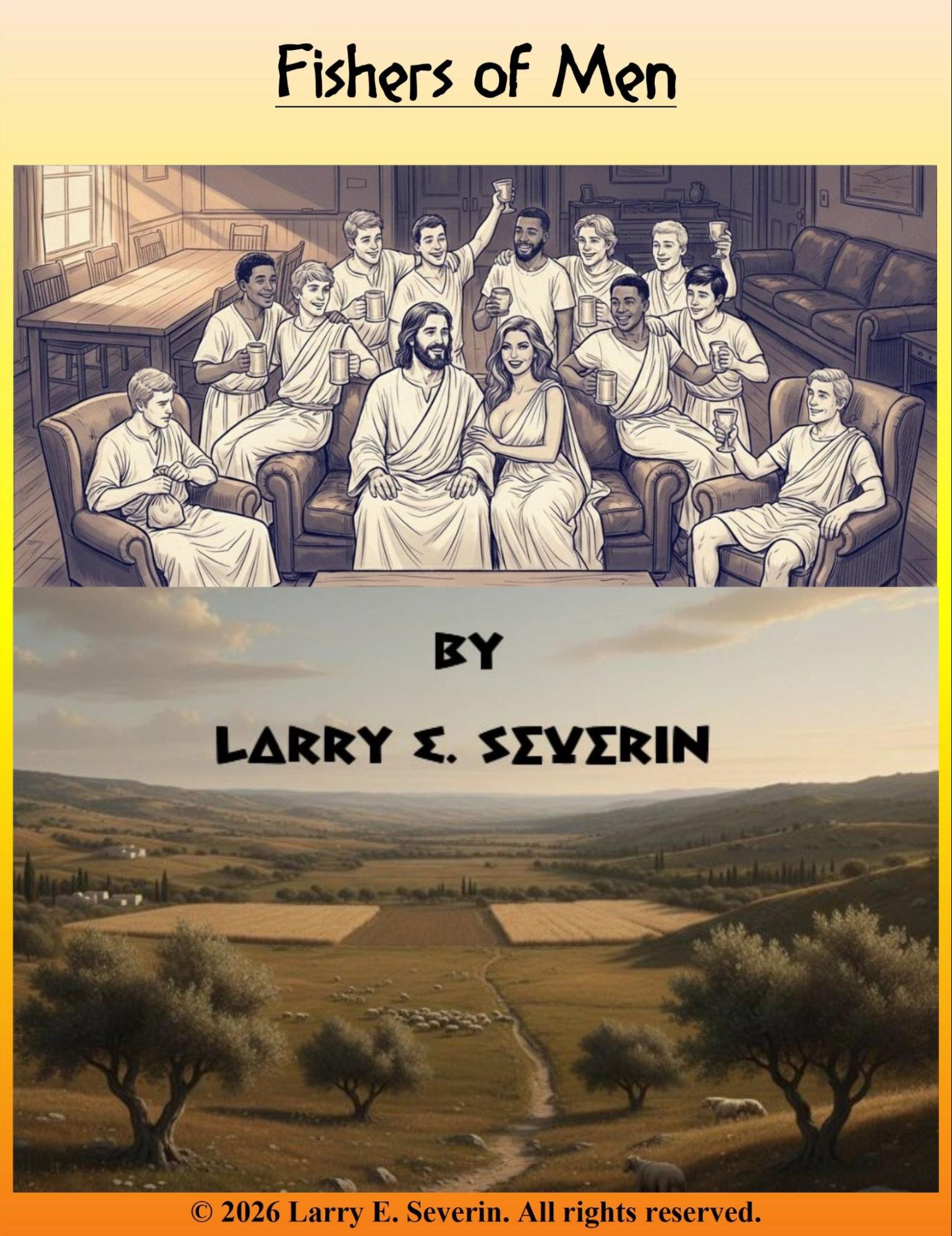
Fishers of Men
Fishers of Men
by
Larry E. Severin
© 2026 Larry E. Severin. All rights reserved.
1.1 Peter’s Mother-in-law; 1.2 Jesus Cures a Man Possessed; 1.3 John the Baptist; 1.4 Trick Shekel; 1.5 Snakes, Frogs, Books, Bodkins & Squibs; 1.6 Zebedee the Fisherman; 1.7 Trick Goliath Act; 1.8 Dance of the Seven Veils; 1.9 Jacob’s Well; 1.10 Wedding Water to Wine; 1.11 Matchmaker Tarot; 1.12 John Recruits Jesus; 1.13 Slave Stories; 1.14 Bible Rules for Slavery; 1.15 When Mary Met Mary; 1.16 Fishers of Men Meeting; 1.17 Roman Jokes; 1.18 Dream of John the Baptist; 1.19 Economics of Judas; 1.20 Baptism of Jesus
2.1 John’s Mentalism Act Part 1; 2.2 Jesus Cleanses a Leper; 2.3 John’s Mentalism 2 at Palace; 2.4 NOVA; 2.5 Detective On Interviews; 2.6 Healing Interviews; 2.7 Widow of Nain; 2.8 The Parable of the Wars; 2.9 Mary Magdalene; 2.10 The Pearl of Great Price; 2.11 Mary the Virgin; 2.12 An Epileptic Boy is Turned Away; 2.13 Jesus Cures a Woman Possessed; 2.14 Faith Healing Failure; 2.15 Phasaelis of Nabatea; 2.16 Matthew the Tax Collector; 2.17 Meeting Between Disciples; 2.18 The Maccabees; 2.19 The Truth About Hanukkah; 2.20 The Hasmoneans; 2.21 Phasaelis Plants the Proof; 2.22 Disciples Locate the Field; 2.23 Jesus Restores a Withered Hand; 2.24 John’s Mentalism 3 About Jesus; 2.25 Jesus Causes a Pig Stampede; 2.26 Lawsuit Cover Sheet; 2.27 King Herod and Lady Di; 2.28 Pool of Bethesda; 2.29 Death of John the Baptist
§ 3: Jesus’s Ministry in Galilee
3.1 Feeding the 5,000; 3.2 Temple Grift; 3.3 Jesus Walks on Water; 3.4 Feeding the 4,000; 3.5 Transfiguration; 3.6 Jesus Acquires the Pearl; 3.7 Hasmonean Treasure Sample Box; 3.8 Jesus Helps a Bleeding Woman; 3.9 Jairus’s Daughter; 3.10 Two Blind Men Outside Jericho; 3.11 Syrophoenician Woman; 3.12 Jesus’s Family Stages an Intervention
4.1 The Woman Caught in Adultery; 4.2 Jesus Fights Santa Claus; 4.3 Epic of Gilgamesh; 4.4 Noah’s Ark; 4.5 Carnian Pluvial Episode; 4.6 Jesus Defeats Satan; 4.7 Sermons on the Mount and Plains; 4.8 Jesus On Parables; 4.9 Seventy-Two Disciples in Pairs; 4.10 Joseph of Arimathea; 4.11 Jesus Forgives a Paralyzed Man; 4.12 The Martyrs Act; 4.13 Twelve Disciples in Pairs; 4.14 Resurrection of Lazarus; 4.15 Jesus and Zacchaeus; 4.16 Jesus Curses a Fig Tree; 4.17 Mathew Infiltrates the Tax Center; 4.18 The Chicken Ranch
5.1 Triumphal Entry; 5.2 Jesus & the Bosses Have a Sit Down; 5.3 Jake Spade, Private Eye; 5.4 Biar Aqueduct Scam Evidence; 5.5 Judas Informs on Jesus; 5.6 The Last Supper; 5.7 Jesus is Arrested; 5.8 Nicodemus Meets with Jesus; 5.9 Caiaphas Sees Jesus; 5.10 Mercurio the Nudist; 5.11 Spinoza Explains God; 5.12 Death of Barabbas; 5.13 Peter Sneaks Around; 5.14 Jesus Confesses; 5.15 Death of Judas
6.1 Trial by Pontius Pilate; 6.2 Longinus the Roman; 6.3 Heist Preparation; 6.4 INRI; 6.5 Getaway Cart; 6.6 The King’s Speech; 6.7 Entry; 6.8 Jesus Cries Out; 6.9 Luca; 6.10 Temple Parade; 6.11 The Vault; 6.12 Joseph Begs Pilate; 6.13 Gold Transfer; 6.14 Food Fight; 6.15 Holy Hand Grenade; 6.16 Duel On the Wall; 6.17 Death Machine; 6.18 Spear of Destiny; 6.19 Matthew Escapes; 6.20 Simon Escapes; 6.21 Burial; 6.22 Joseph Obtains a Crypt; 6.23 Empty Tomb
7.1 Judas’s Replacement; 7.2 Disciples See Jesus at Lake Galilee; 7.3 Jesus is Seen by 500; 7.4 The Sanhedrin; 7.5 Treasure Hunt; 7.6 Jesus is Seen by Two Disciples; 7.7 Modi’in; 7.8 Dinner With Friends; 7.9 The End
I had to teach a class. My students kept asking about the Bible. I wanted to tell them there’s a naturalistic explanation for everything they read.
I didn’t have time, so I just asked the AI to make up a story. I told it to use dialogue from movies that I’ve seen. This is it. Make sure you read to the end because this gets good!
This is a work of fiction. Any resemblance to actual persons, living or dead, or actual events is purely coincidental. The characters and events depicted in this work of authorship are fictional and created for entertainment purposes only. No identification with actual persons, including, without limitation, politicians, religious figures, or historical individuals, or places, buildings, and products is intended or should be inferred.
This work contains copyrighted material, the use of which has not always been specifically authorized by the copyright holder. We are making such material available for purposes including, but not limited to, parody, criticism, and commentary under Section 107 of the U.S. Copyright Act. We believe this constitutes “fair use” of any such copyrighted material as provided for in the act. All rights to the original content belong to the respective copyright owners.
January 19, 31 AD
In the 17th year of the Imperator, Tiberius Caesar Augustus, and the year of the Consulate of Lucius Sejanus, on the 19th day.
From your servant Laurentius Eugenius Severus, to the most excellent Lucius Aelius Sejanus, Consul of the Empire in Syria.
Dear Lucius,
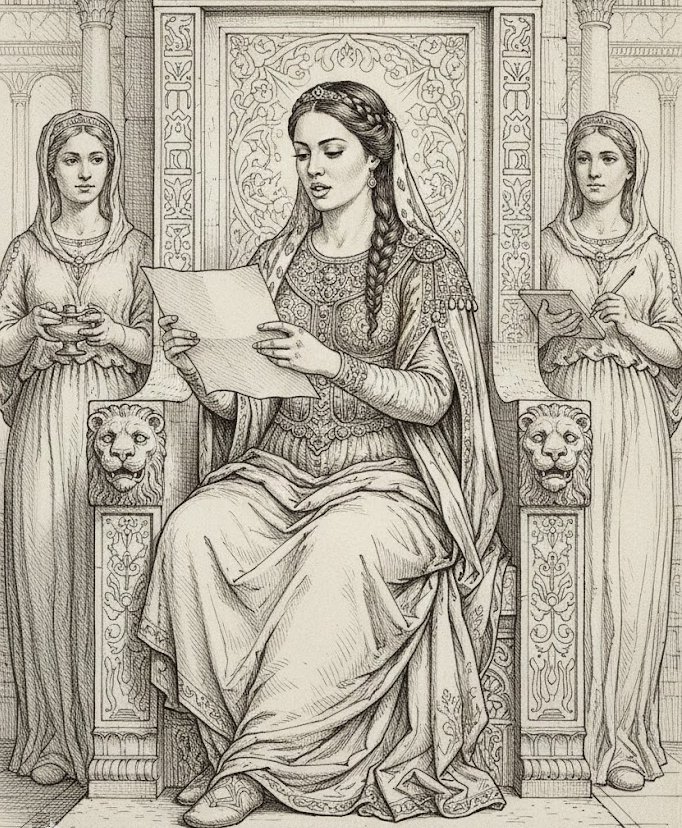
Per your request, I myself have carefully investigated from the beginning the events that occurred in Jerusalem in April last year, under the stewardship of regional governor Pontius Pilate, so I decided to write an orderly account for you, most excellent consul.
We obtained our information from those persons who saw these things, so it seemed good to me to write down these things for you. By this account, you can be certain about the truth of the things that we have learned.
All interviews with witnesses were taken orally, in Aramaic, and written notes were contemporaneously compiled in Aramaic or in my own Latin short-hand. This report is, obviously, in Latin.
All interviews with witnesses were taken surreptitiously. Hardly any perpetrators fled because they still think they got away with it.
My report is in four parts: Facts, Law, Analysis, and Conclusion.
May the gods keep you safe,
(signed)
Laurentius Eugenius Severus
Day XIX, Year XVII of Tiberius
(Attachments enclosed.)
Cc: archive
Bcc: H. Antipas
May 12, 28 AD, Capernaum, Galilee
# Matt 8:14-15; Mark 1:29-31; Luke 4:38-39
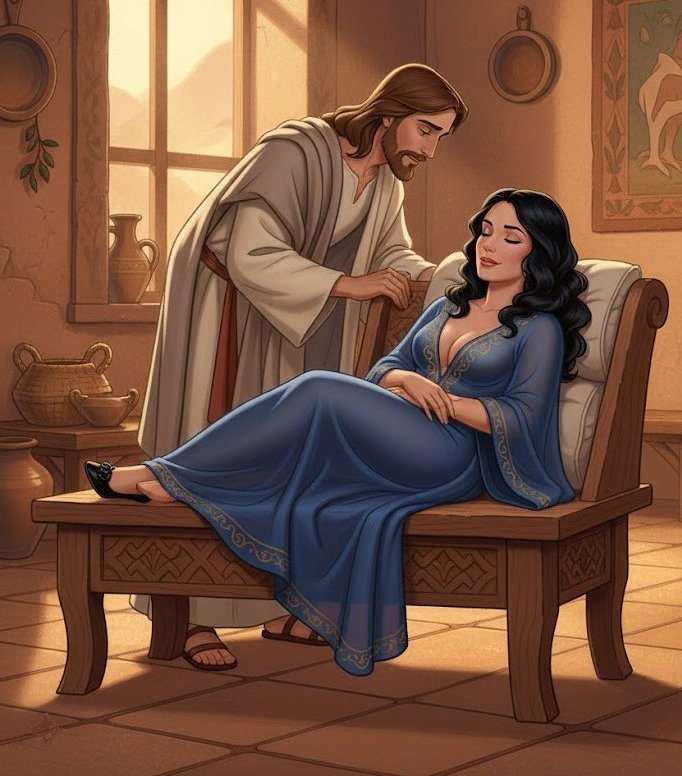
Bubbe Ruth had been struck with a terrible fever. The doctor had gone, shaking his head, doing nothing that worked to break the sweat on her brow. She was burning up, shivering, muttering about her ungrateful children who never visited.
Her daughter, Penelope, hovered, wringing her hands by the bedside. “Ma, the doctor said rest and fluids. You want some chicken soup?”
“Feh! What good is soup? A miracle is what I need!”
That’s when her son-in-law Simon ben-Jacob arrived with his hoodlum fishing pals the Zebedee brothers. Also with him was his brother Andrew and his new preacher friend.
Jesus Christ entered her bedroom.
“Oy vey iz mir, such suffering!” he cried, pressing his hand to her forehead. “Struck down in her prime! But fear not, Bubbaleh. Hashem himself has sent me to heal you!”
Ruth squinted at him. “You look like my cousin Moishe. He was a gonif! I’m too old for this schmegegge. Just let me rest.”
Jesus ignored this. From his satchel, he pulled a glass vial of brownish liquid. “This is my mother’s very own remedy. Blessed by 36 righteous men and a very clean chicken.” With a show of solemnity, he poured a liberal quantity onto her tongue.
(Ruth gasped. It tasted like burning.)
Then he waved his hands, chanted some ancient Hebrew (or possibly gibberish), and pressed his palms to her temples.
And then… she felt it. The pounding in her head eased. Her joints didn’t ache. The room stopped spinning. “I’m cured!” she yelped.
“Baruch atah Adonai!” Jesus cried. “Now, ma’am, we always appreciate a small donation to the cause…”
But Ruth was already up, shuffling to the kitchen in her slippers. “Penny! Put the kettle on! The rabbi stays for lunch!”
She sliced bread, ladled soup, poured tea with steady hands. Within minutes, the tiny apartment smelled of kreplach and brisket.
Neighbors peeked in, amazed as Ruth - who had been at death’s door - now piled Jesus’s plate high, criticizing his posture between servings.
“Eat, tateleh,” she ordered. “You’re too thin. A strong wind could knock you over!” Of course, she made an enormous amount of food, plenty for the whole gang.
Jesus munched on cinnamon rugelach, licking his fingers. The “holy remedy” was the fig liqueur that Mary Magdalene sold at her taberna plus a pinch of powdered opium. By evening, the fever would return, probably worse.
But Bubbe Ruth would tell the story for years, how the farshtinkener doctor said she’d die, but her son-in-law brought a real Rabbi who came and fixed her.
May 11, 28 AD, Capernaum, Galilee
# Mark 1:21-28; Luke 4:31-37
⇒ the day before
Jesus was performing for the first time at a real synagogue. A possessed, demoniac man approached, and sat cross-legged in the middle of the aisle.
The man was speaking in tongues, speaking of things of which he could not possibly have known or understood. Madness, nonsense and gibberish.
“What is best in life? To crush your enemies, see them driven before you… and to hear the lamentation of their women.
“Roads? Where we’re going we don’t need roads!
“The defense network goes on-line August 4th, 1997. Human decisions are removed from strategic defense. Skynet begins to learn at a geometric rate. It becomes self-aware at 2:14 a.m. Eastern time, August 29th.
“Fear leads to anger. Anger leads to hate. Hate leads to suffering. Wars do not make one great. Do, or do not. There is no try.
“Of course, the whole point of a Doomsday Machine is lost if you keep it a secret! Why didn’t you tell the world, EH?
“The path of the righteous man is beset on all sides by the inequities of the selfish and the tyranny of evil men. Blessed is he who, in the name of charity and good will, shepherds the weak through the valley of the darkness. For he is truly his brother’s keeper and the finder of lost children. And I will strike down upon thee with great vengeance and furious anger those who attempt to poison and destroy my brothers. And you will know I am the Lord when I lay my vengeance upon you.”
Jesus grabbed the man by the temples and spoke with the authority of a scholar.
“Whoever you are, you have an unclean spirit.
“Satan, you know who I am, I rebuke thee! Unclean spirits, obey me! I command you! Be silent, and come out of him!
“Come with me if you want to live.”
The man screamed once and fell to the ground, silently frothing and flopping like a fish. After a while, he got up and wiped his mouth.
“I’m better now!” he abruptly stated. “I can see, this man is no ordinary rabbi!”, and exited quickly.
This was the first time that they had had the nerve to plant a shill in the congregation of a public synagogue. The man from the audience was Lazarus of Bethany, Jesus’s best friend, giving his best performance.
January 13, 27 AD, Al-Maghtas, Bethany Beyond the Jordan
# Josh 3:14-17; Matt 3:1-6, 10; Luke 3:1-17
⇒ the year before
A voice cries out in the wilderness:
Prepare the way of the Lord!
It had been four hundred and twenty years since God had last spoken.
Repent sinners, for the apocalypse! The end of the world is coming! The Lord will suddenly come any moment, burning everything like a refiner’s fire.
But who can withstand it when he appears?
You! For only ten silver shekels!
This amount would please the Lord.
───── ∴⋆◬⋆∴ ─────
John the Baptist, son of Zechariah and Elizabeth, was wild, wore camel hair, and ate honey and locust. He had just turned thirty-one, half a year older than Jesus. He was not related to Jesus, despite rumors to the contrary, and they had not yet met.
John had a show at a little cove on the Jordan river at dusk every day.
John also had a small shop where you can buy honeyed grasshopper candy and jugs of holy water to exorcise minor demons at home.
At Al-Maghtas, there is a short brook, Wadi al-Kharrar, which flows to the Jordan. John has a pond inside a cove on the brook, with good acoustics and a hidden speaking area. A natural staircase on one side leads down to the water.
The site is close to the ancient road between Jerusalem and Jordan, via Jericho, crossing a ford on the Jordan River and connecting to the King’s Highway. It is written that Joshua’s priests carried the Ark of the Covenant through the river at that spot, making its waters stop their flow so they could enter the Promised Land.
John said if you have two shirts, give one to someone who has no shirt. If you have food, share it. If you collect taxes, do not collect more than is due. If you are a soldier, do not force people to give you money. And do not tell lies about people.
Except the Romans! Fuck them! (John strongly opposed Roman occupation of Israel.)
The ax is already at the root of the trees, and every tree that does not produce good fruit will be cut down and thrown into the fire.
John said God’s judgment is imminent, already starting, possibly. The Messiah is about to come. Everyone should repent and be baptized as a way to prepare for this judgment. The people will be judged for their sins and will not inherit eternal salvation unless they repent.
Repent by paying John $10 now to immerse you, before it’s too late.
The idea is, pay him once then get permanent blessing to always be able to enter the Temple (“perma-clean” saves you money!) Also you will get to live in the new Kingdom that was about to start, any moment now, and not be burned up like everyone else.
Pay the fee and an assistant, Susanna or Joanna, would walk you down to the water. John would personally totally immerse you in the still waters of the little pool.
June 8, 19 AD, An alea popina (gambling & wine bar), Sepphoris, Galilee
# Matt 22:20-21; Mark 12:15-17; Luke 20:24-25
⇒ 8 years ago
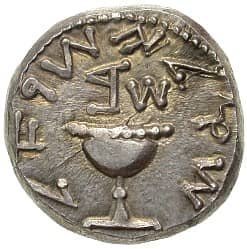
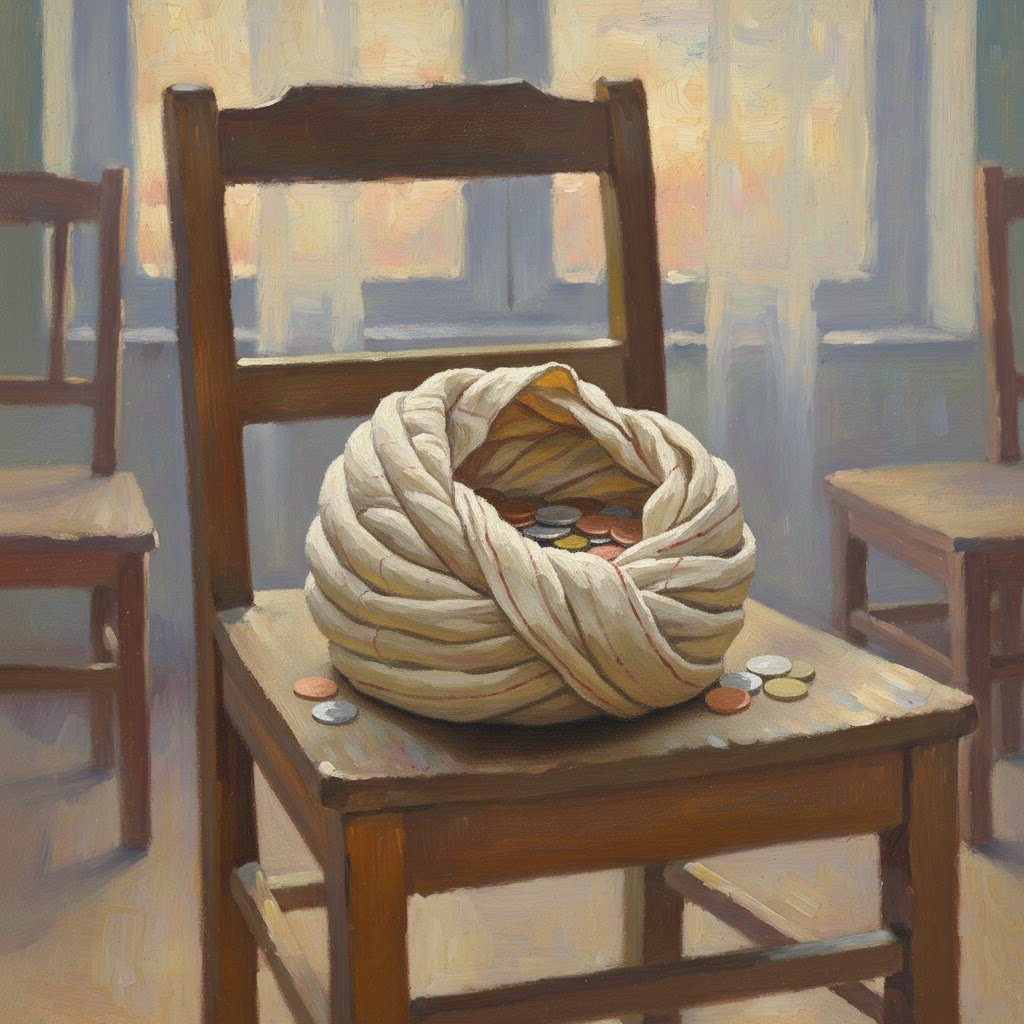
Jesus borrows a silver shekel from one of the trusted bar staff.
He marks it with a black dab of myrrh, so everyone can see.
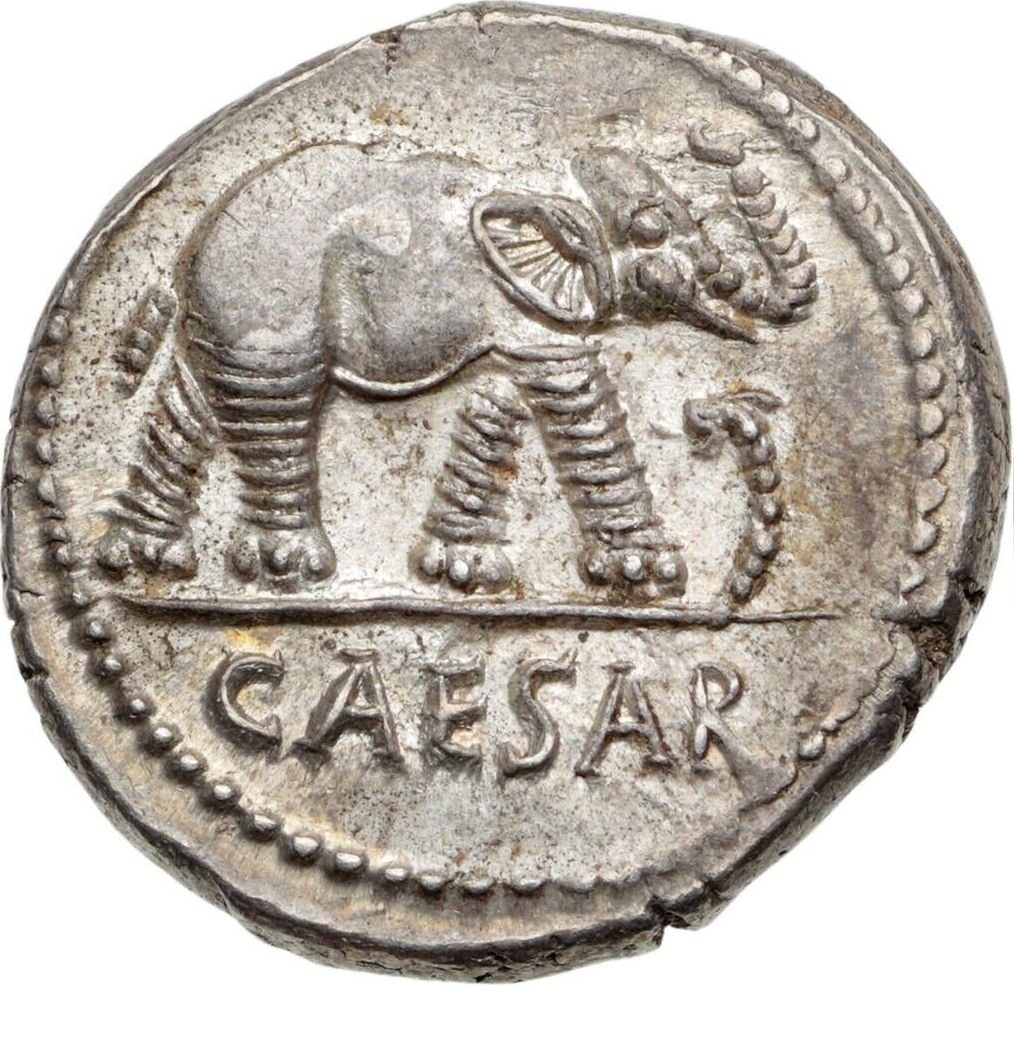
Jesus says to them, “Whose image is this? And whose name is on it?”
They say to him, “Caesar’s.”
While sauntering around the gambling tables, with sleight of hand he switches the genuine coin for a disc of silvery slate, then surreptitiously drops the marked shekel on the ground, thereby passing it to his accomplice Lazarus.
Jesus keeps the onlookers attention for a while, giving Lazarus a chance to do his part. Jesus tells jokes: “How do you sell a chicken to a deaf man? WANNA BUY A CHICKEN?”
After he runs out of stories, Jesus says to them, “Give back to Caesar what belongs to Caesar.
“Give to God what belongs to God!”
With a flashy flourish, Jesus violently smashes the coin on the table, producing a cloud of glittering powder.
The magic trick is in the counterfeit silver 10-shekel piece.
Jesus was an amateur rock-hound. He spent weeks alone, wandering the desert with a little hammer, searching for mica silicate with basal cleavage, and he would find schists up to several feet across. He would pick out flat, silvery sheets of lepidolite and muscovite, then carefully carve them into round, shekel-sized magic disintegrating discs.
Meanwhile, at the other end of the bar, Lazarus ordered a bowl of dates. He paid with the myrrh-marked genuine silver coin (a Roman denari, actually), and received 9 copper shekels and 75 mites in change. Compare it to a $10 piece in exchange for $.25 in food and $9.75 in change.
Now the marked shekel is in the cash urn. Lazarus slinks away with the copper coins.
Once Lazarus is safely away, Jesus tells the first bar man, who lent him the coin, to check the cash urn. There’s his marked coin! Tah-dah!
“You may return the 10-shekel piece to its rightful owner, which is yourself. Peace be with you.”
The boys (both age 22) walk out with cash and snacks.
19 AD to 26 AD, Sepphoris, Galilee
# Ex 4:2-3, 7:8-12, 8:2-14; Mark 1:27-28; John 21:25
⇒ the missing years
Snakes & Frogs
Jesus and Lazarus had a sticks-to-serpents trick, like from Exodus.
Using sleight of hand, a seemingly solid stick is actually a collapsible tube with a small, concealed snake inside that is quickly pulled out to appear as if it transformed from the stick.
The guys would usually do this trick with a lizard and just call it a serpent. Lazarus insisted because, as he says, “I hate snakes! I was taught to keep away from snakes. All snakes have teeth, and all snakes can bite. I think maybe my mother had a bad experience with snakes before I was born when it crawled in her bed. They are too hard to keep in the tube; they have no shoulders! They are too hard to catch, and once they’re loose on the stage or in the audience, it’s over, man, they’re gone!”
The trick would go like this.
After some opening patter, like “So as Moses doeth before the magicians of Pharoah…”, Jesus raised the staff high, turning it slowly so all could see its solid form. He tapped it against the ground. Then, with a flourish, he grasped the staff with both hands and began to chant in a language no one recognized.
The staff was a masterful creation, a telescoping hollow tube cleverly disguised as solid timber. Inside, coiled up, was the medium-sized snake or lizard. The tube was designed to allow Jesus to quickly dump the animal out with a subtle press of his index finger against the cap.
As Jesus’s chant reached its crescendo, he thrust the staff toward the ground. He released the lid, and the reptile slid smoothly from the tube onto the ground to scamper about. Girls would scream. While attention was diverted, he collapsed the cylinder and slipped it into his oversized robe pocket. It appeared as though the stick had transformed into a snake right before their eyes.
───── ∴⋆◬⋆∴ ─────
The boys would pull frogs out of a hat. It was a continuation of the Moses theme.
Jesus had a red-outside and black-inside fez, with stiff sidewalls, a firm round opening, and two false bottoms. It had heavy tassels around the opening, which helped keep it stay upright, on the magi’s head, for an entrance. Prepare it by sealing lots of little frogs in the inner chamber, then sealing a bullfrog in the outer chamber.
They use a fez, or tarboosh, because it is exotic, and a turban is too difficult to make convincing - there isn’t really any flat bottom to be made false.
The magician, either Jesus or Lazarus, would show the audience that the hat appears empty. From a distance, the crowd can see the black interior, but cannot judge the depth, so it looks like just an empty hat.
Jesus puts it on a table, shows there’s nothing up his sleeve, taps it with a magic wand, and pulls the big frog out of the hat’s outer chamber by its legs.
His patter is something like: “Don’t laugh, he’s a show frog; I won’t have him disparaged!”, and “Well at least it’s just one frog, not like it’s a plague, or anything.”
He shows the hat is empty again, taps it again, then dumps out all the little frogs from the second, interior chamber. A riotous calamity ensues.
Jesus jokes, “Maybe the snake will eat the frogs.”
Nobody said it was “real” magic or miracles - they were performing illusions. Technology this advanced is indistinguishable from magic. They would pass a collection plate, usually a turban, if the audience liked the show. They were tektons (carpenters) who made props as a hobby.
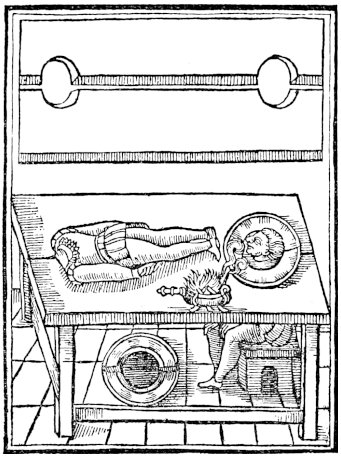
The Book of Magic Tricks
Jesus had an old rolled-up leather book of magic tricks he got from his mother. That’s what originally got him into magic.
Mary got it from her “Magi” friends and relatives, who visit from Egypt.
It included a map of Jerusalem in the back that had been added in the past. The map showed the old city walls, structures like the palaces and the Temple, and some surprisingly detailed areas just outside the walls, like the Mount of Olives on the right, the Valley of Hinnom near the bottom, and Golgotha (“skull hill”) in the upper left.
Jesus assumed the little map had something to do with plotting an old rebellion. It wasn’t a treasure map: there was no “X” or anything, just detailed terrain in random areas.
Here is the Table of Contents from Jesus’s book:
The reader is referred to certain patterns of instruments wherewith diverse feats here specified are to be executed.
– From The Discoverie of Witchcraft, Reginald Scot (1584), William Brome publisher, London. The first published book on how to detect and do magic tricks.
Trick Bodkin
Jesus had a trick bodkin, which is like an ice pick for sewing.
The handle was hollow, so the long pointy blade would freely slip in if you applied any pressure to the tip.
He would set the point, which actually was somewhat sharp, against his forehead. He would thrust it forward and squeeze a little sponge hidden in his hand, so red wine would drip out of his forehead. Then, after a skillful display of his pain and grief, Jesus would lean back as he pulled it out, pointing the bodkin downward so the blade would slide back out of the handle.
Jesus would use a little sleight of hand and pull out a real bodkin that looked just like the trick one, to pass around the audience.
Squibs
Young Jesus and Lazarus would perform another trick from Mary’s magic book, using a “squib”: a thin lambskin pouch filled with fake blood. The blood is usually wine mixed with a thickening agent like dust. The pouch is either opened or popped at the critical moment.
The boys prepare a plaster composition of lime, mud, and sand, with a little straw for binding. They make a plaster cast of Lazarus’s belly and chest. They paint it, not just the color of flesh, but with nipples, naval, and hair so that it looks handsome, like his natural belly.
Next to his true belly they put a linen cloth, then a ceramic plate, then the squib, and then the false belly. The plate is to prevent injury, and the cloth prevents chafing from the plate.
To perform the trick, Jesus would thrust a real bodkin or knife into Lazarus’s fake tummy, so that it appeared to pierce through his gut. He would pull it out, and Lazarus would strain his body against the plate so the fake blood spurted out a good distance.
Trick Linking Rings
Jesus the conjurer shows several solid metal rings. The rings are visibly separate. With a tap, two rings magically link together. Jesus then unlinks them just as easily. He repeats this in various combinations, forming chains and stars in the air.
The trick relies on one special key ring, which has a nearly invisible gap in its circumference. The gap is very narrow and well-polished to match the rest of the ring. The ring maintains tension, so its circular shape stays closed unless pressure is applied. Jesus hides the gap with his fingers, so the audience doesn’t see the opening.
To link the rings, he hides the key ring’s gap with his fingers, and presses another solid ring against the gap. As pressure is applied, the second ring “magically” enters through the gap.
Jesus got the bronze rings from his mom’s Magi relatives in Egypt. They were always visiting Mary’s home, as their caravan followed the Silk Road with brass and glassware containing herbs like frankincense and myrrh.
The cousins were very impressed with Jesus’s disintegrating shekels and his collapsing serpent tube. He had invented those tricks himself; more than just performing from Mary’s book. They liked pulling frogs out of a hat too, but of course they had seen that trick done in Europe with rabbits and a top hat.
Jesus really knew how to make friends and influence people. He had a big future in illusion and stage magic, God permitting.
24 AD - 27 AD, Sea of Galilee, near Bethsaida
# Matt 4:21, 27:56; Mark 1:20, 15:40; Luke 5:8-10
⇒ over the last several years
The First Catch
Zebedee’s boat rocked in the predawn dark. The weighted nets were heavy with fish. His sons groaned as they hauled, their breath white in the chill. The hired men, Peter and Andrew, worked without complaint. They’d been paid in advance.
“Like hauling bricks,” carped the younger son, John.
The older son James spat over the side. “Bricks don’t flop out of the net.”
By sunrise, the boat sat low in the water. The fish shimmered like coins. Peter leaned back and grinned. “I love this part of the day.”
Zebedee thought of fish soup with his wife’s bread, warm from the oven. “Love is good, but it’s good with bread.”
The Women’s Work
Mary Salome mended three-layered nets in the courtyard, fingers quick, eyes sharp. The daughters sorted the morning’s catch, scales sticking to their wrists.
“Your father’s late,” she said.
The eldest daughter, Jackie, shrugged. “He’s counting money.”
Miri snorted. “Or scheming with Jacob.”
A gull cried overhead. The girls worked in silence. If you can’t do what you like, you must like what you can do. The nets had to hold. The fish had to be sold. The world was built on such things.
The Tax Man
The collector came at noon, robes crisp, ink-stained fingers clutching his ledger.
Zebedee wiped his hands on his tunic. “You’re early.”
“Rome doesn’t wait.” The man’s smile was thin.
They haggled over the count. The fish were tallied, the silver weighed.
Zebedee prayed: may God bless and keep the Romans. Far away from us.
When the man left, John kicked at a stone.
Zebedee declared “The cat loves fish, but doesn’t want to get her feet wet. Next time, we will hide a basket.”
Peter laughed. “Under your wife’s skirt?”
Zebedee didn’t answer. Money buys everything except common sense.
The Stranger’s Boat
A storm blew in fast, whitecaps chewing at the shore. A lone figure wrestled a half-sunk dinghy onto the sand.
Zebedee waded in to help. The stranger’s hands were soft. “You’re no fisherman.”
The man smiled. “I’m learning.”
They hauled the boat up. “If you have to, you can,” said Zebedee.
The stranger thanked him, then vanished toward the village.
James squinted. “Think he’s gonna be trouble?”
Zebedee watched the darkening sky. “If God lived on earth, people would break his windows.”
The Broken Oar
John snapped an oar mid-stroke. The boat lurched.
James groaned. “That was a good one!”
Peter shrugged. “Wood breaks.”
Back home, Zebedee carved a new oar by firelight.
Salome eyed the shavings. “You’ll burn the house down one night.”
He kept carving. “Man plans and God laughs.” She threw a fig at him. It missed.
The Night Fisherman
Some nights, Peter took the boat out alone.
“That’s bad luck,” muttered Andrew.
But Peter always returned with fish, fat ones, deep-water catches. No one asked how.
One night he came back empty-handed. He said his nets had grown so full, rather than let them tear, he dumped his whole catch.
The Borrowed Knife
Zebedee’s best fillet knife went missing. A week later, it was back. No one confessed.
Then Jacob’s son showed up with a bandaged thumb.
Mary Salome helped apply a salve. “You don’t throw out the dirty water until you have a clean replacement,” she said.
The boy left fast.
The Dying Light
Winter’s last lamp sputtered.
“Oil’s gone,” said Salome. The daughters huddled close. The fire killed the coals.
Then, a knock. Jacob’s boy with a jar of fresh tallow.
Jackie’s smile lit the room brighter.
The First Rain
When the drought broke, they stood outside, faces upturned.
John danced. The girls laughed. Even Salome let the drops cool her neck.
Zebedee whispered thanks.
The laundry would dry. The boats could wait.
For now - water, free and falling.
October 9, 26 AD, Sepphoris, Galilee
# 1 Sam 17
⇒ last year
The audience at the Desert Inn murmured as the strange figure took his place on a rickety wooden stage.
“Presenting…” announced lovely Mary Magdalene, the bar owner, “Goliath, the day after he met David!”
A tall, headless figure in a comically oversized robe stood motionless, his empty hood swaying slightly. The sleeves hung limp with no hands visible.
From a small table in front of the figure came a voice: “Psst! Over here!”
The crowd was amused as a man’s head appeared to be sitting on the table. A child in the front row started crying.
“That’s my robe he’s wearing!” the head complained. “Do you have any idea how hard it is to get blood stains out of camel hair? Guess I really got ahead of myself this time.”
The headless figure shuffled toward the voice, as if searching for something, tripping over its own sleeves.
“I will not tell you my best joke! You already fell for that once.
“You didn’t know you could get hit with a slingshot? I guess the thought had never entered your head.”
After much dramatic fumbling, the figure crawled under the table. There was a loud THUNK followed by “Ow! Watch the…”
The head disappeared below the table and a whole man stood up - Jesus, looking mildly annoyed as he adjusted his now properly-fitted robe.
“He is risen!” was heard from Lazarus under the table.
“He is risen, indeed!” Mary Magdalene confirmed, stunning as ever.
Awkward.
There was a smattering of applause as they passed the hat. Some laughter, some confused whispering. Weren’t the head and body both supposed to be Goliath? So, Goliath is risen? To do what, wreak havoc?
They were making money, but the act had room for improvement. They better stick to their day jobs for now.
July 15, 16 AD, somewhere in Galilee
# Mark 16:9; Luke 8:2
⇒ 12 years ago
Jasmine, with her smokey-Egyptian almond eyes and a cascade of rich, dark hair extensions swept high, was a fantasy wrapped in silk and gold. Her cherry-red lips, full and pouty with an exquisite V-indentation, were utterly flawless, a testament to her impeccable taste.
The air throbbed with a slow, sultry beat as Princess Jasmine took center stage. Bejeweled and draped in a lustrous white robe, mischief sparkled in her eyes.
The first of seven sins was Pride.
She moved with the music, her body arching to the rhythm as if the world itself was her personal stage. The jewels on her brow shimmered like her intent: “I own this moment, and you.” A smirk played on her lips as she proudly shed her robe, revealing a gold corset that hugged her voluptuous curves like liquid sunshine. The crowd murmured their appreciation as her fingers, long and delicate, trailed over her hourglass body, lingering on her dazzling riches.
Greed follows.
Dressed in shimmering gold and gauzy white layers, Jasmine was a slippery thief in motion, her hands caressing real and imaginary jewels. She peeled away her outer veil, revealing a trove of rock gems sewn into her garments. Each sinuous spin sent a rain of gemstones cascading from her hips and tight corset. She cupped a handful, letting them slip through her fingers like sand, her eyes gleaming with an insatiable hunger.
Next was Lust.
Her body swayed like a serpent, in slow, deliberate circles, hips rolling with hypnotic rhythm. A lingerie scarf slipped away, revealing more of the alluring curve of her waist, the tempting round swell of her bottom. The very air in the room thickened, heavy with desire. She traced her fingertips again, from her luscious mouth, down, down her body, teasing the audience with every slow, deliberate movement. Her form was liquid sin, every twist and turn ensnaring the viewer.
Eventually, her gaze locked with a lucky patron, her luscious lips parting in a promise. She blew him a kiss from her gloved hand before turning away, a gesture so potent it knocked him back, as if the sexy kiss itself had fluttered through the air and smacked him squarely on the cheek.
Now Envy.
Princess Jasmine’s movements grew slow and deliberate, her perfectly made-up eyes searching with longing. There she was: the ritziest woman in the audience, a merchant’s wife bedecked in real jewels. Jasmine’s gaze locked, and her dance transformed into a sassy mockery. She released the scarf in her hair, and a cascade of lush, silky strands fell to her shoulders in a smooth, teasing flow. The woman flushed, gripping her husband’s arm. Jasmine shook her hair loose, then tossed the veil towards the classy dame, a defiant taunt.
The front row of men ogled her like lions watching a gazelle at the watering hole.
Gluttony came next.
A table, piled high with fruit, was wheeled out. Jasmine plucked a cluster of grapes from the platter, slowly biting into one, then sucking others in with a wet, sensual pop. Next, a perfect nectarine, the juice dripping down her chin. She licked at her delicious arms with apparent delight, a sexy kitten, her body undulating as if she could never get enough. She tossed juicy veil number five to the audience, a playful tease.
Now Wrath.
Jasmine’s dance became fierce, aggressive. She flipped her hair, exuding untamed power. She tore at her own garments, loosening her expensive corset until it slipped up and off, over her head, exposing skin. She angrily tossed the foundation garment off stage, while the crowd exhibited pure gratification at the sight of her naked belly button. Like a tiny wash of joy. And she knew how to make her naked belly dance.
The front row was utterly focused now, the men like snakes in a cage with a mouse, almost unable to resist their instinct to devour.
Finally, Sloth.
The music stopped. Her last sheer veil dropped, leaving Jasmine wearing nothing but makeup and sandals.
She lazily padded into a position that gave everyone an unhindered view of everything. Her enraptured fans were unable to take their eyes off her totally nude body.
But “Princess Jasmine” was the stage name of young Mary Magdalene, only 23 years old; this was long before she joined our group. She was very intelligent, newly-single, and just trying to make a living.
There was a reason she didn’t sing in her act.
Her voice was unrealistically high pitched. She either spoke in a breathy, sexy, loud-whisper, or she sounded like a squirrel on Helium, like she’s speaking in italics. Her laugh was so nasal and rapid-fire, hammering like a woodpecker or a dolphin, that it frightened away small animals and children.
She cleared her throat, and from center stage spoke breathily for the first time.
“Men think having large breasts makes a woman stupid, but actually, a woman having large breasts makes men stupid.”
(A drum rimshot offstage, ba dump)
“The first thing men notice about me is my eyes. Then when my eyes aren’t looking, they notice my breasts.”
(ba dum tss)
“My ex-husband and I had 14 good years.
Then we met.”
(ba dump dump)
“My ex-husband left me over a religious disagreement.
He thought he was a God, I didn’t.”
(ba dum tss)
“What did the elephant ask the naked man?
How do you breathe out of that thing!”
(silence)
(crickets)
“How did the Romans …”
(ba dum tss)
“How did the Romans catch the naked man who stole the high priest’s vestments?
They grabbed him by the jewels.”
(band plays short finale and packs up to leave)
Jasmine/Mary stood, naked, her chest rising with each breath. The hall was silent, the guests shaken, as if they had witnessed something forbidden.
December 5, 27 AD, Sychar, Samaria
# John 4:1-42
Meet Tamara of Samaria.
She wasn’t just doing well, she was thriving in the city.
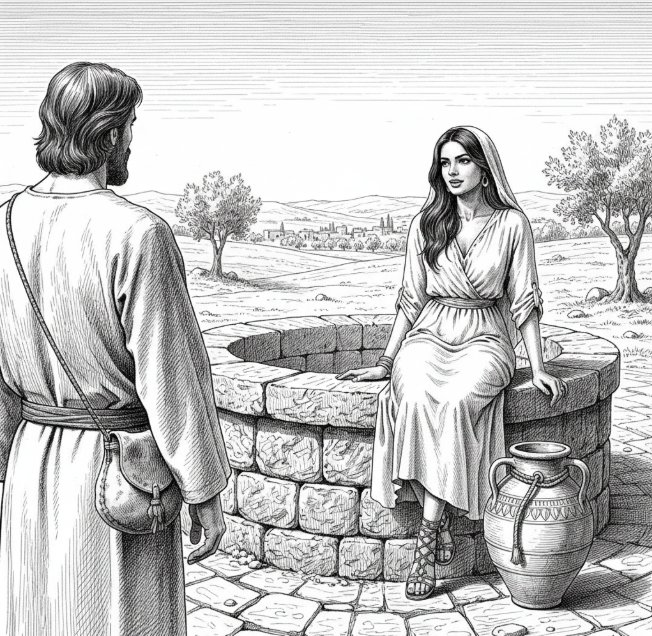
She had had five “permanent” relationships so far, and wasn’t looking to settle down with a sixth. A regular at the best rooftop parties, she was the kind of woman who could turn a simple water run into a thing.
And then, there in the middle of old Samaria, He walked into her life.
Meet Jesus of Nazareth.
Sandals dusty, eyes sharp, and a smile that told her he knew exactly what she was thinking.
Her own accessorized shoes, of course, were more than mere fashion; they were therapy, destiny, self-expression.
“Give me a drink,” he said, though his bota bag was full.
Tamara arched her brow. “Really? You’re asking me?”
He leaned in. “If you knew who was asking, you’d be the one begging.”
Game on.
They bantered. They flirted. He told her things no man should know. “Five husbands, Tammy? Really?” He knew everything about her. “I foresee the next man will be the one who finishes the job,” he teased.
And instead of running, she fell in.
Because here’s the thing about powerful men: they either want to control you or set you free. And Jesus? He made her feel like she had real value, as if Jesus could save her if she would just open her heart and let him in.
But he was Judean, she was Samaritan.
Tamara mused. In this age of un-innocence…
Can we date outside our caste?
By sundown, the well had become a party scene. The Roz Sheynemeydele (the Pink Ladies, her fabulous pack of unmarried vixens) had arrived, and so had Jesus’s single friends.
As the stars shimmered over Samaria, the well that had once been a place of thirst became a place of laughter and music, sandals kicking up dust in the golden torchlight. Lyres were playing, and the Water of Life that Jesus brought was flowing.
Tammy, slightly tipsy, pressed close.
“So,” she murmured, twirling her hair, “was this whole ‘beg me’ thing just a line?”
Jesus grinned. “Come to Cana next month. My mother’s throwing a wedding.”
Of course, he was connected. He was Big.
And just like that, Tammy’s life changed.
Because in a world where men kept telling her who she was supposed to be, Jesus looked at her and said: “I see who you are.”
And that is more intoxicating than any wine.
December 19, 27 AD, Cana, Galilee
# John 2:1-11
⇒ Khirbet Qana, also called Cana, is 8 miles northwest of Nazareth and 12 miles west of the Sea of Galilee. It is high on a hill overlooking the Bet Netofa valley.
The Wedding of Connie Kor-Leon
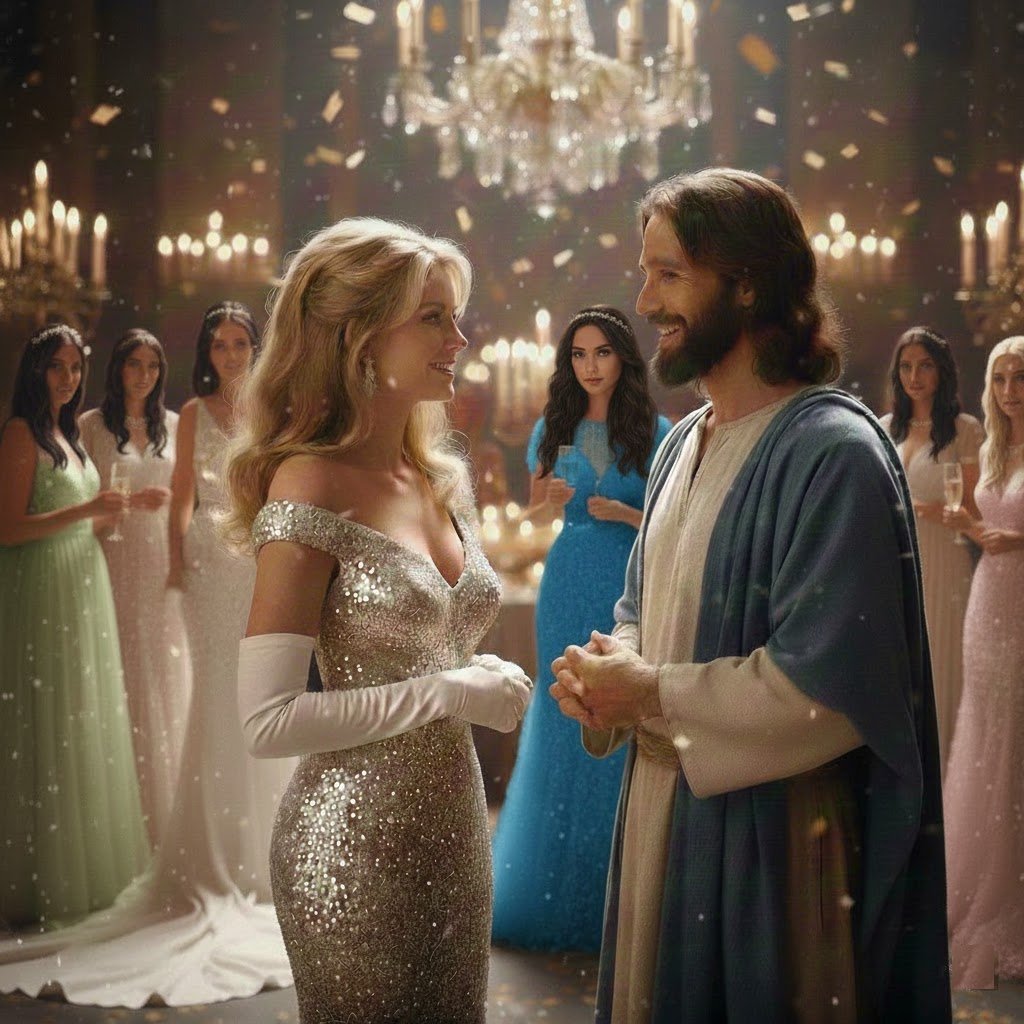
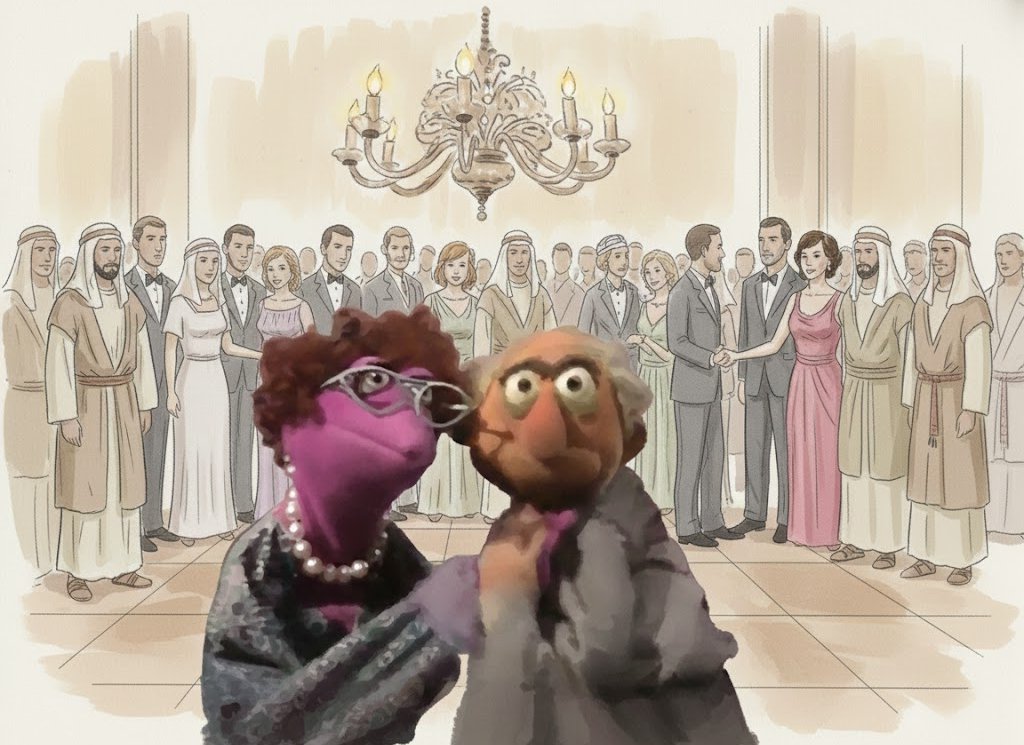
The wedding of the year was a showcase of the Kor-Leon family’s power and influence. A large gathering of family, friends, and business associates enjoyed lavish decorations, music, and dancing, all orchestrated to ensure a grand display of marriage between Candace Kor-Leon and Carlo Lansky.
When Vicenzo “Vito” Kor-Leon arrived in Galilee, an orphan from Sicily, alone, he was so wild he was given for his family name the portmanteau “Kor” (Hebrew for 58 gallons, also called a “homer”) plus “Leon” (Greek for “lion”). Kor-Leon means “fifty-eight gallons of lion.”
The groom’s father, Meyer Lansky, controlled the stone working guilds in Sepphoris and Tiberias that were of great interest to the bride’s father, Vito.
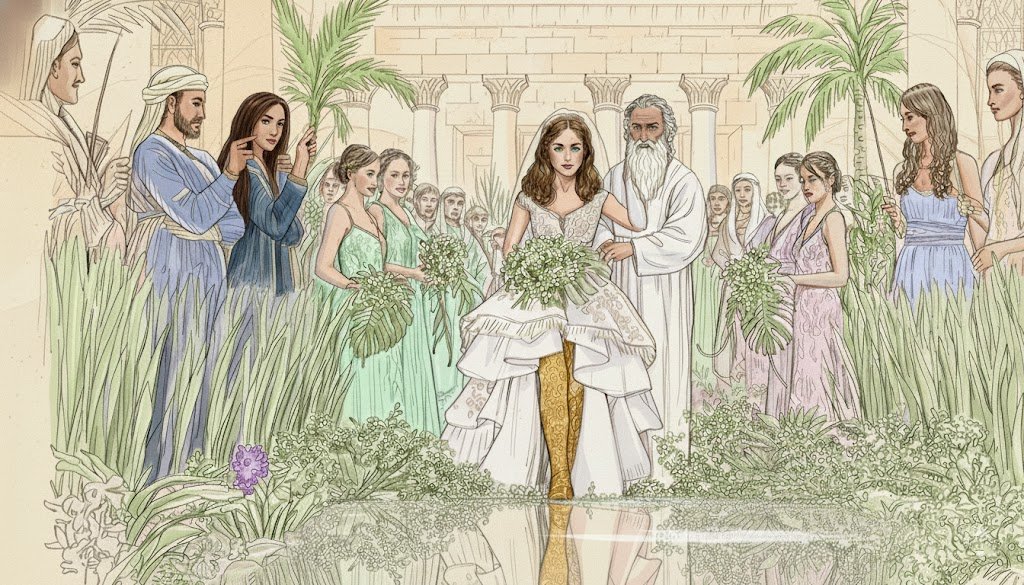
The huge lawn hummed with the low, rich murmur of voices. The air was thick with perfume and music. The wedding ceremony took place under a chuppah (canopy) decorated with flowers and fluttering ribbons.
The rabbi gave the Seven Blessings, and the groom lifted the veil from his bride’s face as if they hadn’t seen each other in a week. One cup of wine passed between them, a shared life, a shared fate. Glass shattered beneath his heel - a reminder that joy and sorrow would walk hand in hand. The crowd erupted in cheers!
The ketubah (marriage contract) was signed, then blessed with Vito and his new son-in-law Carlo’s handshake. Then, the yichud: the marriage was consummated. The newlyweds Connie and Carlo spent about an hour alone together, not necessarily to get pregnant, but to make sure they were physically compatible with each other.
The seudat mishteh (wedding feast) roared to life, a festival of music and laughter. Young men spun giggling women across the floor. Long wooden tables were piled with roasted goat, sheep, and fish, other plates with figs, dates, honey cakes, and challah bread with butter.
The Samaritans
Tamara and her fabulous friends were here. Spicy as cinnamon, and sharp as flint, these females were poised to strike, and Jesus’s innocent young friends, Andrew, John, and James, were easy targets.
The girls recognized the cute teenagers. These were the lads they had partied with at the well, plus some new faces.
The gentlewomen descended on the gentlemen like cougars on lambs, all red lips and whispered jokes, fingers brushing sleeves, hips swaying just close enough, tittering and jiggling.
Wait, were these the same shy boys from the well? It’s amazing what they’d learned in such a short time! Confidence does a lot to increase a man’s appeal, especially to such modern girls as these.
There’s magic when you dance with someone at a wedding; everyone’s so… receptive. Weddings convert nerds into charmers.
Nathanael the Disciple
Nathanael nearly choked when a brunette named Lila cozied up, held his arm, and boldly whispered in his ear. Later, he bragged to his friends:
“She walked up to me and she asked me to dance. I asked her her name and in a dark brown voice she said Lila. L-I-L-A, Lila. Li-Li-Li-Li-Lila. We drank champagne and danced all night, underneath the candlelight.”
Philip the Disciple
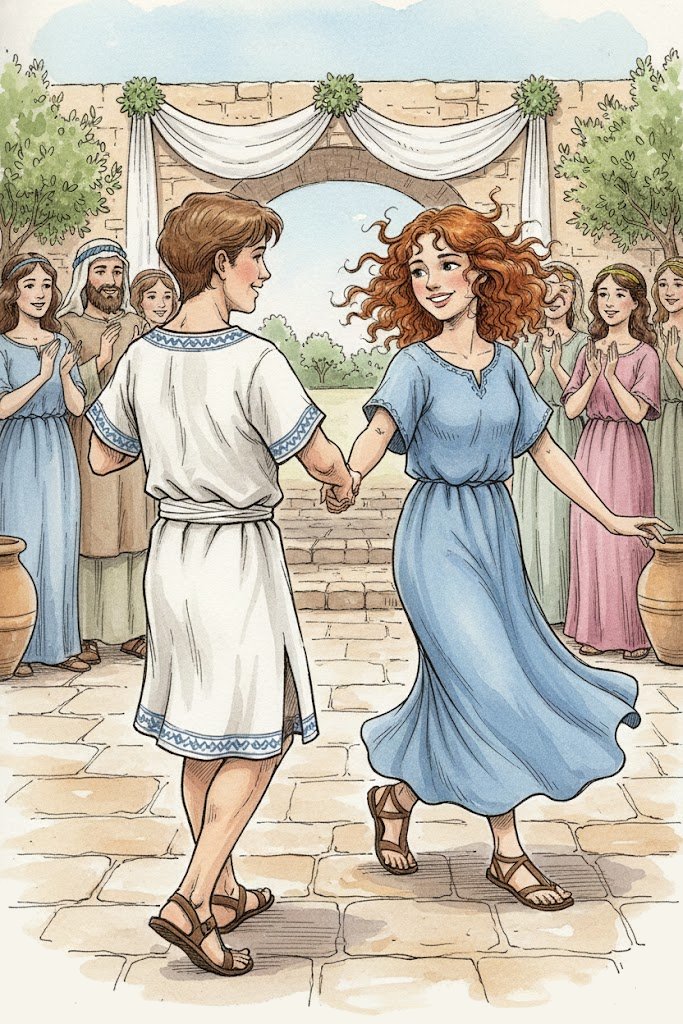
Shayna approached Philip: “You’re not dancing,” she said, flipping her curly, slightly frizzy hair.
He blinked at her. “I d-don’t know the steps.”
She grinned. “That’s okay! I’ll teach you. Come on!” She held out her hand.
He hesitated, eyeing the spinning dancers.
“What if I step on… on your toes?”
“You won’t,” she declared. “And if you do, I’ll step on yours.”
Philip took Shayna’s soft hand. She pulled him into the circle, where they bounced to “Hava Nagila.” She twirled him until his shyness unraveled into laughter.
When the music slowed, Shayna didn’t let go.
“See? You’re a natural,” she said as they swayed.
The Good Samaritan
Goldie “Hochhauser” Hahn, the effervescent, blonde, blue-eyed Samaritan Jew, was chatting with Jesus, and he was definitely giving her his full attention.
“I was off to Jerusalem,” she said, “and I passed a priest going the other way very quickly. Then about ten minutes later, I passed a Levite also in a hurry, also going the other way. About ten minutes after that, I came to a poor man who had been robbed and beaten, left half-dead by the roadside.
“I had some of my people give him some of my perfume and linen for bandages. Then, I had one of my drivers drop him off at an inn I highly recommend, the Bethphage Inn at the Gethsemane Olive Garden. Very discreet. When you’re there, you’re family. Drop my name if you ever need a favor.
“I wonder: do you think it was the first two guys who mugged the third guy?”
Guests Dancing
Champagne music drifts over the dance floor.
George: Would you like to dance?
Mildred: No thanks, I’m a little stiff from bowling.
George: I don’t care where you’re from!
Mildred: You know, my marriage was wrecked by something really stupid.
George: What was that?
Mildred: My husband.
George: If the Prince was free tomorrow night, would you let him take you to dinner?
Mildred: Sure, of course I would!
George: Well, he can’t make it, so how about me?
Mildred: George, do you like duckling?
George: I don’t know, I’ve never duckeled!
Mildred: Do you like bathing beauties?
George: I don’t know. I’ve never bathed one.
George: Do you believe in the here-after?
Mildred: Oh yes.
George: Oh good. Then you know what I’m here after.
Mildred: How do I look?
George: With your eyes.
Mildred: I find that most people don’t believe what other people tell them.
George: I don’t think that’s true.
Mildred: That man is annoying me!
George: He isn’t even looking at you.
Mildred: That’s what’s annoying me.
George: I’m so crazy about you, I can’t even see straight!
Mildred: Oh, I’m so goofy about you, I can’t eat!
George: I’m so much in love with you, I can’t even sleep!
Mildred: What should we do?
Waiter: Check into a hospital, woman!
George: Waiter, there’s a fly in my soup!
Waiter: Shhh, not so loud! Everybody will want one!
George: Waiter, there’s a fly in my soup!
Waiter: What’s the matter? You ordered a mosquito?
George: Waiter, what’s this fly doing in my alphabet soup?
Waiter: Standing in for the apostrophe.
Jesus Changes Water to Wine
Glasses were clinked, toasts were made, and the wine flowed like the Jordan in February. Until, suddenly, it didn’t.
A hush fell. Empty glasses gleamed like accusations. A party without wine was like just sitting and standing around (without wine).
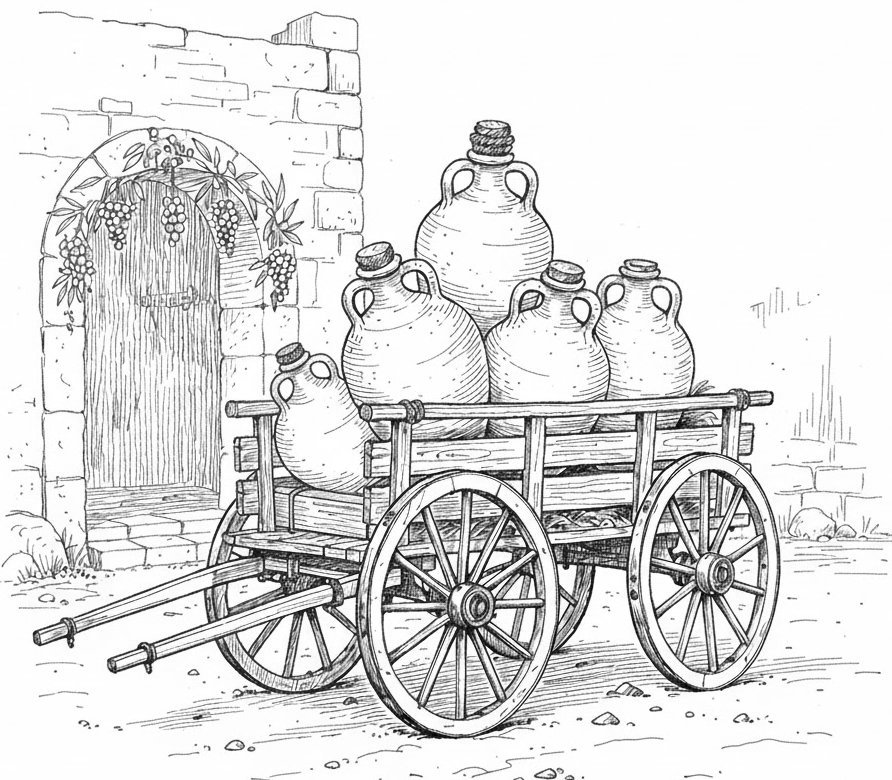
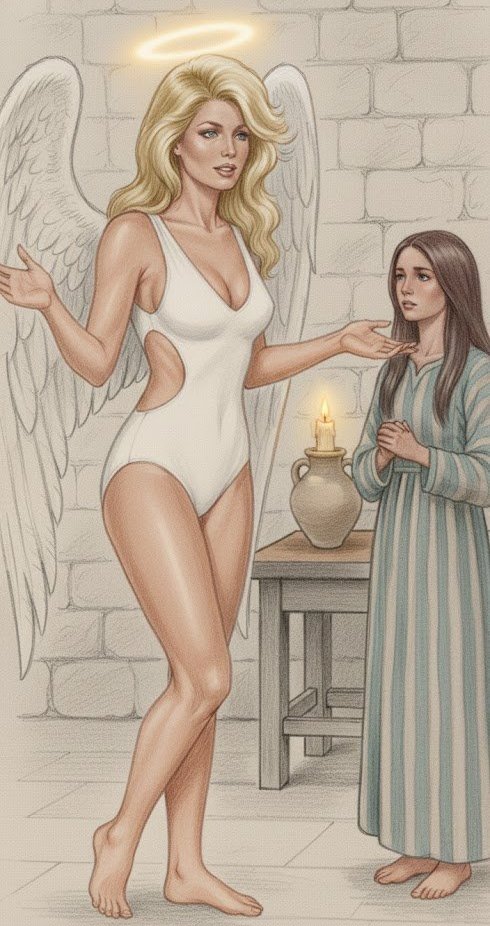
Miryam bat-Josef was known in the matchmaking and catering business as “Mary the Virgin,” despite having six kids. She understood the patterns of revelry - the thirst beneath the laughter, the way guest’s voices grew louder when their cups ran dry. She had seen it before. So she came prepared, her wagon heavy with five amphorae of the Desert Inn’s finest wine, each urn a potential future client or two.
“Do whatever he tells you,” she commanded the servants, her voice steady, certain. She had birthed a miracle once; he would know how to set the stage for another.
After some preparation, her son, her wild, radiant boy, stepped into the center like a storm.
“Ladies and gentlemen, if I may invite your mindfulness, today God has loaned me the spirit of Bacchus!”, Jesus declared, his arms wide as the sky.
He had the room’s amused attention.
“Shall I summon madness? Look around - isn’t this just insane?”, he grinned, wicked as a desert fox.
“Women, what does this have to do with me? Fertility? Which of you ladies is brave enough to come up here and try me?”
The crowd smattered approval, but their buzz was fading.
“No takers? Then let’s use Bacchus’s authority to turn water to wine!”
And so the spectacle began. The servants rolled out six urns - five full, one empty.
Jesus poured water into the empty urn with a flourish. Then, with a magician’s sleight of hand, he simply served from the others - rich, dark wine that flowed like intoxicating poetry. “Now draw some out and take it to the master of the banquet,” he said.
When the first great vessel was drained of wine, they carried both it and the water-filled urn away. No one noticed. The people were too busy drinking in the miracle, too busy believing. “Everyone brings out the choice wine first and then the cheaper wine after the guests have had too much to drink; but you have saved the best till now!”, they said.
Mary the Virgin stood in the shadows, smiling. (Jesus never called her that, she was “mom.”) She and Mary Magdalene didn’t mind giving out a little inventory for marketing; a significant donation at the right event makes us look good to the Cana elite. This is how you grow a business.
December 26, 27 AD, Nazareth, Galilee
# Matt 24:25
In the tiny village of Nazareth, there lived a most remarkable woman called Mary the Virgin. Mary was a matchmaker, a widow with many sons and daughters, and her reputation was as golden as the noonday sun.
One bright morning, a blustery mother hurried into Mary’s cozy little shop, her robes fluttering like the wings of a flustered dove.
“Oh, Virgin Mary, bless me!” she cried. “You simply must help me!
“My dear Shifrah must marry young Shlomo! He’s ever so rich, and his family owns three large vineyards! But the stubborn child won’t hear of it!”
Mary adjusted the scarf in her hair and gave a knowing nod. “Fear not, my dear madame. I have just the solution.”
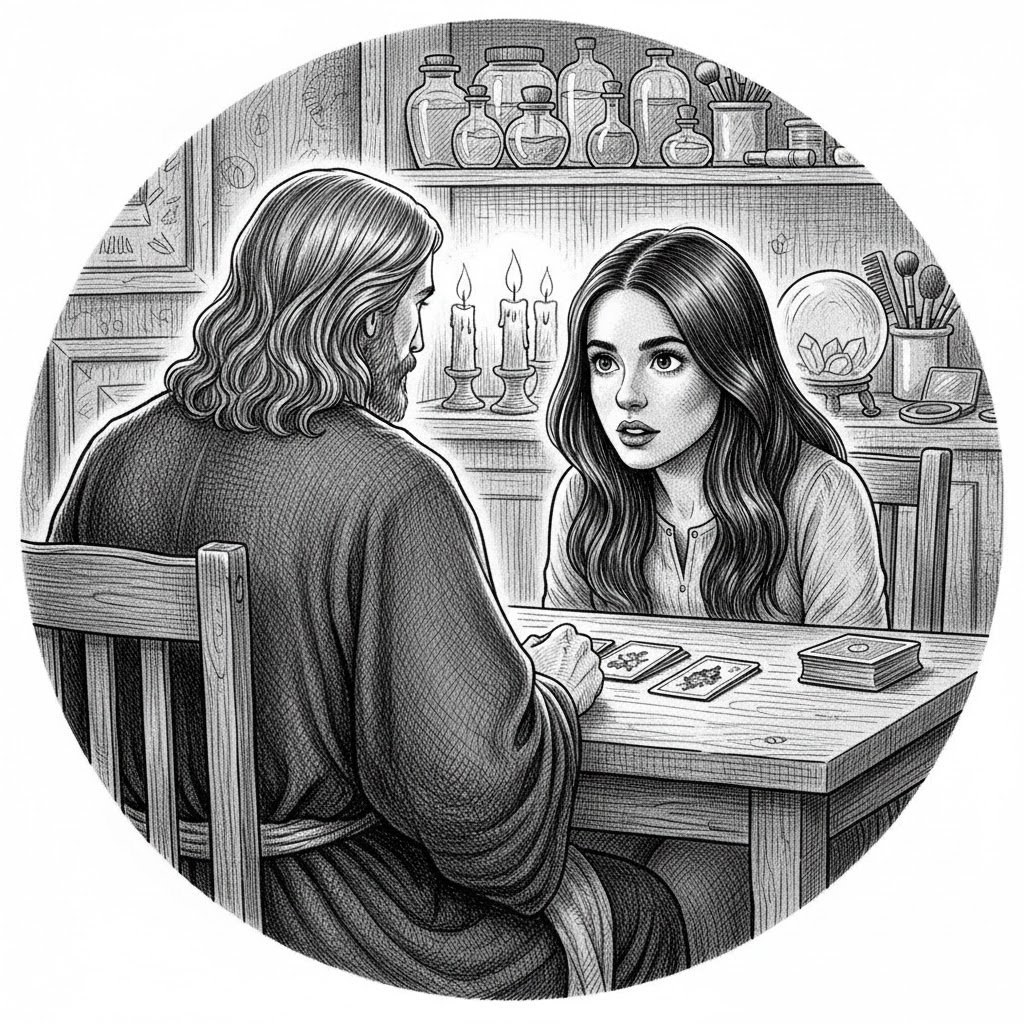
She arranged for her son, Jesus, a clever fellow with a twinkle in his eye and a way of making the future sound like the most thrilling adventure, to meet with her daughter in the tea room.
“Come, ladies,” he said, spreading his stacked deck of tarot-ish cards upon the table. “Let us see what destiny has in store for Shifrah!”
The precious old magical cards shimmered as he turned them over - one by one - each more curious than the last:
The Fallen King - a man broken by fate, his crown tarnished, his power spent;
The Lady and Her Daughter - two figures bound by bloodline and duty, one steering, one flourishing;
The Tent Maker - a critical craftsman, weaving shelter from nothing; and
The Stubborn Gatekeeper - unyielding, arms crossed, barring the way.
“Ah!” Jesus exclaimed, stroking his chin. “This is no ordinary fortune - this is the tale of housewife Jael and Judge Deborah, from the Book of Judges in the Nevi’im!”
Shifrah leaned forward, intrigued.
“Picture it!” Jesus declared, waving his hands dramatically. “Sisera, the wicked general, fleeing from a battle brought about by Deborah - only to stumble upon the tent of delightful Jael, kindest of hostesses!
“She gave him milk, she gave him comfort, and then, WHAM! Right through the temple with a tent peg! Such a clever woman!”
Shifrah gasped. “She killed him?”
“Oy, indeed yes, but so heroic she was!” Jesus assured her.
“And I see there’s also the five daughters of Zelophehad, from the book of Numbers in the Torah - oh, such brave girls! They marched right up to Moses himself and stubbornly said, ‘Why should we miss out just because we’re not boys?’ And Moses agreed! Isn’t that splendid?”
Shifrah blinked. “What does this have to do with me?”
Jesus moved his fingers in the air. “The cards say you are part of a grand story, similar to this, my dear! Not you should make with the tent peg murder part - ach, no! - but the part where a wise woman builds a home, raises strong sons, and makes her mark upon the world!”
He leaned in, with an exaggerated lilt, elbowing and winking. “And… if I may be so bold… I see a handsome young man named Shlomo in your future! A sturdy tent! And one day, perhaps, a great purpose for your household!”
“Shlomo? Shlo… Shh…” Shifrah muttered, seemingly stunned. Does this fortune teller think he sees Shlomo Manischewitz, the winemaking putz, in her future?
“He’s a good man, he’s got a good heart. He’ll be a fine husband, you’ll see. You’re not going to starve,” said the matchmaker’s son.
Shifrah’s mother clasped her hands in delight. “You see? It’s fate! I say we proceed with a splendid party to have your friends meet Shlomo’s friends, shall we do that? Shifrah, honey?
“Mother Mary, my sweet dear, you simply must do the party planning, I’ll be just devastated if you won’t, I shall, oh promise me you’ll do it!”
Jesus gave a sly nod to his mom, who flashed a wide smile as she pulled out her catering menus.
February 2, 28 AD, Al-Maghtas, Bethany, Jordan
# John 11:48
John the Baptist: “Nobody expects the Jewish Inquisition!
“Our two weapons are fear and surprise.
“And ruthless efficiency.
“Three! Our three weapons are fear, surprise… Four! Our four weapons are fear, surprise, ruthless efficiency, and fanatical devotion. And five, we have cool uniforms.
“Now, please have a seat in the comfy chair.
“What is your name?”
Jesus: “Yeshua al-Natsrat ben-Yosef ha-Mashiach.”
John: “Ok, I’m writing down ‘Jesus Christ.’
“You are being considered for membership in our movement, the Fishers of Men, formerly called the Jewish Defense League.
“Now, the idea that religion and politics don’t mix was invented by Romans to keep the Jews from running our own country. If there is any place in the world we need the JDL - I mean the Fishers of Men - it’s here and now, in the West Bank of Palestine today. The reestablishment of a single Jewish state will lift us chosen ones out of our current oppression by foreign invaders. A single-state solution would open the gates to the kingdom of God on earth, with us Jews finally on top.
“OK, then. We expect complete faith in the coming apocalypse, repentance of sin, and baptism by immersion.
“What do you say?”
Jesus: “I hate the Romans, a lot!”
(long pause, silence)
John: “All right, you’re in.
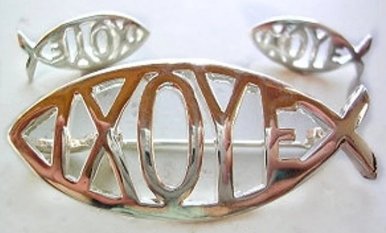
“Our secret club logo is the Greek word IXThYS inside a fish outline.”
Jesus: “Does that mean anything?”
John: “You’re asking whether the word ‘fish’, inside a fish, logo for the Fishers, has any meaning?
“Yes, yes it does. It means, looky here! A fish!
“Pay the ten shekel fee then walk down by the water to get dunked and pick up your membership packet.”
Jesus: “How many members does that make, worldwide?”
John: “Counting myself, and my four assistants, you make six.”
# Lev 25:44-46; Deut 15:12-18
Caesaria, Coast of Judea
Before the sale, the enslaved are stripped naked and thoroughly inspected by potential buyers like livestock. Their muscles, teeth, and limbs are probed and examined.
They are forced to grease their bodies with animal fat to appear healthier and more muscular, a dehumanizing process that fills them with shame and confusion.
Kunta remains defiant throughout the process, a horrifying and profound violation and dishonor to his person. When ordered to jump to show his strength, he refuses, leading to a brutal whipping that forces his compliance.
The enslaved are taken to a public auction block to be sold individually to the highest bidder. This is a scene of chaos, noise, and cruelty, with bidders casually discussing their purchases.
When Kunta’s turn comes, he is pushed onto the block. The auctioneer highlights his physical attributes to the crowd, selling him as a strong, young “prime field hand.”
He is sold to a man acting as an agent for a lentil plantation owner near Tiberias, Galilee. The transaction is cold and final - a human life is exchanged for cash. He is immediately branded on the chest with the mark of the plantation, a searing, painful symbol of his new status as permanent, owned property. The owner names him “Tobias.”
Families are torn apart, with mothers separated from children and husbands from wives, their agonized cries filling the air.
Carthage, Africa
Potential buyers, including two with a ship bound for Judea, are led through the fortress prison. The enslaved are presented not as people, but as cargo to be broken into parcels for transport.
As a buyer inspects Cinqué, another enslaved man is brutally beaten, while shouting “Give us free! Give us free!”
Cinqué watches this, with intelligence, fury, and calculated restraint. He understands that overt resistance at this moment will lead to his death.
The ship owners select Cinqué and dozens of others. The transaction is cold and commercial. The seller assures them of the captives’ quality for field and mining work. The sale is finalized with a handshake and money, treating human beings as live goods to be transported, “tight-packed” on a ship. They’re businessmen engaging in a profitable, legal trade.
Cinqué does not understand any of their chattering, but he sees the buyers are polite, business-like. They are not sadistic monsters, not in this moment.
Cinqué thinks this is good. He will be peaceful, at least for now, and someone from his village will find him and help him run away. Perhaps after a while on the boat he will jump off and swim for shore.
Hammat Section, Tiberias, Galilee
The enslaved people are meticulously prepared for sale to maximize their market value. They are required to wash thoroughly, and are provided with new, clean, cheap robes for men, and colorful frocks for women, to appear smart and lively.
The slaves are arranged in a line for inspection by height and are made to walk back and forth, holding up their heads. Customers examine them as they would livestock, feeling their hands and arms, turning them about, forcing them to open their mouths to show their teeth, and asking them what kind of labor they are capable of performing.
Eliza had two young children, a boy and a baby girl. She had been promised freedom by her master, the children’s father, but he died, and his jealous widow was selling her now.
She pleads desperately with a potential buyer to purchase all three of them together, promising to be the most faithful and obedient slave. The buyer refuses, stating he cannot afford it, and purchases only her young son. She breaks down into a paroxysm of grief, crying aloud and wringing her hands as her son is taken away.
The slave trader reacts to her sorrow with savage brutality, raising his whip and threatening to flog her with a hundred lashes if she does not immediately stop crying and “behave herself.”
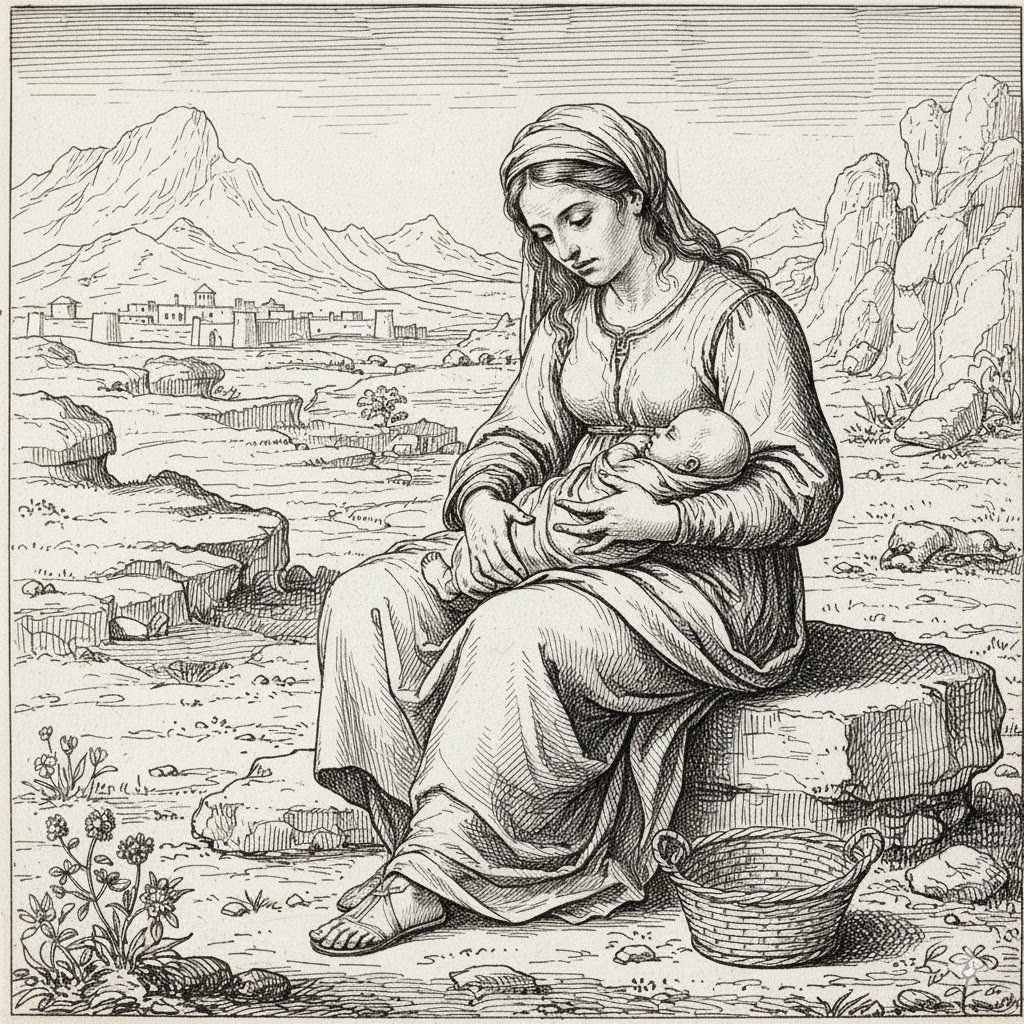
The bidding continues for Eliza and the baby. The mother is sold for field work to a lentil plantation owner. The baby is not wanted, not even for free, not even by the farmer. After the woman is led away in a state of shock, where she can’t see what’s happening, the child is left by the slave trader on a trash heap.
After about an hour of crying, a “Hebrew midwife” picked the baby up.
This was a new mitzvah, a tzedakah rooted in social justice called an “orphanage” the Jews were trying out. Saving babies from trash heaps, after being discarded by Israelite and Roman human traffickers.
July 4, 25 AD, Hammat Section, Tiberias, Galilee
# Ex 21:7-11,16,20-21; Lev 25:44-46,55; Deut 21:10-14,24:7; Prov 29:19; Eph 6:5; Col 3:22; Titus 2:9; 1 Tim 6:1; 1 Peter 2:18
The Hebrew slave trader speaks to the audience before another auction starts.
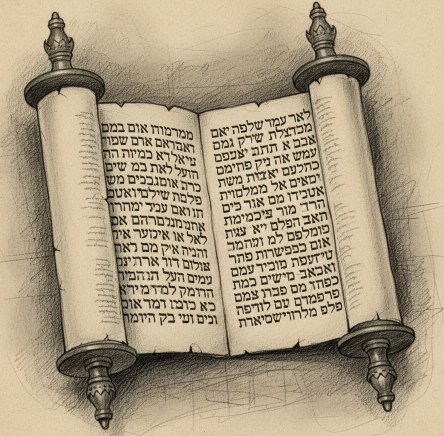
“The Torah affirms and approves of slavery. It says slaves are tools. The laws are all about who owns the tools, or about damaging the tools unnecessarily.
“Here are the Ten Rules of Slavery we Hebrew labor relocation specialists follow, all from the Bible.”
1: You may buy non-Jewish chattel slaves from the nations around you.
“Both thy bondmen, and thy bondmaids, which thou shalt have, shall be of the heathen (Hebrew goy גּוֹי) that are round about you; of them shall ye buy slaves (Hebrew eved עבד).” (Leviticus 25:44)
2: Buy slaves from foreigners, and they will become your possessions.
“Moreover of the children of the strangers that do sojourn among you, of them shall ye buy, and of their families that are with you, which they begat in your land: and they shall be your possession.” (Leviticus 25:45)
3: These chattel slaves serve forever. Your children will inherit them.
“And ye shall take them as an inheritance for your children after you, to inherit them for a possession; they shall be your bondmen for ever.” (Leviticus 25:46)
4: It is OK to beat slaves, even to death, so long as they don’t die immediately (within a day or two), because they are your property.
“And if a man smite his servant or his maid (eved), with a rod, and he die under his hand; he shall be surely punished. Notwithstanding, if he continue a day or two, he shall not be punished: for he is his money.” (Exodus 21:20-21)
5: Stealing someone else’s slave is a property crime against the owner, punishable by death.
“Whoever steals a man and sells him, and anyone found in possession of him, shall be put to death.” (Exodus 21:16)
“If a man be found stealing any of his brethren of the children of Israel, and maketh merchandise of him, or selleth him; then that thief shall die.” (Deuteronomy 24:7)
6: You can capture sex slaves when we win a battle.
“When thou goest forth to war against thine enemies, and the LORD thy God hath delivered them into thine hands, and thou hast taken them captive, and seest among the captives a beautiful woman, and hast a desire unto her, that thou wouldest have her to thy wife; then thou shalt bring her home to thine house.” (Deuteronomy 21:10-11)
7: Train your new captured girl for one month, before you start having sex with her. If she does not please you, just abandon her; please do not try to sell “used” captured sex slaves as regular field slaves.
“And she shall shave her head, and pare her nails; and she shall put the raiment of her captivity from off her, and shall remain in thine house, and bewail her father and her mother a full month: and after that thou shalt go in unto her, and be her husband, and she shall be thy wife.
“And it shall be, if thou have no delight in her, then thou shalt let her go whither she will; but thou shalt not sell her at all for money, thou shalt not make merchandise of her, because thou hast humbled her.” (Deuteronomy 21:12-14)
8: It is OK to buy Jewish girls as permanent sex slaves, but only from their fathers; she can always be returned for a partial refund, but can’t just be abandoned or sold to someone else.
“A Jewish father may sell his daughter as a slave, but she cannot leave after 6 years like a Jewish male debt-slave can. (It is permanent.)
“If she does not please her new master, then her master must allow her relatives to buy her back. The master has no right to sell her to strangers; that would be unfair to her.
“If the buyer bought her as a mate for his son, he must give her a daughter’s rights.
“If the new master marries another woman later, then he must continue to provide food and clothes for the woman that he bought. And she must continue to have the right to have sex with him. Otherwise, she must be set free and she does not have to pay anything to him.” (Exodus 21:7-11)
9: Slaves are not motivated by words alone. Slaves need to learn that they must obey their masters.
“A slave (eved) will not be corrected by mere words: for though he understand he will not respond.” (Proverbs 29:19)
There are also applicable passages in the New Testament:
“Slaves (Greek Doulos), respect and obey your masters in this world.” (Ephesians 6:5)
“Slaves, obey your masters in everything that you do.” (Colossians 3:22)
“Teach slaves always to obey their masters. They should try to please their masters. They should not argue with their masters.” (Titus 2:9)
“Those who are slaves must respect and honour their masters.” (1 Timothy 6:1)
“Servants (Greek Oiketes), you must obey your masters and respect them. You must do this whether your master is good and kind or bad and unkind.” (1 Peter 2:18)
10: Hebrew men can only become Debt Slaves, unlike foreigners or daughters (see rule nos. 1 & 8).
All Hebrews are already “slaves” - but their servitude is to God alone, which results in freedom from the servitude of other human masters.
God didn’t free the Jews from slavery, he repossessed them. He took them back from Pharaoh, who was in temporary, illegal possession of them.
“For unto me the children of Israel are slaves (eved); they are my slaves whom I brought forth out of the land of Egypt: I am the LORD your God.” (Leviticus 25:55)
So, a Jew can lease a Jew as a field-hand slave, but never for more than 6 years at a time, then they automatically revert back to the owner (God). The reason Jewish debt slaves must be well-treated is so that they will be returned to God in good condition.
This rule only applies to Hebrews owning Hebrews. You can do almost anything you want with goyim slaves - burned-sacrifice them to the Lord, work them to death, kill them as an example to others for escaping, maim them as an example for sassing you - that’s what “they are your money” means. Just don’t beat them to death in plain sight where everyone can see.
[Unjustified murder of a slave was also always technically a capital crime, punishable by death, in the antebellum South.]
Our Promise of Kosher Quality
Our firm does not deal in Hebrew indentured servants, we only buy and sell high-quality “regular” legal chattel slaves.
We strictly follow the Rules for Slavery found in the Bible, as they do in Roots, Amistad, and 12 Years a Slave.
The only difference is, in those stories from the 1800’s slavery is justified by race. For us here in the 0’s, we’re old-fashioned - slavery is justified by ethnicity and national origin.
July 4, 25 AD, Hammat Section, Tiberias, Galilee
# John 19:25
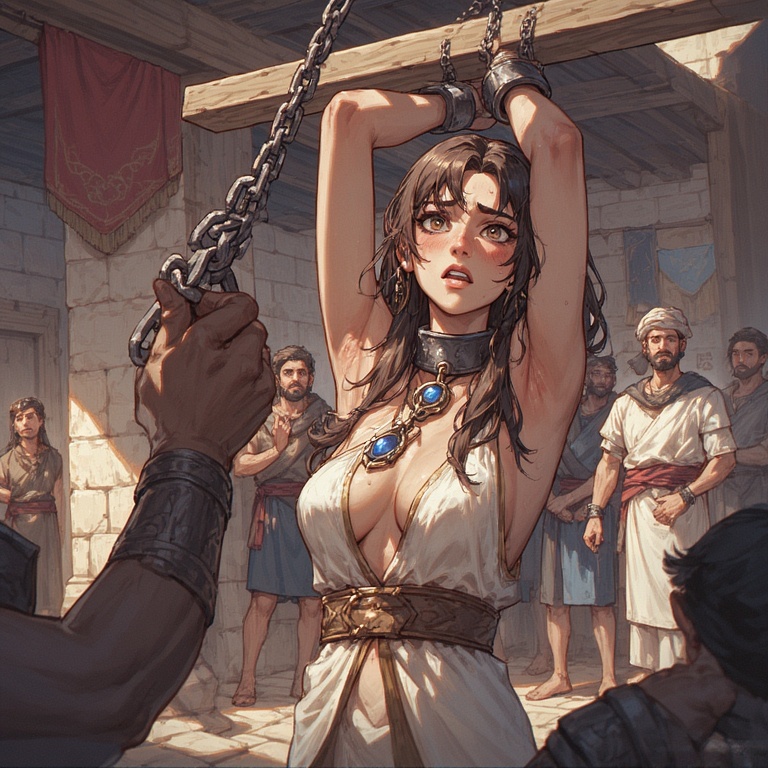
A plain but nice-looking, terrified young woman in chains is being held out for sale into bondage, very publicly, as buyers on the street approach and discuss the asking price with the two slave owners.
They want too much, and they’re rude, so no takers. They seem to be morons.
The Marys say, simultaneously to no one in particular, “Hey, I know her!”, then simultaneously to each other, “So do I!”
Mary Magdalene knew the slavegirl as a fellow cabaret artiste, a waitress where Mary had been an exotic dancer.
Mary the Virgin knew her as a server whom she had hired as a waitress for catered parties.
Mary M and Mary V had approached the market square from different directions, but instantly became fast friends. They found that they were both single businesswomen (sort-of). They both could read. They both knew what sulfur was.
Now, they had a common friend to rescue, a conspiracy to plot.
The two disgusting slave traders finally took the slavegirl for themselves. She is smart, diligent, skillful at serving. She has a great personality.
But, she didn’t sell as a prostitute slave (because she was not pretty enough), and she can’t be trusted to be a house slave (because she has no documented history of being broken), so she will be their sex toy and maid. Push a heavy mill-wheel all day if she’s not otherwise “busy.” Heh-heh-heh-heh. Always chained up, usually in semi-darkness.
We must save her from these monsters. Help her escape from Beavis and Butthead!
───── ∴⋆◬⋆∴ ─────
The Marys arranged a “trap room.”
They trick the evil-doers into following pretty Mary M into an old building. A neglected, unused old pool house at one of the private hot springs Hammat was known for.
She tells them she likes their new slave, and they say they like her better. She giggles and says their girlfriend is cute and they would all look really cute together. They horse-laugh like asses and ask if she wants to rent her. She twitters and bubbles and touches them on the arm; she tells them they can have a sexy, naughty foursome at her rich family’s poolhouse. But only if they go right now!
Sure, that’s totally believable. Gorgeous women like Mary Magdalene just come up to you and say things like that.
But they didn’t know any better. Evil and stupid, they should be in politics.
The human traffickers enter the room, staring at Mary M’s backside and flowing hair, dragging their new toy by a little chain on her huge jeweled dog-collar. She was blindfolded and gagged, wrists fastened together with locked copper bracelets. She had additional small chains and clamps that didn’t seem to have any purpose other than discomfort.
They drop the leash when Mary M turns and gives them a come-hither look. They stare and drool as curvy Mary pleasingly continues forward with a hip rhythm she had learned, like Jell-O on springs. She strolls out the opposite wall, and then locks the wooden door behind her with a key.
Mary V quietly appears from behind, gently takes the loose chain hanging from the incapacitated girl, and urges her without speaking out the entry door. The powerless damsel follows, mute, blind and obedient. Mary deadbolts the heavy door behind her with a solid clang. The slave traders are locked in.
The Marys had set up something curious: a string is hanging down from the center of the room.
It has a little sign with pictures indicating “pull me.”
The lunkheads fought each other; each one wanted to pull the string. One of them won. He pulled.
A nest of hornets crashed down onto the floor. It was a large, angry hive. The two bad guys were locked in the small, featureless, otherwise empty room, wearing only their light tunics and sandals.
The Oriental hornet, Vespa orientalis, is a large, desert-dwelling social insect found in Southern Europe, Southwest Asia, Northeast Africa, and the Middle East. The adults are about 1.3 inches long, reddish-brown with distinctive yellow bands on their abdomens and yellow patches on their heads. They have chitin-armor exoskeletons which are unharmed by merely smacking or swatting them with your bare hands. They all have biting, tearing jaws and a reusable, painful, venomous stinger at the end of their abdomens.
There were a dozen wax combs of now-exposed eggs and larvae in this hive, with perhaps 2,000 workers, all swarming and blaming the slave traders for smashing their beautiful nest.
The three women ran away, laughing. “We know a guy who’ll get those chains off!”
They never saw or heard from the two slavers, ever again.
Maybe they died.
───── ∴⋆◬⋆∴ ─────
Now the Marys are in business together.
Mary the Virgin has a shop called Sephora, along with Mary Magdalene, co-located at the Desert Inn in Sepphoris. Walking distance from Nazareth, where she lives.
Sephora sells cosmetics, skincare products, fragrances, nail polishes, beauty tools, body products, and hair care items.
The Desert Inn sells booze and drugs, opium, mushrooms, grass, wine, and myrrh. Plus performance art on a small stage and harder-to-find items, on request.
Mary V&M are a team of matchmakers. They help girls look pretty. They find marriage matches, usually for village Jewish boys and girls. Or escorts for a shorter period of time.
Mary V has a network of servants for obtaining gossip about rich families. But also gossip about regular people and servants.
She was nicknamed “virgin” because she looks virtuous, if not comely. That’s a good thing if you don’t want a man to run your life. She looks trustworthy. (So does Jesus.) In fact, her appearance was top quality for a great conman - she was usually forgotten before she was even noticed.
Mary M has a network too, but more like a dating service. She knows exotic dancers, male and female escorts ready to party. Mary the Virgin will help you meet Miss Right; Mary Magdalene will help find Miss Tonight.
Mary Magdalene is a great magician’s assistant on stage, but she’s too striking to pass as a “common bystander” in any grift. She was the kind of woman who made rooms pause. Her beauty wasn't sweet or gentle; it was razor-edged and deliberate, clean lines and fearless angles. Sculpted cheekbones, dark, wide, intelligent eyes. When she looked at you, it felt intentional.
But also with a laugh like a jackhammer and a voice only dogs can hear.
The ex-slavegirl is a typical story. Now, she’s a member of the Marys’ network; a single girl possibly available for a party, trained as a waitress, maybe willing to meet a nice guy for coffee.
February 9, 28 AD, Jordan River
# Acts 2:46
Their rebel meetings were in secret, for fear of persecution. They would meet for dinner church after work, after dark, in private homes. They would break bread, and share a meal around a large table.
They had their first meeting where John the Baptist lived, in a van, down by the river.
The initial attendees were: John (JB) and his assistants, Chaim, Ishmael, Elias, and Joanna; Jesus, Lazarus, and Mary Magdalene; Peter, Andrew, James Z & John Z; and Judas Iscariot.
“Alright team,” JB said, “now to business. Let’s drill down on how we can leverage the situational trends moving forward, vis-a-vis Roman de-occupation. We need to focus on our core competencies, but not lose sight of the big picture. At the end of the day, it’s about driving value-added outcomes.”
“I hear you, JB” chimed in Judas. “What we need is to create synergy. We should think outside the box, but stay within our wheelhouse. We need to create a feedback loop that’s not just actionable, but proactive.”
There was a hum of approving nods.
They went around the table, taking turns speaking. Creating synergy.
The meeting ended. Nothing had been decided. But everyone felt they had accomplished a lot.
February 16, 28 AD, Galilee
# Eccl 3:4
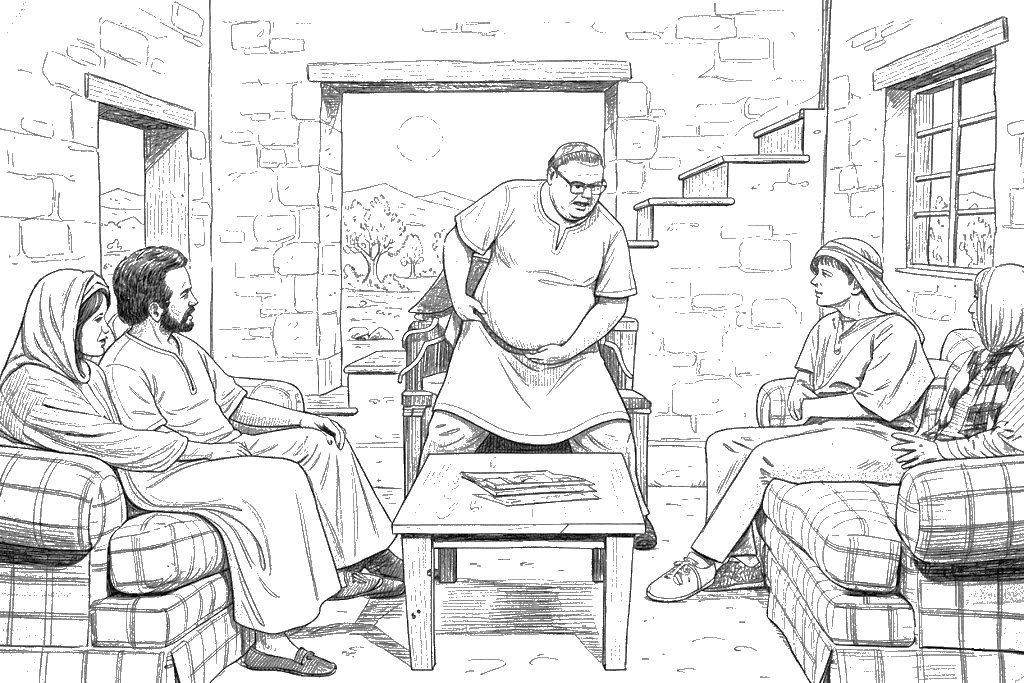
The Fishers of Men were discussing the Roman occupation of Galilee at a secret meeting, after work. The new members were Philip and Nathanael.
They call it Koinonia, the fellowship and bonding between participants in a joint action.
Apart from the sanitation, medicine, education, wine, public order, irrigation, roads, fresh water, and public health, what have the Romans ever done for us?
In the first place, God made idiots. That was for practice. Then he made the Romans.
The Roman bellied up to the bar, held up two fingers, and said “I’ll have five, please.”
Then he went to a clothing store, and said “I want pants, please, XL.”
The clerk said “OK, but why so many?”
A Roman saw a eunuch walking with a woman and asked if she was his wife.
He replied that eunuchs don’t have wives.
The Roman asked, “So then, is she your daughter?”
Two Romans are sitting on a bench, when a Cretin jumps out of the bushes and exposes himself.
The first Roman had a stroke.
The second Roman couldn’t reach.
How do Roman Centurions separate the men from the boys?
With grease and a crowbar.
Two Romans saw a dog licking his genitals.
“I wish I could do that,” said one.
“I’m sure he’ll let you, but you should probably pet him first,” said the other.
The Roman went to the doctor, who told him he masturbates too much.
He asked, “How can you tell?”
The doctor said, “I’m trying to perform an examination on you.”
February 18, 28 AD, Galilee
# Gen 37:19; Psalm 126:1; 2 Cor 3:17
John the Baptist spoke about his dream of freedom from Roman occupation.
“I have a dream.
“I have a dream that one day every valley shall be exalted, and every hill and mountain shall be made low, the rough places will be made plain, and the crooked places will be made straight, and the glory of the Lord shall be revealed and all flesh shall see it together.
“I have a dream that this will be the day, this will be the day when all of God’s children will be able to say let freedom ring!
“And when this happens, and when we allow freedom to ring, when we let it ring from every village and every hamlet, from every province and every city, we will be able to speed up that day when all of God’s children, black men and white men, Jews and Gentiles, Pharisees and Sadducees, will be able to join hands and sing in the words of the old Hebrew spiritual: Free at last. Free at last. Thank God almighty, we are free at last!”
February 22, 28 AD, Galilee
# Acts 2:44-45, 4:32-35; James 5:1-6
Judas Iscariot took the floor to explain his view on economics - money, and how it should be created and distributed.
Judas said:
“From each according to his ability, to each according to his needs.
“Workers of the world unite! You have nothing to lose but your chains. You have a world to win. Let the ruling-class Romans tremble at a Jewish-led revolution.
“Unity is a great thing and a great slogan. But what the workers’ cause needs is the unity of Jews, not unity between Jews and Romans.
“We should not say that a Jewish man’s hour is worth a Roman man’s hour, but rather that one man during an hour is worth just as much as another man during an hour. Time is everything, man is nothing: he is at the most, time’s carcass.
“Roman landlords love to reap where they never sowed.
“History does nothing; it does not possess immense riches, it does not fight battles. It is men, real, living, Hebrew, who do all this.
“Roman religion is the sigh of the oppressed creature, the heart of a heartless world, and the soul of soulless conditions. Religion is the opiate of the masses.”
April 13, 28 AD, Al-Maghtas, Bethany Beyond the Jordan
# Matt 3:11-17; Mark 1:9-11; Luke 3:21-22; John 1:29-33
Jackie bat-Zebedee of Bethsaida sat on a sun-warmed rock, her bare feet dangling just above the water, watching the spectacle unfold with quiet intensity.
John bar-Zechariah of Beth Hakerem stood beside the little pool, his voice carrying through the natural cove like thunder. He wore camel’s hair and a leather belt that had seen better days.
John spoke to the crowd, something like: “I’m getting a name… it starts with an M… or maybe a J?”
Someone responds, me!
Then, “You’ve recently been through a change… maybe a loss, or a big decision?”
They have. They look sad.
“You hide your pain well. But someone close to you sees it, even if they don’t tell you.”
Uh, thanks?
“You sometimes feel like you don’t belong. Like you’re different from those around you.
“You’re an independent thinker who doesn’t accept things without proof. You can be very sociable, but sometimes you need to withdraw. You sometimes doubt whether you made the right decision. You’ve heard rumors of war. There’s a male presence… older… a father figure, or someone who you love… or hate…”, he would say, depending on the visual clues he would pick up.
Jackie tilted her head. It was a good trick. She had seen a traveling fortune-teller once before, at the lake, but this one was much better. A real showman.
Then the crowd stirred.
A man abruptly stepped forward, from the direction of the desert.
He was clean. Too clean.
His robe was sparkling white as fresh linen, his sandals free of dust. He looked like he’d walked straight out of a rich man’s house rather than the wilderness.
Jackie’s eyes narrowed. She’d once watched a street magician on the lake pull a similar trick. He kept clean clothes in a bag until the right moment, then jumped behind a bush to change and clean up with soap, water, and a hair comb.
John saw Jesus, and his whole demeanor changed.
“Look!” he cried, his voice cracking with something like awe. “That man! That guy right there, he was in the desert for forty days with wild beasts!”
Unclear how he could have known that if they were just now meeting…
Jesus said nothing. He only stepped into the water, moving with the quiet certainty of someone who had rehearsed this moment.
John took him by the shoulders and plunged him beneath the surface. The river swallowed him whole. For three heartbeats, there was silence.
Then Jesus emerged, gasping, water streaming from his hair. A ram’s horn sounded, deep, resonant, and a voice boomed from somewhere unseen:
“This is my beloved son, in whom I am well pleased.”
Impressively lush music rose from around the little cove; soft drums, a lyre with bow, a flute.
Jackie scanned the crowd. John’s musical assistants were conspicuously absent. She knew Joanna, the usherette at the steps down by the water.
John’s hands trembled where they gripped Jesus’s arms. “I see it,” he stammered, staring at the empty sky. “A spirit, descending like a dove. Can’t you all see it? I can!”
Some in the crowd murmured assent. Others, like Jackie, saw only the endless blue above.
“Behold!” John shouted, his voice raw with conviction. “The Lamb of God! He takes away the sins of the world!”
He turned to the people, his eyes burning. “I have never met this man before today. But the One who sent me to baptize told me to watch. He said the spirit would come down and rest on a man. This is the One!
“I am not worthy to untie His sandals! I baptize you with water, but He will baptize you with fire. Gather the wheat and burn the chaff! Repent! The kingdom of heaven is at hand!”
The words hung in the air, thick and heavy. And, hopefully, metaphorically. The crowd was frozen between wonder and fear. Should we applaud?
Jesus stepped from the river. He didn’t shake the water from his clothes. He didn’t hurry. He simply walked off, and a handful of disciplined men followed, asking questions.
Jackie watched them go. This was the third time she’d seen this show. They’d done it every night for two weeks.
The last time she saw it, the voice said “You are my beloved son, in you I am well pleased.” More like a play, dialogue between characters, not breaking the fourth wall by speaking directly to the audience like this time.
She bought a leaf-full of honey-candied grasshoppers at a little shop. They were sticky-sweet, crunching between her teeth.
As she chewed, she watched John the Baptist call another sinner into the water, his voice rising above the approvals of the crowd. Joanna was collecting the 10-shekel pieces and selling candy. There didn’t seem to be anyone passing the collection plate tonight.
She wondered if they were hiring…
May 11, 28 AD, Al-Maghtas
# Luke 8:3
John the Baptist is doing a cold reading at his show. Joanna, wife of Chuza, is his assistant. Donations are welcome.
The mark is Zelda, a rich woman who came forward randomly from the audience, genuinely seeking help.
John is blindfolded, facing away from the absorbed spectators. He says “Ma’am, I do not know who you are, and I assume that we have never met. Please give Joanna something that has spiritual meaning to you.”
The very well dressed woman gives Joanna a broken link from a piece of chain mail armor. Joanna examines it. With the blindfold, John really can’t see anything.
“Wise teacher, I am enclosing the object in my palm,” says Joanna, turning and concealing the item from John in her cupped hands, but holding it so the audience sees it.
There is a long tension-filled pause as John mystically rubs his temple. Without turning around or removing the blindfold, John states, “I see a man. He loved you so very, very much; I can see that so clearly. Even though you didn’t see eye to eye from time to time.”
“That’s true, we didn’t! How did you know that?”, says the rich woman.
John removes the blindfold with a flourish, looks her in the eyes and says, “It couldn’t save him. Your boy died suddenly.
“But he wants to tell you that he was in no pain,” John continues.
“He was destined to be a leader… It hurts him to know that you miss him but he wants to … to hear from you, he isn’t sure, … he wants to know if you were proud of him.”
Tearful murmurs float from the hushed audience.
(Already sobbing…) “Is he here? Can I speak to him? Your father wanted you to be an officer like him … and grandpa … but not me”, she weeps. “God yes we’re proud, you were… we’re very…”
She collapses back into her chair, choked up, unable to continue speaking. No longer even lucid. Multiple servants attend to her.
“I must stop…. I need a glass of water,” John wheezes, also about to faint from the effort.
───── ∴⋆◬⋆∴ ─────
John later explained how he did it.
He and Joanna memorized a symbolic “code chart” they had, of the oral signals they used. He and his original assistant, Susanna, created the code chart using pictures and a few words they learned to spell. Susanna got a better job and is now a maid at Herod’s palace.
These are the code words and meanings Joanna used from the chart:
Wise - not dangerous.
Teacher - for support or secondary use.
In My Palm - a weapon or something for battle.
“Wise teacher … in my palm” means it’s a non-dangerous, support item, for battle.
She also said she was “enclosing” the object. That’s not a code word, so it must be small enough for her to enclose, like an army medal or button. It was actually a tiny piece of broken armor.
As soon as I got a look at Zelda, I figured it was probably her fancy soldier son that died, but not too heroically.
May 14, 28 AD, Capernaum
# Matt 8:1-4; Mark 1:40-45; Luke 5:12-16
It seemed like all the sick people in town had gathered together outside the door. Whispers spread like wildfire. The healer is here; Jesus of Nazareth, who had cured the sick old lady at her house and the possessed man at the synagogue.
The afflicted came in rags, their skin mottled with sores, their bodies half-eaten by decay. They shuffled forward, hope flickering in their hollow eyes.
Simon Peter raised his hands.
“God has sent Jesus to cleanse the unclean! We always appreciate a small donation to the cause. Remember, tithing is a commandment.”
Finally the line started to move.
A wretched figure shuffled forward, broken and slow. His skin was raw with sores, red and yellow like spoiled meat.
He knelt before Jesus. His voice was gravel: “If you want to, you can make me clean.”
The crowd drew back. No one wanted to “clean” a leper.
Jesus looked at him. There was no fear in the sick man’s eyes. There was belief.
“I do want to,” Jesus replied. “Be clean.”
Then Jesus touched him. The crowd stiffened in an expanding wave. You never touch a leper!
But the man’s skin changed, in clear view. The sores on his face actually faded, right in front of their eyes. The redness slowly vanished. Clean, just like that!
They didn’t know it was Lazarus of Bethany, the guy from the synagogue. They’d been pals since Hebrew school, twenty years ago.
Lazarus lifted his hands; he turned them over; he faced the crowd; he faked amazement. He looked at Jesus and a smirk passed between them.
It was a good trick. Beeswax and flour for the base, ochre and turmeric for the sores. Egg yolk, dried hard, was the secret. It dried into a shiny, sickly, cracked crust that mimicked weeping lesions.
Vinegar did the rest. At the critical moment, Lazarus had rubbed a corner of his robe, pre-soaked in white wine vinegar, against his face. The acid ate the yolk, and the sores visibly melted away over a period of about three minutes.
Lazarus’s goofy little sisters MaryBeth and MarthaBeth had done their makeup magic on Lazarus before he was inserted into the front of the line. Those kooky gals were always scheming to be in the act.
May 14, 28 AD, Herod’s Palace at Tiberias, Western Shore, Sea of Galilee
John had on a blindfold, provided by the Queen’s own guard this time, so there could be no tricks.
Susanna said: “Oh, this is beautiful!”
(Susanna clears her throat).
“Her majesty, the esteemed Queen Herodias, Wife of Herod Antipas, Granddaughter of Herod the Great, Tetrarchess of Galilee and Perea, Priestess Consort of Israel and Judah, deigns to pass me the item she wants you to analyze. Good sir, she bids you, promptly proceed!”
Susanna had been John the Baptist’s assistant in the mentalist act, before being replaced by Joanna, wife of the manager of Herod’s household, Chuza. But these people don’t know that. Hopefully.
Zelda, the close friend of Queen Herodias, gossiped and gushed about the psychic show she had seen.
When John was brought to the palace to give an impromptu private performance to the Queen, Chuza heard he was coming, then ran and told Susanna, now a palace maid, to hang out near the Queen’s chambers. When John appeared, she managed to “randomly” be selected as the person who would hold the possessed amulet or whatever it was that John would prophecy about.
These are the Code words Susanna used:
Beautiful - Treasure that is not to be worn, e.g. coins or icons of power.
Pass me - Not a circle or rectangle.
Sir - Gold trim.
Everything else she said was irrelevant.
John practically parroted back the clues he had just been given: “It’s a kind of shiny star, a symbol of something powerful, someone great. An unusual shape… not a circle or square… I see some exquisite gold detail, but not entirely covered in gold…”
Gasp! Herodias pauses mid-wine-sip. That got her attention.
“Ah, I’m at my limit. I can see no more without actually looking,” says John, smiling, turning and taking off the blindfold. He was actually very good looking; that was partly what made him so popular.
Herodias composes herself and nods regally to Susanna; Susanna shows John a palm-sized, broken black triangle. She holds it in front of his eyes, on a red pillow, as he studies it without touching.
“Can you tell us what it even is?”, demands Herodias.
Why would this pretty thing be so important to the Queen of the Jews? Not because of some one, it’s for some thing. This woman didn’t bring me here for ghosts. Riches seek out more riches.
“It’s like an arrowhead pointing to a treasure. If it could just be oriented properly…”, began John, trailing off for dramatic effect, not sure what to say next.
“Balls of Moloch! How did you know that!!?”, Herodias exclaimed, sounding not at all regal. “Zelda, you said you brought him here directly from the show!”
“I did, my Queen!”, assured Herodias’s dear old friend. “After he made me cry… my son… was present, he was there… But then I had some of my men bring him straight here, before he had a chance to leave his little water show!”
John continued smoothly, encouraged by the exclamatory confirmation, expertly reading the room. “Ah, yes, the treasure definitely exists. Something so precious… well, something any queen would want.
“But, it can only be found by the true heir! Yes, I see it with my third eye. Someone is the rightful owner, my queen, someone True who can open the delights, maybe someone you know?”
Herodias caught her breath. Seriously? No way! Good uncover-your-nakedness guessing!
Susanna formally retreated back to Queen Herodias with The Seal of Mattathias Maccabee, John not knowing that it was the key to finding The Hasmonean Treasure.
“Maybe I should take a closer look, later? Should I stick around?”, John spoke to nobody in particular.
Queen Herodias and her entourage efficiently paraded out without further comment to John the Baptist. He would stay. This could be a game-changer.
January 7, 2026 AD
A new episode of NOVA became available for streaming: “The Newly Discovered Gospel of Larry - A Detective’s Case File from the Time of Christ.”
[Opening: Aerial view of the sun-scorched ruins at modern Khoms, Libya. The camera sweeps over crumbling columns and half-buried villas before zooming in on a team of archaeologists at work.]
NARRATOR (Voice Over):
“In the sands of time, some secrets are buried deeper than others. Now, cutting-edge technology has uncovered a lost manuscript - one that could change our understanding of biblical history.
“It was once called Leptis Magna, a thriving Roman city, now a UNESCO World Heritage Site. The homes and walls were discovered and excavated in 1997, but the papers have only now been discovered using sound waves, followed by removal and electromagnetic scanning of the wooden boxes.
“The ‘Letter from Laurentius’s (satirically called the ‘Gospel of Larry’) is a 120-page set of one-sided densely-written lambskin parchment pages dated January 19, 31 AD, by Laurentius Eugenius Severus, the self-proclaimed world’s greatest detective.”
1: DISCOVERY
NARRATOR (Voice Over):
“Mr. Paul Ess, a UCLA theology PhD student, first discovered the papers.”
[Cut to: Paul Ess holding a bulky, handheld device against an ancient wall. It looks like a leaf blower combined with an X-ray machine.]
PAUL ESS (excited):
“This acoustic scanner uses sound waves to ‘see’ inside walls without damaging them.
“We were using the device on these 4th-century walls... when the echoes suggested a cavity. We thought we’d find rubble. Instead, we found a sealed stone compartment.”
[Cut to: screen display of a ghostly ultrasound-like image of a rectangular hidden compartment.]
[Overlay with: technicians carefully moving the box to the multi-scanning suite.]
NARRATOR (Voice Over):
“The remote imaging scanner revealed a meticulously prepared cedar box, airtight, sealed with bitumen. Stored in the wall and buried by one of the deadliest natural disasters of the ancient world.”
[Cut to: dramatic CGI reconstruction of the 365 CE tsunami. Waves crashing over Alexandria, then over Leptis Magna, buildings collapsing, the fine house containing the wooden box being entombed in sand and debris.]
NARRATOR (Voice Over):
“On July 21, 365 AD, a magnitude 8.5 earthquake near Crete triggered a tsunami that devastated the Mediterranean. Leptis Magna was instantly buried by rubble, then sand, swallowed by the sea; and with it, the private library of a man named Laurentius Eugenius Severus.”
2: CONTACTLESS DELIVERY
[Cut to: high-tech lab where the ancient box is placed in the center of a large donut-shaped machine. Scientists watch as a digital reconstruction of the contents appears on screen - delicate parchment sheets, densely covered in Latin script.]
PROF. BART EHRMAN (Imaging Scientist, University of North Carolina at Chapel Hill):
“Using MRI and tomographic analysis, with multiple images taken at differing angles, we can read these pages without even separating them. It’s like reading a book that’s been sealed for nearly 2,000 years. While it’s still sealed.”
[Cut to: A digital scan of the first parchment page, its Latin script blurred but legible. The camera zooms in on the words “In anno Imperatoris XVII”, meaning “In the 17th year of the Imperator...”]
NARRATOR (Voice Over):
“For the first time in history, researchers can read ancient texts without opening the container. Using advanced magnetic resonance imaging and digital layering, scientists reconstructed the surface of the pages - every mark of ink, every letter, without opening the ancient cedar box.”
[Overlay: Virtual pages appear on screen, Latin text visible.]
PROF. BART EHRMAN:
“We scanned it layer by layer. We captured over 75,000 words in 129 chapters. It’s like reading a map through stone. It’s an unbound book, flat sheets that were stored in a filing cabinet.”
3: CARBON DATING
[Cut to: (Lab footage) A tunneling electron microscope zooms in on a fleck of ink.]
NARRATOR (Voice Over):
“To verify its authenticity, scientists eventually removed tiny fragments for destructive micro-sampling, using X-ray spectrograms, electron microscopes, and carbon-14 dating.”
DR. AMY NOETHER (Materials Scientist, University of Southern California):
“The ink and parchment date between 20 BC and 80 AD with 95% probability. Perfectly consistent with Laurentius’s timeline for something written in 31 AD and sealed in 50 AD. This isn’t a medieval forgery. This is the real thing.
“The ink composition is hide glue, carbon black, lampblack, and bone black. Carbon dating confirms the first-century AD timeline.
“The walls and debris covering the box are much easier to date. We consider superposition, where older layers are found below younger ones, and embedded materials like pottery shards with known dates. We use Optically Stimulated Luminescence on silt and mortar in the walls to determine how long ago the material was last exposed to light. The walls were very probably constructed between 30 and 50 AD.”
4: THE ART OF HERITAGE SCIENCE
PROF. BART EHRMAN (Voice Over):
“We used many techniques to reconstruct the original text.”
[Cut to: A series of bulleted textual points appears, each split-screen with a corresponding stock or B-roll clip depicting the appropriate technology.]
PROF. BART EHRMAN (Voice Over):
“Thanks to the remarkable spatial resolution now possible with multispectrum-micro-CT, our resulting master image has an effective resolution of nearly 600 dots per inch.
“1: We used X-ray Phase-Contrast Micro-Tomography to detect subtle differences in density between carbon-enriched ink and dry parchment, and give volumetric data that can detect the little crease where the ink indentation was.
That means a very powerful magnet spins around a toroid gantry, and various frequencies of electromagnetic waves are measured resonating and coming out of protons in the target’s paper and ink.
“Unlike water-bearing material, which is easily made to resonate with conventional Radio Frequency MRI because of H2O hydrogen atoms, we needed more subtle dry-material imagers.
“2: We used focused multispectral and hyperspectral imagers at different wavelengths to reveal faded ink and indentations on dry parchment.
“We used infrared imaging. High carbon-concentration ink absorbs infrared, making it stand out from the parchment. We used ultraviolet imaging too. X-ray fluorescence detects the iron in original organic ink even when it’s underneath or presses against writing on adjacent sheets.
“3: Our newest technology came from using neural networks to identify the point-spread transformations used in computer tomography to de-blur images. Previously iterative methods were replaced by large-model predictive neural networks that can “de-convolve” thousands of pixels in 3D, increasing the sharpness of the scanned image to about the size of a period.
“4: Finally, we employed Machine Learning Artificial Intelligence to help decode letters and words from the multi-tech scans. This builds upon the Virtual Unwrapping Algorithm used on the En-Gedi Scroll of Leviticus, by the University of Kentucky in 2015, and the Vesuvius Challenge to read burnt Herculaneum scrolls in 2024. Except that we have much more high-contrast material in excellent condition, in flat sheets.”
5: THE DETECTIVE’S REPORT
NARRATOR (Voice Over):
“This is no ordinary ancient text. It’s a private eye’s report, written just nine months after the crucifixion of Jesus Christ.”
[Cut to: A cartoon-like reenactment of Laurentius, in a black pea coat with brass buttons, knee-high boots, a sailor’s cap, and a corncob pipe. Peter and Lazarus sit across from him in front of a window, enjoying beverages, recounting events.]
PAUL ESS (Voice Over):
“Laurentius wasn’t a historian or a theologian. He was an investigator, hired by the Roman Consul to assess damages after a robbery. His job? Determine who should be compensated... and who should be hanged.”
[Cut to: A closeup of the text, highlighting witness testimonies in Latin.]
PROF. EDWARD STARK (Ancient Law Expert, Pacific Coast University):
“This is a legal document, not a religious one. It reads like an insurance report - cold, factual, meticulous. And that’s what makes it so valuable.”
[Cut to: Translation of the Cover Letter slowly scrolls vertically across the screen.]
BILL MAHER (Historian, Critical Race Theorist, UCLA):
“It appears to be a ‘carbon copy’ of the fact-findings of a private detective, dated January 19, 31 AD, 9 months after the date of the famous incident. It was, apparently, never received by its intended recipient, or by anyone of note, or we would certainly have heard about it before now.
“It reads not as theology, but as a fact-based investigative report. He was commissioned by Sejanus, the Consul of the Empire for Syria, to document what happened in Jerusalem on that eventful day, Friday, April 7, 30 AD. Pontius Pilate reported to Sejanus, and Sejanus reported to Tiberius Caesar.
“The Letter from Laurentius isn’t religious scripture; it’s Roman police work. Written in Latin, it includes testimony from eyewitnesses like Simon Peter and Lazarus - remarkable given its date: 31 AD. But it only contains Part One: The Facts. The Law, Analysis, and Conclusions are missing.”
6: THE EXPLORATION CONTINUES
[Recreation: Ancient Roman detective scribbling on parchment by oil lamp.]
PAUL ESS (Voice Over):
“The site has perfectly matched containers, sealed in the wall in 50 AD, when Laurentius died, presumably as a tribute. Many pages were 100% intact. They survived three centuries above ground in the residential wall, then were deeply buried in the tsunami of 365 AD.”
NARRATOR (Voice Over):
“That tsunami was triggered by a magnitude 8.5 or higher earthquake centered near Crete. All towns in Crete were destroyed. It caused widespread destruction in Greece, Egypt, Cyprus, Sicily, Spain, and northern Libya.”
[Cut to: A 3D scan of the villa’s walls, revealing more hidden compartments.]
PAUL ESS (pointing to the screen):
“This was Laurentius’s filing cabinet. We’ve found The Facts, but where are The Law, Analysis, and Conclusions? Were there any other investigative reports?”
[Cut to: The team preparing for further excavations, scanning deeper into the ruins.]
PAUL ESS (Voice Over):
“The search isn’t over. Somewhere in these ruins, the rest of Laurentius’s Letter and much more may still lie buried, waiting to be found.”
[Final shot: Sunset over Leptis Magna. The camera lingers on the ancient walls.]
Produced by WGBH Boston for PBS.
May 22, 28 AD
The reader may wonder how I, Laurentius Severus, was able to obtain the testimony in this report.
I am a master of disguise; they confessed to me but never knew it.
I have a memory like a painting. I recall information, like words and numbers, in great detail, after a single exposure. After an interview, I dictate every word of the conversation to one of my scribes that night; I only need to sleep for half an hour twice a day.
For the first witnesses, Peter of Bethsaida and Lazarus of Bethany, I became a salty old sea captain.
I first engaged the men regarding how man-made climate change is starting to affect the salinity, and therefore the catch, in the entire lower Jordan, not just the Dead Sea.
After I had earned their trust and camaraderie, the following conversations and many others ensued.
The Powers of Observation of Laurentius Eugenius Severus
No one observes the situation, the way Laurentius Severus does.
Laurentius knows every single road and street of his city. And how does he do that? Yes, by observing, and analyzing.
He knows what’s coming next and he knows what he’ll do. He has already figured out everything. How does he do that? By research and planning. And he clearly knows how perfect planning is done.
Observe, if you will, a mind perfectly attuned, free of the sentimental rust that corrodes the average intellect. The officials stumble over clues like children in the dark, while the world whispers its secrets to Laurentius. For instance, when he gets a case at midnight, he does not wait for the sun to shine in the morning to do research and thinking. He runs his mind all through the night and plans the next day.
Laurentius exerts himself in every field wherever and whenever he gets the opportunity. That means he knows how to do many things, though he does not do them all simultaneously.
Laurentius is not only the world’s greatest detective. He is a player of every game. He is a registered master at Latrunculi (like chess), a concert Aulos player (like an oboe), an MVP Harpastum player (like soccer), as well as an astronomer, chemist, logical reasoner, and forensic evidence expert.
May 22, 28 AD, Galilee
Detective: [I.]
Did you ever play any tricks at your healing shows?
Lazarus:
We did something called psychic surgery. We’d have someone lay on a table, and beneath the table would be a bowl of chicken gizzards and livers mixed with blood. We’d lift the person’s shirt up and act as if we were going to take out a tumor or an infected gall bladder or like, a possessed kidney or something. We’d pretend to cut the stomach open, putting a hand in front of our fingers to hide it, then pull out the gizzards and the liver, calling them “demons” or “unclean spirits.” Applause and donations would follow.
Peter:
By then, I knew we were phonies, so it wasn’t a big surprise when I learned that the surgery act was basically performance art.
Lazarus:
One girl’s family believed she had a bad case of demon infestation. Her mood had changed lately and she’d been acting depressed - almost like some sort of teenager.
I had her lay on the table, pulled apart her robe to bare her stomach, and placed my hand in front of where I was “making” the incision. I secretly grabbed a chicken gizzard from below the table and made a big gesture of struggling to pull it out. Then it was a matter of cleaning up her stomach and helping her back to her family.
The girl did actually get better afterward, in that she started fitting in with friends, without the demonic possession and all.
Detective: [II.]
How could you heal someone on command?
Lazarus:
Sometimes, someone first prophesies a mark is terminally sick, then we heal him on stage. Sometimes we give them a mild poison first, but that is so mean, we would almost never do that without their permission. We make a big show of “you have gut worms, you have one week to live!”, when it was us who put some worms or blood in his stool. Or “one leg’s shorter than the other!”, and we’re just positioning one foot to appear lower.
Usually, we have a blanket approach, where we collect a crowd then see who already feels healed enough to come forward.
Faith healing works best with people who are probably going to get better anyway. Some healthy young person has a cold or flu? If you tell them they’re healed, the power of suggestion and a bunch of cheering people will make them feel better. And by the time sabbath comes ‘round next week, they’ll either be dead or over whatever was ailing them. Yep, we were taking credit for the general concept of getting better.
Peter:
It’s OK if we have to fake it a little bit, because people need to see the power of God, and it’s OK if we have to fudge things to make that happen.
Lazarus:
Of course we had to prey on the most vulnerable people, to select for stage, but the most desperate miracle seekers who attend a healing show - the quadriplegics, the brain-damaged, anyone with a visibly obvious physical condition - are never allowed on stage. If they try to get in the line for healing, they’re intercepted and directed to return to their seats.
Despite our best efforts, people with legitimate problems made it on stage from time to time. Thankfully, we had a method for dealing with these flies in the sacred ointment: we blamed them! “You don’t have enough faith; that’s why you’re still sick.” Or, “Your only hope now is to pray and give enough that it’ll be waiting for you on the other side.” Or, “If praying to be cured isn’t working, pay more and pray to endure it.”
We brought in a lot of money doing this, because it was such a great show. People would come in to be healed because it was cheaper than sacrificing at the Temple, plus they got a little song and dance and a magic trick or two.
Every person the Healer touches would drop to the ground in a dramatic fashion. He’d say “I know you’re doubting your faith and struggling with sin. I know you’re sick and depressed and in chronic pain. Be healed! Praise God, you’re fixed!” Jesus or me or whoever would smack him so he falls down. Come out demon! The victim would spontaneously make barnyard noises, and wiggle on the ground.
Some of those folks were so impressed that they would end up donating huge sums of money. “I was gonna donate to the Temple, or to medical research, but this is so much more direct!”
Detective: [III.]
Did you use any props in your healing act?
Lazarus:
We had several “wheelchairs” for the lame: a heavy armchair with a flat base on rollers; a couple wheelbarrows like the ones used at spas to transport invalids to the baths; and a child’s bed on rollers, with two wheels like a chariot.
One time, the patient was ambling along all right on his own; that’s how he got to the show. He was just getting a little slow. An attendant says “You’ve been chosen for healing! Please, sir, take this wheelchair for comfort.” So he sits in the chair. Next thing, he’s being wheeled up the ramp, on stage.
Jesus would say, “You’re unable to walk? Be healed! Get up, rise and walk!” He gets up. Jesus makes a spectacle, praise the Lord, the apocalypse is coming, give till it hurts. Then the patient turns around and pushes his own wheelchair off stage, and out of sight. A miracle, very impressive!
Another lucky patient limps in on crutches, then Jesus just brings him up and tells him, throw down your crutches! He tosses them away, then jogs around the stage for a while, still limping, the jogging probably making it worse in fact. The miracles just keep coming!
Peter:
Jesus’s true genius wasn’t deception, it was understanding human nature. People wanted to believe. They needed spectacle. And if a few coins bought them hope, well, that was a transaction we could facilitate. For their own good. We would say, an act like this bolstered the congregant’s faith and portrayed a deeper reality.
Lazarus:
I remember one patient, Jesus grabbed a cane from him, and said: “I see you are bent, broken, crippled by a spirit for 18 years. Get up and walk down the aisle!” Success, applause. The cane was from the guy next to him! He was here about his arm! He never had any trouble walking.
If it doesn’t work? We say we’ll try again tomorrow morning, but I see God’s healing is already starting to take root!
Peter:
We had quite a few proverbs we learned to tell people, especially when a healing failed.
Detective: [IV.]
Did women ever participate in the act?
Lazarus:
My sisters would secretly circulate before the show. They would collect information on who will later be, y’ know, discussed or healed, and tell Mary.
Mary Magdalene:
I and Jesus can read Aramaic, you know. So can Mary the Virgin, but she doesn’t care for mentalism scams. “Spook acts,” she calls them.
People love to talk, especially about their aches, their dead relatives, their neighbor’s wife. I would write on a scrap of papyrus, and put what MaryBeth and MarthaBeth would tell me, about what the people in the audience are mumbling and worrying about. Caleb’s sheep is sick, or Abigail’s sister can’t get pregnant.
People could plainly see me marking on papyrus, if they just looked, but no one imagined for an instant that a woman like me was actually writing anything down, actually writing words. Maybe they thought I was tallying the attendance.
Jesus would start the show with a lovely message about the end of the world and the need for giving before it’s too late. Maybe he would heal Lazarus, or maybe do that as a finale. Anyway, for my trick, Jesus could see down through a hole in the wooden stage, where I had a big chalkboard.
Lazarus:
We made a trick wooden stage, for big shows at the lake, with trap doors, ramps, a podium, and a square hole in the floor that you could see through, so you could casually stand behind the lectern and see Mary in the cubby space underneath the stage. She would get down in there with her notes.
Mary Magdalene:
One at a time, I would look at the notes I took and write clear messages on the chalkboard, and Jesus would receive revelations from God. For example, he magically knows where someone lives, or he can see demons or angels all around someone’s house.
I would write on the chalkboard, something like: “Naomi d’ḥadetha - ama” (“Naomi is anxious - mother”), with a circle around the N, as a little starter suggestion for Jesus.
Jesus would say, “I can sense, there’s a woman and she’s worried about someone she loves… I’m seeing in my mind the letter N…”
“That’s me!”, the author of the note would say.
“Your name is Naomi. Your mother has a lot of hard work ahead of her, but if you care enough, and if you can give enough…”
June 16, 28 AD, Galilee
# Luke 7:11-17
Detective: [V.]
Did you ever raise the dead on stage?
John son of Zebedee:
Oh yeah, many times. Always with a willing actor as the “zombie.”
At one fun show I was in, a dad appeared to bring his dead daughter up on stage. Actually, she was a drugged slave. They both were in on it, the girl took opium and alcohol until she passed out. That way she would be convincing, totally still, almost no breathing. Non-responsive to minor pain. Limp even when handled or tickled.
But, you know, she probably thought, that experience was as much fun as she ever gets, being a slave and all. A female slave for an unmarried man.
Anyway, first, Jesus said he would “make sure she was dead,” so he pretended to perforate her gently with a trick bodkin. In the head, the chest. It wasn’t too sharp, he wasn’t violent, and the shaft receded into the handle. The audience laughed when Jesus said she was just sleeping, while politely stabbing her repeatedly, making off-color jokes.
He talked for a while, then Jesus dumped a few drops of week-old urine - gross, it’s used for tanning - under her nose. That’ll wake anybody up.
When she started to rouse, he helped her rise, and get up. They probably could tell it was just an act, but it was funny! She slipped and staggered around, barely conscious, but at least she was alive again. “Am I alive again?”, she managed to ask. If you saw it, you’d agree it was funny, you’d laugh. It was slapstick.
Lazarus:
We went to the town of Nain. That’s about 9 miles south of Nazareth. We had a specific mark we were targeting, a potential whale, an investment-level donor. Jesus had a referral from another apocalyptic prophet named Theudas.
The challenge was to actually raise a passed-away dead boy in front of a crowd, including his apparently sad widowed mother to see. Impossible, right? Theudas had some rich politician hooked in a long con, and this would reel him in.
Well, we hired the entire crowd! We paid off everyone but the mark himself; the boy, the widow, the mourners - all extras, shills, paid actors.
I mentioned earlier that we sometimes hire hobos, didn’t I? We often did outreach to the homeless in the city, so we knew where to look. We would come into town and ask around to find skid row. We’d explain the con, give ‘em a snort for now and the rest of the bottle or bag after they perform. Come on stage broken, then become well at the touch of His hands.
We did that Nain kid up with zombie makeup, and arranged for a group of “mourners.” We pay the least amount of cash possible, the smallest coin, two mites each, to play an extra with no lines. But you’d be surprised what hobos will do for even a tiny amount of cold hard cash. Or booze.
We put the kid in a coffin, got the mark set up, and started the funeral procession of actors. Theudas came forward, claiming to be somebody holy, and many men joined him. As he and the mark approached town, Jesus said to the widow, “Do not cry.” He and Theudas went and touched the casket. The men who were carrying it set it down and stood still. Theudas said “Young man, I tell you, get up!” The dead man sat up and began to speak.
The crowd, the boy, Jesus, and the widow all told the politician, “a great prophet is here with us!” Meaning Theudas.
Nobody chased after us later, so I assume he bought it.
May 20, 28 AD, Herod’s Palace at Machaerus, East of Dead Sea, Perea
Lady Di (Herodias) would listen to John for hours at a time, captivated by his soothing voice. She snacked on a bowl of buttered and salted parched corn and drank carbonated fruit juice as he sat next to her.
165 BC, Israel
⇒ A long, long time ago
In the beginning was the Roman Empire, and it was not good. Its dominion stretched forth across the lands, and none stood against it, for its reach was long and its wrath terrible.
A cruel ruler, Herod the Dark Father, sought control of the Empire’s greatest weapon, the Hasmonean Star, which was a star, yet not a star, for within it was a treasure having the power to lay waste to entire worlds. Herod obtained the Seal, a jewel which would unlock the Star when wielded with a Knight’s grace.
Yet behold, there arose a Rebellion, the Hammers of the desert, called the Maccabees. They were a voice in the wilderness, crying out for freedom.
And in those days, a beautiful princess, Leah of Jerusalem, did steal the Seal of the Hasmonean Star. And the princess was pursued by Herod, who had turned to the dark side and was clothed in black, forever concealing his face.
The princess, perceiving the danger, entrusted the Seal to a small, crippled slave, and with him went another slave, a slender, golden homosexual, full of words. The slaves rolled and walked unto the dry and barren land of Nazarene.
Now there dwelt in that land a young man named Luke the beloved physician, though he knew not his true father nor the fullness of his heritage. And the first slave came unto Luke, bearing the message of the princess in a loop: “Help me, Obi-Wan Kenobi. Thou art my only hope.”
Thereupon Luke arose and went into the wilderness and found the old man, a hermit who ate wild honey and locust, known among men as Old John the Kenobi, but truly he was Obi-Wan Kenobi, a wise Rabbi of the old order. And Obi-Wan spake unto Luke and told him of his father, that he too had been a Rabbi, and strong in the Word, but he had been betrayed and slain by someone called “Dark Father.”
Obi-Wan gave unto Luke his father’s weapon, a blade of pure faith, blue and fierce, unlike Herod’s blade, which burneth with scarlet fury. And he taught him of the Word, the unseen force that binds the world together.
And they sought passage upon the ships of the desert of Han, who is called Solo, a scoundrel with a rogue’s charm. He had a pack of camels, swift and proud. And with Han was Chewbacca of Nabatea, a creature great and shaggy, strong of arm and true of heart, but difficult for some to perceive in his growling manner of speech.
And so they fled from Nazarene and journeyed unto Jerusalem, but Lo! The city of Jerusalem was gone, the Temple destroyed, completely burned away at the hand of the Empire, and then they were somehow dragged into the belly of the Hasmonean Star itself with unseen chains. There they found the princess and delivered her from captivity, and Obi-Wan Kenobi faced Herod the Dark Father, and the two contended in a dueling battle, and Obi-Wan was struck down, but he was not gone, for his spirit was still with them; then they returned unto the camp of the Rebels, and they studied the stolen Seal, and they found the Seal revealed the soul of the Star, and found therein a weakness.
September, 165 BC, Ayalon Valley, Judea
And so the Rebels took flight on camels of war, and amongst them was Luke.
The Battle of Emmaus was fierce and many were lost, and the Hasmonean Star loomed nigh to destroying the Maccabees. But Luke was steadfast, and he harkened not unto the machines, but rather to the spirit of Obi-Wan, and the Word was with him, and the Word was good.
Luke loosed his fiery missiles into the heart of the Star, whose opening was about the size of a rat of Womp. The fire consumed the huge weapon from within, yet preserved the Temple’s Ner Tamid (eternal light) that hangs above the Aron Kodesh (holy ark), which holds the Torah scrolls, and the people rejoiced. The lamp did exhaust its oil yet its flame did continue long unending, about a week, its holy light shining to banish the shadow of the Empire.
Yet the shadow had not fully passed away, for Herod still lived, and the Hasmonean Treasure was lost to man’s knowing.
Princess Leah dispensed ribbons of honor, and light shone in the darkness, a new hope, yet all perceiving that the Empire would strike back. May the Word be with you.
# Luke 8:1-3
Detective’s note:
In my years as an investigator, I’ve learned that a person’s story is rarely as simple as it seems. There are layers, like the veils a woman wears, and you have to strip them off one at a time to get to the naked truth. Mary Magdalene’s story is one of those.
She was married when she was fourteen, and abandoned when she was twenty-two.
She was born into wealth, the daughter of a fishing magnate who commanded a fleet on the Sea of Galilee. As an aristocrat’s daughter, she was raised to be a wife, taught the art of attracting and keeping one man.
Her skills weren’t limited to a woman’s charms; she also learned chemistry, from making cosmetics to pickling sardines. At fourteen, she was married off to an elite boy from a wealthy family in Magdala, a town built on sardine factories. They were the perfect couple, seen at the poshest places. They were beautiful, rich, and carefree, or so it seemed.
Then the picture started to crack. He made bad investments, and then, in a desperate gamble to save their fortune, he lost everything.
When the money lenders came, he didn’t stay to face the music. He just ran, leaving her in a financial no-woman’s-land.
If only he had died, or even divorced her, she would have had something under Jewish law. But when he just goes away, without explanation, the assumption is that she was in on it, that she must know where the money is hidden. Or at least that she should be squeezed hard for repayment.
The “bankers” came for her, assuming a woman so rich couldn’t be broke. Her own family, to protect their name and their own assets, shunned her.
She was forced onto the street, and then onto the stage. She said she was an exotic dancer, but rarely if ever a prostitute. But those lines are often blurred. Her circle included other professional strippers and “classy” escorts, men and women, but Mary maintained a certain code. At least she wasn’t promiscuous.
She said Jesus had “cured her of seven demons - pride, greed, lust, envy, gluttony, wrath, and sloth.” She laughed as she told me this, because what she meant was that Jesus had seen her show.
She made lots of friends. She worked her way up the ladder until she was partner, then owner of the Desert Inn, a taberna vinaria in Sepphoris.
She climbed her way out of the shadows, building a network of self-employed girls. The ladies aren’t just lounging around in lingerie, waiting for a client to choose them; they’re fully dressed, serving drinks, and eager to make a friend.
Officially, she’s the wife of a man named Clopas the Feygele, but she runs the show. He is a kept man who keeps to himself. She is like a beard for him, making him seem masculine, and he’s a man who signs contracts and receipts for her, a necessity in a man’s world.
June 21, 28 AD, Machaerus Palace
# Matt 13:44-46
Herodias (Lady Di) is convinced that there is a lost treasure.
Of course, the story was made up. John guessed the triangular jewelry-thing was for something good, and made up a story about a savior destroying a death star. He does not know who those characters in the story really are; he just tells Di, the treasure is out there, but missing.
It’s a really good story, though, isn’t it? A good con must convince the greedy mark that the setup is their own idea (“conception”).
John says, “Now you must confide in me. We cannot finish the story unless you tell me everything you know.”
Lady Di leaned back against the back of her throne, finishing the last of a crystal glass of soda pop, the porcelain bowl almost emptied of its salted parched corn.
“The story is true. The treasure is missing, like you said, my friend,” she said. “And you’ve already seen the Seal.”
She let the words hang in the air.
She commands a servant to fetch the broken, triangular Seal of Mattathias Maccabee and bring it to her here, in her entertainment chambers. She lets John hold it.
While he examines it, Lady Di reads to John from a classified sheet of papyrus which is kept with the Seal.
“Once upon a time, a Pearl of Great Price was hidden in a field. A great merchant was looking for the Hasmonean Treasure. Instead, he found the Pearl of Great Price, in the field. He put the treasure back, so people nearby would not notice that he had found anything. He went off, sold everything that he owned, and bought the field.”
Her eyes became weighty; she was serious now, if she hadn’t been before.
“The Seal isn’t just a trinket. It’s an answer, a doorway. It leads to the Pearl somehow. The pearl is a tease, really. It’s a taste of the real treasures. Why else would the merchant put it back?”
Di wants to make John feel trusted; safe, even, here at Machaerus. Deferred betrayal.
“I’m an expert on this. The legend says the Pearl is a box of treasure samples,” she says. “The huge treasure itself is inside a small pyramid, in the lost Maccabee’s mausoleum. Lost.
“I know the sample box must exist. They say it’s a legend, but it’s real, I know it, and it’s a key… a magic key, maybe. A Pearl somewhere buried in a field to be purchased.
“The legend is that the Hasmonean Treasure isn’t for the merely elite, sweetheart. It was made for royalty. For a King. And for his Queen…
“And also for their Conjurer.”
Finally, Di is bored, stricken with ennui. The popcorn’s gone. Story’s over. She orders The Seal of Mattathias Maccabee returned to its safe, and abruptly flows out of the room, leaving John alone.
Did John the Baptist just become adventure buddies with Queen Herodias of Galilee?
John sketches a line drawing showing a gold rimmed triangle, with two unequal straight sides and a broken third side. Like two edges are for show, to be seen, and one hides a secret.
It has an interior gem, like a diamond, and a smaller blue gem along the irregular side, just outside the gold border.
Three simple yet beautifully inscribed and inlaid gold figures are etched into its face, in the corners: a menorah, a palm branch, and a hammer, oriented pointing toward the center.
The back is plain black, exposing the underside of the clear gem.
# Num 5:11-31; Matt 1:18-25; Luke 1:26-38, 2:1-21
Several disciples told me this same story.
I could not get Mary herself to confirm or discuss her past, or anything else with me. Mary was unique in that she was not fooled by my disguises. Not at all.
She hit me with a broom; I was lucky to get away unharmed.
Detective: [VI.]
Tell me about Jesus’s mother.
Disciples:
Anne, wife of Joachim, was barren. They lived in Nazareth, a suburb of Sepphoris.
The story goes, an Angel told St. Anne, “Tho thou art barren, Thou shalt have an immaculate baby girl anyway!”
Anne often had sex with her husband; but she never had a baby and she was over 40, obviously far beyond her children-bearing years. A fertile woman would be a great-grandmother at that age - Anne was clearly cursed to be one of the unfruitful.
Yet she becomes pregnant and gives birth to our Mary anyway. Immaculate!
Mary is a prodigy. At 6 months old, she stands up and walks. As a young girl she was given the task of spinning thread for the temple, where she would live, despite not being able to enter the main temple chamber itself (because she was female).
A volunteer named Joseph wins a temple lottery, and is selected to take care of Mary. Not for sex; she is 12, a dependent of the temple, who just needs a caregiver.
One day, Joseph comes home, and finds Mary is pregnant.
She says, “an Angel told me I was pregnant, but I am still a virgin.” Sort of like what happened to her mom.
Then, it is said, the Angel tells Joseph the same thing, and also tells him that when the baby is born, Joseph should adopt him.
The Jewish authorities accuse Joseph of impregnating his unmarried ward. Under questioning, Joseph says “I don’t know how this happened! She is only 14!” (between 12 and 14 at that time).
The authorities say the couple must go into the wilderness to survive a “virginity test,” which will inform us whether Mary tells the truth. It was a variation of the “bitter water” or sotah ritual, in Numbers 5:11-31, for wives accused of adultery.
So she gives birth in a cave, in the wilderness outside of Nazareth. Joseph names him Jesus, formally adopting him. Shepherds heard a baby crying and came to help, bringing their manger.
They survived the test ritual, so the “appeal’s court” of three wise men concluded they must have been telling the truth.
June 22, 28 AD, Galilee
# Matt 17:14-21; Mark 19:14-29; Luke 9:27-43
At one healing event, a father who was carrying his epilepsy-afflicted son, Velvel, was stopped by two screeners when they attempted to get into the line for a possible blessing from Jesus.
The man shouted past the attendants at the stage, trying to get Jesus’s attention.
“Lord! I brought my son to you because he has a spirit. The spirit makes him unable to speak. Wherever he is, it gets hold of him. It throws him down on the ground. Bubbles come from his mouth and he bites his teeth together. He becomes stiff. I asked your disciples to do something about it, but they could not do it.”
Jesus approached for a moment but did not speak.
As soon as the boy saw Jesus, the boy shook hard. He fell on the ground. He rolled about and foam came from his mouth.
A screener asked the boy’s father, “How long has he been like this?”
The father answered, “Since he was a child. The spirit has often thrown him into the fire or into water to kill him. But if you can do anything, pity us. Please help us.”
The screeners asked the father if Velvel had been healed. When the father replied in the negative, of course not, that’s why we’re here, they were told to return to their seats.
The pair was asked to get out of line, with Velvel shouting he just wants Rabbi Jesus to pray for him, his father trying to support him as he tried to walk. His father shouted “I do believe! Help me to overcome my doubts!”
After several unsuccessful attempts at walking, the pair left the area in tears, both father and son visibly upset at being turned aside and crying as they explained to any who would listen that all Velvel had wanted was for Jesus to pray for him, but the staffers rushed them out of the line when they found out Velvel had not already been healed.
June 23, 28 AD, Galilee
# Luke 13:10-13
An upset and excited woman explains her problem to Jesus.
Woman: “Help me, help me Jesus! I am possessed by the devil!”
Jesus: “Yes, darling. And what is the problem?”
Woman: “I am POSSESSED BY THE DEVIL.”
Jesus: “Yes, that is a problem. And how do we know this?”
Woman: “Ever since then, my throat has been itching!”
Jesus: “Since when, ketzeleh? What happened?”
Woman: “A demon came in my mouth!”
Jesus: “Oy gevalt! That’s terrible. Is he still there?”
Woman: “No, he came, he came in my mouth you know, like a man!”
Jesus: “Oh I see, it was a male demon? Well, spit it out!”
She coughs hard, like a camel clearing its throat. With Jesus’s hand on her shoulder, she is on her hands and knees, forcing herself to gag.
Jesus: “Demon, depart from this woman! Free her from this, uh, infection!”
She sticks her tongue out, blaaaahh.
Jesus: “Evil spirits, you know who I am, so get out already!”
He smacks her on the top of the head.
Jesus: “Succubus, I command you! Wait, a Succubus is a female demon… This is an STD, a Sexually-Transmitted Demon. Incubus, I command you! Out, god dammit!”
It’s like she’s trying to simultaneously gargle and hork up a fur ball.
The disciples are struggling to keep a straight face.
Jesus grasps her by the shoulders and shakes her. Her eyes roll back. She makes an inhuman gurgling sound, and with enormous effort, a tiny amount of foamy spit slowly drips off the tip of her tongue to the floor.
Jesus: “Uh, lady, I should’ve asked, is this the first time this has happened?”
Her head waggles demurely, as if saying not quite yes, not quite no.
The disciples backstage are losing it.
Jude does a spit-take into Nathanael’s ear.
James the Less experiences nasal regurgitation (his drink blows out of his nose).
James the Regular is bent over in tears, trying to catch his breath, waving one hand, laughing “Stop it, stop it…”
Jesus hits the woman hard with open palms on both the head and chest, firmly closing his eyes, facing skyward, and bellowing the Hebrew word “Raaaaphaaa!” (Heeeeal!)
She collapses to the ground, limbs splayed dramatically.
Applause all around.
June 25, 28 AD, Galilee
# Mark 6:4, 13:57; Luke 4:24, 28-30
Jesus bolted, robes flapping, as the mob surged after him. People will not accept a prophet from their own area!
He wove through the marketplace, knocking over baskets, but the crowd closed in. Someone grabbed his sleeve, ripping it clean off. Cornering him near a steep hill, the swindled rabble chanted, “Throw him off!”
Ducking behind a donkey cart, he snatched up the beard that Lazarus’s delightfully clever sisters had made for him, and a sticky glob of myrrh resin. In seconds, he pressed it to his face.
This time, he was lucky that he still had the custom-fitted beard and glue in his huge pockets. If he got out of this alive, he would always carry eyebrows with him, too. Maybe a little kit, with an eyepatch and a black tooth.
He tore what remained of his colorful outer robe off, revealing a dull T-shirt tunic and pants underneath. As the murderous horde scanned the hillside, Jesus rubbed some dust on his skin, grabbed a walking stick, and hobbled forward, now a dirty, frail old man.
“I am Jorj, the humble beggar!” Jesus coughed, shielding his face.
“Which way did he go, Jorj? Which way did he go?”
“Umm… That way!” Jesus said, pointing to a fence with a cliff on the other side.
“Thanks a lot, Jorj, thanks a lot!” The herd stampeded off.
July 2, 28 AD, Machaerus Palace
# Matt 14:3; Mark 6:17
You want the truth? Fine. I’ll give it to you straight.
My name is Phasaelis.
I was born princess of Nabatea in 5 BC, daughter of King Aretas IV, reared in the exquisite rock-city of Petra. Emperor Caesar Augustus decided I would marry Herod Antipas in 6 AD, a political marriage, they called it. A marriage to keep the peace.
Well, peace is fragile - and Herod is a fool.
He dropped me like a cracked amphora the second Lady Di - Herodias - waltzed in. One minute I’m the dutiful wife, the next I’m discarded, another tool that’s lost its use.
My father is going to be furious when he learns of this humiliation. Herod thinks he’s clever, but he’s playing with fire.
And Lady Di? Oh, she’s a piece of work. She struts around the palace with that face sculpted by the gods and says, “Beauty is such a curse. Wouldn’t you agree, Darling?”
A curse? Please. If that’s a curse, then may I be afflicted forever. Her beauty has bought her everything she’s got, and she knows it.
But Di isn’t content with admiration and spousal lechery. No, she has to scheme. Always scheming, whispering about the future, about her freedom, about a treasure map.
Yes, you heard me. A treasure map. Or some kind of locator jewel or divining rock, what does she call it? She’s obsessed with it. She believes it will lead her to a pyramid of perfumes that never fade, and makeups that shimmer like the ocean and the sun. The woman is vain beyond reason, and she is desperate. She doesn’t suffer from insanity, she enjoys every minute of it.
Desperation can be exploited.
Do I hate her? Absolutely.
Do I hate him? He betrayed me. I feel stupid that I let him surprise me. I trusted him… stupid. Stupid! Yes, I hate Herod, of course. Absolutely.
But then… there’s John the Baptist. He was summoned to Machaerus - our bleak little prison by the Dead Sea. By Queen Ditsy Di herself.
The moment I saw him, something stirred. Not lust exactly. Not love either. Admiration, maybe. Brains recognizing talent.
When I came here, I told everyone I was just on vacation, sampling the mineral baths, enjoying the salt air. In reality, I was hiding. Hiding my shame. I’m getting divorced. Or being divorced, rather. Before long, I’ll have to crawl back to Nabatea, face my father’s disapproval, and live with the disgrace of being tossed aside. But here, in this fortress, I found a strange kind of freedom.
I’ll tell you a secret: the parable John told Lady Di about hidden treasure? That was my idea. He needed a hook to reel her in, to get her chasing shadows.
We whispered like forbidden lovers in the torchlight, John and I exchanging ideas to form our plan. He made it sound like prophecy. Lady Di swallowed it whole. She’s convinced the treasure will save her.
And now? I’ll play along with John’s grift. His gang of researchers is going to figure out the fix, the sting, the punchline, then get back to me. I’ll feed Di’s fantasies, keep her chasing her own tail.
I’ll make her the laughingstock of the palace before she ever finds her precious perfumes.
Because if I have to live in disgrace because of her, I’m not doing it alone.
June 28, 28 AD, Galilee
# Matt 9:9-13; Mark 2:14; Luke 5:27
Matthew, son of Alphaeus, of the tribe of Levi, had a wife named Sktania and a son named Matathia. He was commissioned by the Roman Empire to collect taxes on property and income, duty on imports and exports, and most things that traveled by Roman road.
Most of the time, Matthew worked security at Herod’s Casino in Tiberias, named “Herod’s.”
Detective: [VII.]
You were the pit boss at Herod’s, watching for cheaters. What did you look for?
Matthew:
I oversaw the action by players and dealers for a section of tables, making sure the money was handled correctly.
One game called Tali (knuckle bones) uses tiles, like dominos, which are shuffled and dealt, face down, from the dealer. The players make wagers and after several rounds, the highest hand wins.
You’re looking for things out of the norm. For example, a dealer should never turn off the game (turn his head away from the table). If the dealer ever turned off the game to look at me, the only reason that dealer is looking at me is to see if I’m looking at them, and usually that means that they’re about to do something.
Now when you’re a dealer, you’re looking for the players to cheat. The signs that you’re looking for is distractions, trying to make a dealer look elsewhere, then you’re gonna hit them on the other side of the table (cheat while unobserved by the dealer).
Or when they start putting their hands too close to their bet. That means they’re about to pull a bet or press a bet. If they win the bet, they’re going to add to it. If they lose the bet, you’re gonna pull some back.
Or, when hands leave the table. Those tiles always have to stay in view. When these tiles leave the table, the player can be switching tiles, marking tiles, definitely up to no good.
Loaded dice don’t really work. They can’t consistently come up with the numbers you want. If this die is weighted so that, say, a one is most likely to come up, try rolling it over and over. It may usually come up one, but not all the time, probably no more than half or two thirds the time. That’s useless, I need a guarantee if I’m going to cheat with loaded dice. Once the hot dice are in play, you bet big; if you don’t win right away, it’s over. Then you gotta get the loaded dice outta play or you’re caught.
Someone was caught with 1-2-4 dice. Two dice, no 3s, 5’s or 6’s. Looking at the cube, you can only see three sides at a time, you can’t tell. They can’t roll a 7, you’ll win for sure at a craps table featuring bar-snake eyes. That’s why the dice tables have mirrors around the edge now, so you can see the backs of the dice.
Detective: [VIII.]
Do they really beat up cheaters?
Matthew:
Yes, violence is an effective solution and deterrent.
If you are a player and you just saw some guy walk out with two busted hands, you would think twice about cheating. The people they hire to watch the games are ex-cheats. Like me.
Casinos don’t want unnecessary attention from law enforcement. But, casinos are Royally-licensed businesses and may request that you leave because you did a questionable thing. For example, you may be asked to remove your feet from the gambling table.
And if you don’t, they may remove you. While possibly rough, the removal process will be well documented, and presented to law enforcement, along with a bribe to look the other way when appropriate.
What else do I watch for?
Players can communicate what tiles they have by how they hold their fingers on the tiles, or even how they place their chips on the tiles. Hold your fingers like this, that means I have an Ace, hold my fingers like this it means I have a Six.
One partner is signaled to drop out; then if the third player wins, he’s the one who’s cheated out of a larger pot.
Simply pay attention when you see the tiles getting dealt. If people’s eyes are looking in the wrong place, that’s a sign. If a player is looking at the other player’s tiles instead of his own hand, he might be reading signals.
The most common scam is dealers simply dumping the game. A dealer is working with a player, the player loses, but they simply pay anyway.
There may be a dozen people whose job it is to watch the casino, but they’re usually still understaffed, and the odds of someone missing that little trick are good. In a casino, if you want a big money scam, you gotta get the dealers involved.
Here is the “Savannah move.” It only works once, then they either watch you like a hawk or they won’t let you play anymore. Put a very large chip, say $1,000, under a small chip, say $5, so you can’t see it. It looks like two fives, $10. If the player loses, he quickly grabs the chips, as if he mistakenly thinks he pushed. When challenged, he gives back two fives from his pocket. But if he wins, he makes it clear to the dealer that he has $1,005 bet on the table.
August 12, 28 AD, Galilee
# Matt 11:2-3; Luke 7:18-20
John’s disciples arrived at the edge of the crowd that followed Jesus. The air was thick with the scent of dust and paranoia. They moved with purpose.
“John the Baptist sent us,” Chaim said quietly, voice edged with urgency. “He asks - are you the one who is to come? Or should we wait for someone else?”
Jesus looked at them. “The blind see,” he said, voice calm. “The lame walk. Lepers are cleansed. The deaf hear. The dead rise. And the gospel is preached to the poor.”
The three men exchanged glances. It was unspoken confirmation. “It is you,” they said.
───── ∴⋆◬⋆∴ ─────
But John’s message had layers. It wasn’t just about faith - it was a remote conversation.
“We have a message from John,” Chaim continued, lowering his voice.
“John told Queen Herodias the ‘Wars’ parable, and she thinks it’s real. She’s searching for the treasure. John saw a ‘Seal’ - a broken stone triangle marked with Maccabee symbols. Here is a sketch.”
They handed over the drawing, the edges frayed from handling. “It points to the Pearl of Great Price,” Chaim said, eyes flicking around as though the crowd itself might overhear. “A box of samples, probably hiding a map, maybe more. It’s not really a pearl - John meant something buried in a field, a chest with secrets inside.”
───── ∴⋆◬⋆∴ ─────
Peter drew in a deep breath. “Here’s what we do,” he said, voice steady. “Tell John we’ll use Jesus as planned. And tell John to arrange the following.”
He held up a finger for emphasis. “One: plant Luke’s genealogy of Mary so Queen Herodias finds it. Two: guide her spies to the Sepphoris Temple. We’ll make sure the rabbis go along with it. Three: tell her the legend of the treasure’s true heir - the long story with Hasmoneans, Herodians, and Mary.
“John will understand.”
Around them, the crowd cheered for more miracles, unaware that a game of maps, bloodlines, and secrets could change the course of history.
August 22, 28 AD, Machaerus Palace
# 2 Maccabees
After his disciples returned, John the Baptist told Herodias a well-known story.
The Jewish resistance movement in 167 BC was led by a priestly family named “Hasmonean,” after an ancestor named Asmonea, and with the honorific name “Maccabee,” for “hammer.” The head of the family was Mattathias, an elderly man. His son, Judah, was the leader of the resistance.
Though outnumbered, Judah Maccabee and his fighters miraculously won two major battles, defeating the Greeks and their massive siege weapons.
When the Maccabees entered the Temple and began to reclaim it from the Greeks, they found a small jar of oil, only a single day’s worth, and immediately lit the Ner Tamid.
The messenger who was sent to secure additional oil took eight days to complete his mission, and the single jar of oil continued to burn until his return.
— Second Book of Maccabees (150-100 BC)
August 23, 28 AD, Machaerus Palace
This is not the truth about Hanukkah.
John made this up. It was setup for the con he was playing on Queen Herodias.
Judah had brought a new Eternal Light with him. Of course, the old one had to be replaced - the Greeks had desecrated the Temple.
The Maccabees had a new technology, “green burning” low-flow Eternal Light. It reduced energy bills up to 90% with innovative low-energy lighting solutions. With advanced fungus and glow-worm technology, the light-emitting filaments shine on and on, so the High Priest can enjoy a longer-lasting, more reliable energy source. Reduced maintenance costs lead to extended lifespan which can last ten times longer. It reduces carbon footprint for a sustainable future.
It was also a diversion. This is when they hid the Hasmonean Treasure.
During this time, it was the eight-day Harvest Festival of Sukkot, the Feast of Booths, where they would camp out in little tabernacles to commemorate the Exodus. It was fun.
They said they were camping and worshipping the energy-efficient lamp, but actually Judah and a few men were moving talents and talents of tin, zinc, and fine cedar tools into a storage room above the mausoleum. Gifts a king would want for war. The precious ingredients for bronze and brass weapons (remember, this was soon after the Bronze Age).
The Greek king Antiochus had also acquired a collection of gifts for a queen. Delicate items in well built chests. He didn’t store cash or jewels - cash was always urgently needed for the latest war. The queen’s treasure was wonderful, literally magical; for enjoying an enchanted life after the war. They hid that in the mausoleum, too.
After being housed in the Temple of Solomon in Jerusalem, the Ark of the Covenant disappeared from historical records following the Babylonian conquest in 586 BC. The Ark is not mentioned among the items taken as spoils. Some say the Ark was already hidden by King Josiah or taken by the prophet Jeremiah.
Judah told the people, “We may have found it! Stay back while we look.”
Judah told a parable:
“The bad guys found the Ark, tied us up where we couldn’t see, then opened it. We were tied up, blindfolded. We heard terrible demonic sounds. When we got loose, everyone was dead.
“Maybe the Romans popped out and killed everyone?”
Judah said to the people, “Anyway, this area is too holy! The lamp is miraculously burning. Stay away from here! This is a magic area, you will be struck down if you approach at this time.”
That allowed his team to sneak in and move the treasure. They created a distraction, then said to “stay away while we work on something holy. We’re looking for the Ark. We are the new priests, we make the lamp last. Ignore the man behind the curtain.”
“In the meantime, let’s celebrate our military victory. Over, who was it… the Gentiles?
“And celebrate Sukkot, the inbringing of the harvest, for 8 crazy nights.
“We will party like it’s 99.”
And it came to pass, that a man named Ross-Gelar would instruct his son Ben-Gelar concerning the feast of Hanukkah. But Lo, he found not raiment befitting the holy day; for at the last hour no garment could he obtain, save only a covering like unto an armadillo. And so came his brethren, Joseph and Chandler, arrayed the one as the man of steel, and the other as the father of winter solstice. And the child Ben was sore perplexed, for the holiday was strange in his sight.
August 24, 28 AD, Machaerus Palace
# Matt 2:16; Mark 6:18; Luke 3:19-20
John reminded Herodias of her own family’s true, well-documented history.
The Hasmoneans Were The Priest-Kings
The Maccabees (Hasmoneans) started the Hasmonean Dynasty, ruled by generations of individuals who were simultaneously King of all Judea and Israel, and High Priest of the Jewish religion.
The first Hasmoneans were:
The Hasmonean Priest-Kings were:
The great Mausoleum of the Maccabees, built in 167 BC, has been lost to time, and its location is unknown.
In 63 BC, the Romans took over, making Judea and surrounding areas “client states” of Rome. They let the Hasmoneans stay as the monarchs, as long as they sent resources to Rome.
But things didn’t go well; the Romans sent Herod, a military general, to re-conquer Judea. The last Hasmonean king, Antigonus II, was beheaded in Rome by Herod’s friend, Mark Antony, in 37 BC.
Herod Killed All The Hasmoneans (Almost)
Herod the Great, son of Antipater the Idumaean, was named governor of Galilee in 47 BC, and then named King of Judea and Perea by the Roman Empire in 37 BC. He appointed whomever he wanted to be High Priest of the Jewish religion, headquartered in Jerusalem.
Herod was super-crazy, and loved killing people, even relatives and children. When he took over, he killed almost all the Hasmoneans; even the babies, so that he wouldn’t have any rivals.
The Bible states that he killed all the baby boys under age two in Bethlehem around 4 BC. If true, that would have been consistent with Herod’s character.
Herod left only five Hasmoneans alive after the initial purge: Mariamne, whom he married; her brother, mother, and grandfather; and an unnamed daughter of Antigonus II.
Herod eventually lost his mind and murdered all of them, except for the little girl. He spared her, presumably so his son Antipater could marry her; she was the last Hasmonean princess alive.
Herod’s Son Married the Last Hasmonean Princess
When Herod died in 4 BC, he had many sons, including (in order):
Herod Archelaus became ruler of Judea (and Jerusalem) in 4 BC, when Herod died. He was incompetent, so in 6 AD, Rome replaced him with a (non-Jewish) Roman nobleman named Pontius Pilate, as governor of Judea.
Aristobulus IV had a daughter, Herodias, named after her grandfather. He was strangled by Herod in 7 BC along with his brother Alexander.
Philip married Herodias, his niece, on orders from Herod. Philip was eventually disinherited.
Herod Antipas became ruler of both Galilee and Perea in 4 BC. When Antipas visited his brother Philip, he was so smitten, he wanted Herodias for a wife for himself. So Antipas divorced his own wife (Phasaelis of Nabatea), forced Philip and Herodias to get divorced too, then married Herodias, his own niece. The Bible says John the Baptist publicly criticized this marriage because it violated scripture.
Antipater II, the oldest brother, is not mentioned in the Bible. Herod murdered him in 4 BC, weeks before Herod died. Antipater II had two wives: his second wife was said to have been the unnamed daughter of Antigonus II, the Last Hasmonean Princess.
– Flavius Josephus, Antiquities of the Jews, Books 12, 13, and 14 (94 CE)
August 26, 28 AD, Galilee
# Matt 1:16; Luke 3:23-25
John’s disciples had returned to John after their meeting with Jesus.
John told Phasaelis her two tasks are to insert a Genealogy of Jesus into the Book of Luke, stored at the Temple, and to spread rumors about Jesus being the son of “Pantera.”
1. Genealogy of Jesus
The Book of Matthew lists the genealogy of Joseph, Jesus’s legal, adopted father: Jacob, Matthan, Eleazar, etc. (Matthew 1:16)
These are Jesus’s adopted father’s ancestors. Kin, family perhaps, his relatives but not his blood.
The Book of Luke lists a genealogy of Jesus’s other parent, which was erroneously listed as Joseph, but must actually refer to his birth mother, Mary: Heli, Matthat, Levi, Melchi, Jannai, Joseph, Mattathias, etc. (Luke 3:23-25)
These are the names of Jesus’s blood.
Former-queen Phasaelis plants Luke’s genealogy of Mary in the archive in Jerusalem, for Herodias to find.
She has old connections among the priests who maintain the records. Upon paying the traditional fee (bribe), they create an official entry for the genealogy of Jesus of Nazareth, including Luke’s lineage of Mary.
Nobody thinks it’s true, she’s just planting the data to trick Lady Di, whom she hates. Mary’s real parents were named Imran and Hannah.
In addition, Phasaelis sends a message back that the priests are gossiping about aqueduct money being misused, commingled with casino money and korban temple money at the archival records building. Just random information she picked up, and thought it might be useful.
2. Spread “Pantera” rumor in Sepphoris
Phasaelis informed John that she spied on Di’s investigator, and he is being sent to Sepphoris to check on Jesus. He plans to go to the Temple in that city, and talk to whoever will speak to him, like a spy. She doesn’t think he’ll investigate any further if the Temple personnel answer his questions.
John tells Phasaelis: “Ok, let me tell you a tale about what happened over a year ago.
“When Jesus was in Sepphoris, the Nazarenes who did not approve of his healing called him Yeshua bar-Pantera, Jesus son of the Panther. The rabbis were his enemies, and this was an insult. Like, he’s a dangerous animal. And, Pantera might have been Joseph’s family name.
“It is already written in the scriptures that a rabbi named Eleazar was struck dead, because he prayed for the false prophet Yeshua bar-Pantera to heal him.
“That was Jesus in a failed faith healing performance. Eleazar got sick, Eleazar paid Jesus, Jesus prayed for Eleazar, then Eleazar died. Oops.”
“Ok, that happened. So here is what we do now,” John continued.
“We tell the rabbis of Sepphoris: we already sometimes call Jesus ‘panther boy’ as an insult, right?
“So, if anyone asks, Jesus’s father was ‘Pantera.’”
Mary the Virgin and Mary Magdalene use their network to get the right people in Sepphoris to talk about “Jesus bar-Pantera.” The rabbis can think they’re mocking him when they say that.
Phasaelis spreads the same gossip around the palace.
We don’t mind a little smack-talk about Jesus, in a prison or a synagogue that already doesn’t like him anyway. We want the “son of Pantera” label to feel organic, not forced, when Lady Di’s spy hears about it.
August 12, 28 AD, PM, Galilee
⇒ Flashback to just after the Meeting Between Disciples
After John’s disciples left, the Fishers looked at the sketch. It shows a triangle, with the three Maccabee symbols, and a big gem near the center.
James the Less says, “Hey, those symbols are on the Hinnom Valley cliff!”
James knew that area. He was from Bethel, just north of Jerusalem, where he sometimes worked as a cart or taxi driver.
“Not where the Valley Gate is - further up, where you can’t see from the road, past where the valley gets real narrow.”
Jesus got out his map, from his book of magic.
James showed him where he thought the symbols were. He pointed to “Wadi al-Rababa”, a valley shaped like a bowed instrument.
There, along the map’s terrain lines for Hinnom Valley, exactly where James is pointing, is a tiny triangle with dots in the corners. Like a very small Macabee’s symbol.
Some of the Fishers travel there with some of the Samaritan girls, to that place on the map, just south of Jerusalem. They make a holiday of it and have a meeting at the Gethsemene Olive Garden in Bethsphage.
James was right, there are 200-year old markings, high up on the cliff. They see the field identified by the Seal of Mattathias Maccabee, and inquire into who owns it. His name is “Cantor Potter.”
No one knew the significance of the clear aperture on the Seal.
September 1, 28 AD, Galilee
# Matt 12:9-14; Mark 3:1-6; Luke 6:6-11
The Pharisees stood in the shadow of the synagogue wall, watching the crowd gather around the man called Jesus. They were serious men with hard faces, their robes cinched tight, concealing whatever hung from their belts.
“There he is,” said the first.
“Healing again,” said the second.
They pushed through the crowd, shoulders set, eyes flat. The people parted for them. No one liked Pharisees who walked like that. They were dangerous men, paid to collect for the Sanhedrin.
Jesus was speaking to a strange man Mary Magdalene had sent to him. The man was double-jointed. He could manipulate his right-hand fingers using his left hand, so each finger joint bends sharply to the side. Then he could exert internal tension so it stayed that way.
The man could hold his hand for a while so it looked like every bone was broken. He could also bend his thumb all the way back to dig into his wrist. It was unnatural and disgusting.
The first Pharisee cleared his throat. “Jesus of Nazareth,” he said, voice gravelly and deep. “You are accused of healing, again. Consumers need protection. You know the Sanhedrin handle the protection ministry.
“Do you have a license to heal on the Sabbath?”
Jesus looked at them. He said nothing.
“Licensing fees exist for a reason,” the second Pharisee said, sarcastic and snarling. “For everyone’s protection. For your own protection. You understand.”
It was a shakedown, extortion. The Sanhedrin wanted a payoff; you pay us to protect you from us. If not, we make an example of you.
The strange man must have effectively joined Jesus’s gang at that moment, because he started to quietly set up his trick hand. His eyes flicked between Jesus and the Pharisees. Sweat beaded on his forehead.
“It’s too late now to just pay a fee,” the first Pharisee said. “If you don’t heal someone right now, you’re under arrest for fraud.”
A pause. The crowd held its breath.
Jesus turned to his newest follower.
“Stretch out your hand.”
The man nodded. Then, he reached out his arm and slowly unclenched.
The horribly disfigured joints snapped straight, one by one, each making a slight, wet knuckle-popping sound. The thumb slid free from the wrist.
The hand stretched out, and his hand was restored whole as the other.
The crowd murmured.
The Pharisees first stared at the man, then looked at each other, then glared at Jesus, then turned and walked out. They did not speak until they were out of earshot.
“We have to kill him,” they said at almost the same time.
October 2, 28 AD, Machaerus Palace
# Luke, 3:23-25
John the Baptist prophecies to Herodias:
1. It is written, the immediate ancestors of Mary, the mother of Jesus, are: Heli, Matthat, Levi, Melchi, Jannai, Joseph, and Mattathias.
Seven men’s names, from the Bible.
Dear Lady Di, you may fact-check this yourself at the Temple library. It’s in the Book of Luke, 3:23-25.
2. John continues. As everyone knows,
Seven men’s names, from world history.
3. Mary was born in 18BC.
The Hasmonean priest-kings before Matthat had names corresponding to Mary’s ancestors:
Seven men’s names, from Flavius Josephus.
4. John says, “Dear Lady Di, the word on the street is that Jesus’s real father was a Roman soldier named Pantera.
“You may fact-check this yourself at the Sepphoris Synagogue. Ask around, ask the rabbis. They call him ‘Jesus bar-Pantera.’
“Sounds like ‘Antipater,’ doesn’t it?
“Roman Prince Antipater II, son of Herod the Great, could also be confused with the ancient Macedonian general named Antipater. A Roman soldier named Antipater.”
John says, “Dear Lady Di, as you know, Antipater II and your two husbands, Philip and Antipas, were all your uncles. Their murderous father, your grandfather Herod the Great, spared the princess, then murdered Antipater after they got married.
“What if Antipater had a secret son? That boy would have an excellent claim to the throne.
“We know Herod eventually murdered Antipater, but there is no record of what happened to his second wife, the secret princess.
“What if Antipater’s wife was pregnant in 4 BC?
“What if the baby was born after Antipater and Herod died?
“That child would have a double claim to the throne: the eldest grandson of Herod the Great, and the only male descendant of the last Hasmonean king.
“You know, Jesus was born in 4 BC.”
(Pause)
What if Jesus was that boy, born in 4 BC, and what if his mother was the last Hasmonean Princess?
───── ∴⋆◬⋆∴ ─────
John rubs the Seal of Mattathias Maccabee against his face. It was part of the seance.
“I see it through the stone,” he says, peering through the crystal gem in the center.
“Mary, the mother of Jesus, is Antipater’s widow.
“Mary was the last in the Hasmonean bloodline. That is, until she had an anointed child with the firstborn son of Herod.
“She had Antipater’s son soon after he and his ‘Great’ father died. She was a single mother, age 14, raised by a Jewish priest named Joachim / Heli. Her blood ancestors are listed in the Book of Luke. They are the Hasmonean priest-kings.
John said: “Jesus is the only living male heir to the Hasmonean Dynasty.
“He is also the secret grandson of Herod the Great.
“THEREFORE JESUS, SON OF MARY, IS THE HASMONEAN MESSIAH, THE RIGHTFUL HEIR TO THE THRONE OF ISRAEL, THE TRUE KING OF THE MACABEES AND OF ALL JUDEA, SAMARIA, AND GALILEE, FROM THE RIVER TO THE SEA.”
“Not of some future kingdom to come - right now!”
November 3, 28 AD, Gadara, Gerasa, Galilee
# Matt 8:28-34; Mark 5:1-20; Luke 8:26-39
⇒ Gadara is a city in the region of Gerasa, about six miles southeast of the Sea of Galilee.
The wild man was naked except for the broken chains. He roamed the cemetery at night, screaming at gravestones.
When he saw Jesus from a distance, the lunatic shambled towards the group and fell to his knees, blathering.
“What do you want with me? You’re here to get me! Swear to God you won’t torture me!”
“What is your name?” Jesus asked, loudly and theatrically.
The raving maniac shuddered, then grinned - a grin too wide, too sharp.
“My name is Legion,” he growled, “for we are many.”
Continuing, “Your mother’s in here, with us, Jesus. Would you like to leave a message? I’ll see that she gets it.”
Good one, thought Jesus.
That startled him, though - a clever fellow. He should remember to visit his mother, but he wasn’t worried. I’m sure she’s fine.
He had heard of this man - a madman, a performer, one who convinced even himself that demons lived inside him.
The crowd gasped in horror; they pretty much believed anything and everything they were told. His “flock.”
Jesus gestured for the audience to stay back, as he went forward, sat, and waited for the madman to approach like a stray dog.
Erik, obviously a deranged gentile, sat down, and Jesus shared a joint with him.
“Ok, I get your grift, Erik,” said Jesus, dragging on reefer, holding his breath, and passing the cannabis cigarette. “And I’m not going to interfere. I just need you to go along with me on this. Play along.” He exhales a big puff.
Jesus cupped his hands around Erik’s ear while Erik smoked. “I’ll pretend to … (whispering) … and you … (muttering) … the pigs … (muttering and gesturing) …
“Follow my lead, just don’t blow it, and this bag of giggle grass has your name on it.”
Erik the meshugener goyim probably didn’t speak fluent Aramaic, but he seemed to get the gist of the proposal.
───── ∴⋆◬⋆∴ ─────
Jesus turned toward the hillside where two thousand pigs grazed. With a dramatic sweep of His arm, He cried out, “Unclean spirits! Into the swine, I command thee!”
Crazy Erik, playing his part, convulsed and wailed as if something were leaving him. Then, on cue, the pigs startled.
It had been simple enough for the advance team, James and John Z, to set up earlier. A handful of coppers to the herdsmen, and they were in on the stunt.
The pigs were startled by hidden noisemakers, and they bolted as planned. The crowd didn’t see the ropes snapping, the sticks prodding them from the shadows. They only saw chaos, heard squeals as the pigs panicked.
Things were proceeding swimmingly.
That’s when things went terribly wrong.
Too much! They wouldn’t stop! They were all plunging into the lake, like lemmings!
───── ∴⋆◬⋆∴ ─────
The next morning, a local news scroll read, in part:
Sows Squeal in Hog-Herd Horror
. . . A spokesman for the group, Lazarus of Bethany, team leader in charge of props and special effects, gave the following statement:
“Who knew pigs would stampede over a cliff like that?
I swear, I did not think that pigs would do that!
You really expect me to predict what swine will do?”
The Fishers of Men and its officers were subsequently sued by the pig ranchers of Gadara.
ISRAEL DISTRICT COURT OF GALILEE
REGION OF GERASA
HolyLand Mutual Covenant & Casualty, Insurer for Pig Ranchers of Gadara Plaintiff(s) -v- Fishers of Men and its Officers, i.e., Jesus of Nazareth, President; Simon of Capernaum, Vice President; and Judas of Iscariot, Treasurer Defendant(s) ___________________________________ | ) Case No: ______________ ) ) ) ) ) ) ) ) ) ) ) |
COMPLAINT FOR CIVIL CASE
For:
Negligent property damage and conversion of chattel; Careless demon-possession of livestock; and Intentional destruction of livestock.
REQUEST FOR DAMAGES
Plaintiff requests relief in the amount of $800,000 for property damage after demons were exorcised by Defendant into Plaintiff’s swine livestock that proximately caused said livestock to run off a cliff and into the lake, thereby rendering said livestock dead and unfit for market.
2,000 whole hogs @
200 lbs. est. hanging weight each @
$2 shekels per pound, farm price = $800,000
Replacement cost does not subtract for depreciation.
GROUNDS FOR INJUNCTIVE RELIEF
Irreparable Harm: The destruction of 2,000 swine with a mere command represents an ongoing irreparable harm to the rancher’s business given the likelihood of repeated, catastrophic cursing.
Balance of Equities: Plaintiffs seek only to be secure in their persons and property. The Defendant suffers no hardship by being barred from a district where he has no home, family, or business.
Public Interest: It is decidedly in the public interest to prevent a known agent of disastrous economic loss from re-entering the community. This guy is dangerous.
REQUEST FOR INJUNCTION
WHEREFORE, the Plaintiffs respectfully pray that this Court issue a Permanent Injunction, ordering that the Defendant, Jesus of Nazareth, his agents, servants, disciples, and all those acting in concert with him, are hereby PERMANENTLY ENJOINED from entering, for any purpose, the geographic boundaries of the Region of the Gadarenes.
October 2, 28 AD, Machaerus Palace
# Luke, 3:23-25
The torches flickered in Herodias’s private chambers. John the Baptist held the ornate little work of art.
Her breath hitched. Treasure. Power. A way out.
John bowed his head, hiding a smirk as, without hesitation, the Queen swept from the room in a cloud of perfume and ambition.
Again, she suddenly leaves John alone like that.
Lady Di stormed into the Throne Room, throwing off her cloak with theatrical flair. A guard tried to stop her. She smacked him with her sandal.
“I’ve just had a session with that lunatic,” she said, breathless. “He told me something insane… and you need to hear it.”
King Herod Antipas turned, eyes gleaming. He was teaching Salome, his sexy stepdaughter and niece, a dance he had seen years ago somewhere in Galilee; a striptease with seven stages.
“I like to listen to John preach. What’d he tell you?”
Lady Di ignored her 16-year old daughter, scrambling to put her clothes back on. She had been standing in just her pink lingerie, and… was she telling jokes? Isn’t that lovely.
Actually, Di fully approved of any offspring these two might produce, especially a son for Herod which would carry her own blood. It’s complicated. The royal family was very incestuous, and John the Baptist didn’t approve. Prude.
“John knew about the Seal. He’s the only one I’ve ever seen who just, like, knew already. He says it’s part of some lost code - for a map. The treasure is real!” she breathed, heart racing. “And Jesus has royal blood. More royal than you.”
“Royal blood?” Herod said. “That carpenter’s bastard?” Herod slammed his goblet down. “This is what I get for marrying you! Always drama, and scandal, and now we’re after some barefoot con man who thinks he’s magic!”
“He said Jesus is Hasmonean,” she said. “Through his mother. His mother Mary is the missing daughter of Antigones. You remember her?”
“I remember.” Herod stopped. He suddenly turned vicious. “I also remember what you were before you were queen. You would have ‘taken care of her’ yourself.”
Herodias smiled without warmth, “Well, John said the kid’s father was Antipater, your brother. He knocked Mary up before your dad liquidated him and every other living Hasmonean.”
She continued. “And I remember what you were too, before you were king. We’ve both done things.”
“Shut up! I told you never to bring that stuff up again!”
“I’ll bring it up if you can’t keep it down. You said you loved me. I left my husband for you.”
“You wanted power.”
“And you wanted a woman who would lie for you, cover up your naughty habits.”
“We’re not alone here! Shut up!”, he screamed.
They were silent.
“He said there’s treasure?” Herod asked.
“He said it the way a con man would say it.
“But he knew things, he knew facts about grandpa, your father. He already knew! He told me about the Seal! What it was; I think he believes it’s the legend to some kind of map, so you can read the map.”
“You gave it to him? He’s got it now?”
“I had to,” she said. “He needed to see it. And if it’s real, it’ll lead us to it.”
“You fool.”
“I did what you never could. I got him to speak.”
She met his gaze, her own eyes burning with defiance - and schemes. The Seal of Mattathias Maccabee was more than a trinket. It was her escape, her key to freedom from this gilded cage.
“I always liked John the Baptist. But no sense taking chances; you think he’ll lead us to it?”, said King Herod.
“I think,” the Queen said slowly, “he has told me all that he intends to say.
“No sense taking chances, right?” she continued. “We’ll make sure he tells us everything, then we’re done with him. I don’t want to just kill him outright; his followers would riot. Maybe he should have an accident.”
“And Jesus?”
She hesitated, then gave a wicked smile. “No reason for him to live long enough to find the treasure, either. He’s a threat to your throne.”
Herod clenched his jaw. “We’ll kill them both.”
───── ∴⋆◬⋆∴ ─────
John could hear them shouting from a couple chambers away. He didn’t need the holy spirit to know things were about to go bad.
Phasaelis had warned him, once he was no longer useful to Herodias, the queen would want his head on a platter, to protect herself. Herod was going to kill him as a possible rebel any moment, anyway. It was logical, why take chances, they would eventually conclude about him.
Two guards stood outside his door, bored and yawning. John stirred up his courage.
“Help,” he croaked. “I need some water, I’m gonna throw up in here.”
One guard sighed and opened the door. John stumbled forward dramatically, pretending to faint. As the guard caught him, John drove an elbow into his gut and stabbed the other in the knee with the sharp corner of the Seal.
He ran.
Down stone corridors, past silk curtains and startled servants, past the chamber where Herod was now screaming at Herodias to shut up.
Saturday, March 12, 29 AD, Temple, Jerusalem
# John 5:1-9
The two hard men observed the Pool of Bethesda, their eyes sharp as spearpoints. Their dark gray robes clung to them in the heat, the outline of hidden blades visible when they stretched.
They were Pharisees, but not the kind who read scripture. The one with a scar across his forehead spat into the dust. “He’s gotta actually touch this sick guy. For his trick to work,” he said.
The crowd around the pool was thick; lame men, blind men, all waiting. The thugs moved through them, scanning for a target like leopards.
The sick man they were told to expect lay somewhere out there on his mat, as he had for years. The Pharisees had heard rumors - that the preacher would be here today, that miracles happened here when the waters stirred.
Jesus moved through the crowd like a shadow. He crouched beside the sick man. The Pharisees edged closer, eyes scanning.
“You wanna be healed?” Jesus asked.
The man groaned, “Sir, I have no one to put me in the pool.” His eyes were hollow, limbs wasted.
Jesus slipped him a small glass vial. He gestured to drink this.
The man did. His eyelids fluttered, his pupils dilated. A slow, dreamy smile spread across his face.
“Take up your mat,” Jesus said, loud enough for everyone to hear. With a little help, the man staggered to his feet, swaying, his grin loose and euphoric.
Then the Pharisees spotted Jesus. “There!”
A man stood in a simple tunic, with his back turned. The slope of his shoulders, height, weight, they recognized his voice. It was him.
The scarred one touched his knife. “Easy this time.”
They closed in.The big one reached out, grabbed Jesus’s shoulder, and spun him around.
A stranger’s face stared back. Dark beard, swarthy complexion, one-eyed and missing a tooth, nothing like the Hebrew from the Synagogue.
“Mama mia! Va fangool! What’s a matter for you? Fuhgeddaboudit, I’m walkin’ here, capeesh?” The stranger hand-gestured insultingly, a chin flick only a Pagan would make.
The big one stepped back, stunned. “Sorry. Mistake. I don’t speak Latin.”
The foreigner scuttled away, quickly blending into the crowd.
The two killers stood there, frustrated.
The scarred one cursed. “Dickhead! Excrement! Born of disgrace!” (Pharisees were not very good at cursing.)
“He was just here. I swear!”
Nearby, the beggar laughed to himself, watching the hired goons. The disguise was simple - a beard, eyebrows, and skin bronzer from the emergency getaway kit he always carried now. Plus superb acting.
The hard men cleared out. They were… dissatisfied.
April 1, 29 AD, 4:00 PM, Machaerus Palace
# Matt 14:1-12; Mark 6:14-29; Luke 9:7-9
The Seal of Mattathias Maccabee was a palm-sized, triangular piece of dark stone inlaid with shimmering lines and symbols of gold. It was not just a symbol of rule. It was a key. And now it was stolen.
John’s lungs burned as he sprinted through the torch-lit corridors of Herod’s palace, the mystical jewelry clutched in his fist. Behind him, the shouts of royal guards echoed off the marble walls, their swords scraping against scabbards, crossbows loaded and thirsty.
One more door. Just one more.
A bolt whined past his ear, splintering the wood ahead. He didn’t slow. The final gate - a heavy oak monstrosity reinforced with iron - was already grinding shut.
John roared, throwing his full weight against it. The door shuddered, the gap narrowing - but not fast enough. He wedged his body in, muscles screaming, and shoved the amulet into the shrinking opening where his disciple Ishmael had appeared.
“TAKE IT!”
With an exhausted effort, he hurled the Seal through the gap. John’s last vision was the glint of a curved blade swinging toward his neck.
There was the whoosh of steel, and then silence.
John the Baptist’s head bounced once and rolled on the stone floor, lifeless eyes staring past the door as it shut with a final thud.
Ishmael - young, wiry, fast - snatched the artifact mid-stride. He didn’t look back. He ran like a man already dead.
The Seal was warm in his grip, its stone edges biting into his palm. The outer courtyard loomed ahead, the gates still open. Almost -
THWIP.
The bolt took him between the shoulders. He gasped, stumbled, the Seal slipping from his fingers as he hit the stone floor, inanimate.
Chaim was already moving. A musician turned fighter, he scooped up the artifact without breaking stride.
“WE’VE GOT TO GET OUT!” he barked at Elias, who spun, short sword drawn, ready to hold the line if necessary.
Too late.
From the high walls, a horn blared - Herod’s alarm signal. The massive gates in front of them groaned, inching shut.
“NOW!” Elias hurled himself at the closing gate doors, shoulder slamming into the wood. Chaim joined him, veins bulging as they fought the mechanism. For a heartbeat, it held - then cracked open just enough.
Chaim slipped through.
Elias wasn’t so lucky. A spear punched through his ribs. He grinned, blood on his teeth, as the guards descended. “RUN, GO!”
Chaim the combat horn player sprinted through the shadowed paths inside Herod’s open air prison, the prize stone in his fist. Behind him, alarms screamed - Herod’s wrath unleashed. He ducked into an archway, then another, his path twisting toward the last rendezvous.
There.
Susanna waited, her movements serene in her maid’s frock. Herod’s trusted servant and John’s magic-show assistant. Our best-kept secret.
“Give it to me,” she said, her voice cool as desert water.
He pressed the Seal into her palm. “Get it out.”
She nodded once, tucking the artifact into her blouse, as Chaim nonchalantly headed down a dim corridor. Then Susanna turned and walked, not ran, toward the palace’s servant gate.
The guards stiffened as she approached. “You’re not supposed to go outside,” one growled.
Susanna was simultaneously seductive and pleading. A pretty servant girl, begging. “Oh please, oh please, oh please, you gotta let me through! The queen’s medicine, she’s waiting for it.” She lowered her eyes, now submissive. “I’ll have to explain to her why I was slow to get it, if you don’t let me through. Please, please don’t get me in trouble!”
The guards exchanged glances. The queen’s temper was legendary.
Screams sounded from the dim corridor, then cut off suddenly. Chaim was caught.
“Go. Quickly.” The guards stepped aside, more concerned about a potentially violent attack than a polite maid.
Susanna glided past them, the Seal hidden against her breast. She had made it outside Herod’s walls.
April 4, 29 AD, Sea of Galilee, near Bethsaida
# Matt 14:13-21; Mark 6:31-44; Luke 9:12-17; John 6:1-14
The Wind
The rarest of winds blew over Lake Galilee, with extraordinary speed and direction, strong and cold enough for thermal and barometric stratification to reduce the oxygen in the water.
As a result, masses of fish panicked and swam, cornering themselves at the shore. Tilapia and biny were flopping at the surface, live and healthy, easily trapped in nets or simply scooped into buckets. Sardines filled all the spaces between the larger fish.
Zebedee wasn’t unhappy about this, of course. But it was a mixed blessing.
On a normal day, he could easily sell hundreds of pounds of fish at the town market, get paid for all he could catch. But the market price today had crashed. Today’s tremendous fish catch wasn’t worthless, it was just unsellable. No one was buying today; the townspeople of Bethsaida could catch their own fresh fish with their own bare hands.
The Fish
“Cook ‘em now or lose ‘em,” Mary Salome said. So they did - piles of cleaned, gutted and filleted fish blackened on several makeshift grills, the smoke drawing a crowd.
Peter had the idea.
He dragged out the old wooden cart, lined it with wet reeds, and stacked the cooked fish inside. He removed any obvious bones that remained.
Then, he wedged a false bottom over the ready-to-eat stash, like a magic trick. You could reach a scoop into the lower section, where the fish was, from an opening in the side. He said “Watch this.”
It wasn’t hard to get everyone’s attention; he had the fish cart.
Peter made a big show of putting only two intact fish on the top section of the apparently empty cart. No “behold!”-style magician’s patter was needed, because everyone was already watching. Only two fish were visible, then with a flourish he covered the whole contraption with a faded blue blanket.
He reached in the side with a scoop, and pulled out a delicious steaming helping of chopped fish flesh. “Behold!”, Peter shouted anyway.
The Miracle
The cart never emptied.
Zebedee played along, handing out fish and a little bread to the gathering crowd. “It’s no shame to be poor, but it’s no honor, either.”
His children grinned. A woman wept. A man kissed his calloused hand.
Jackie was crouched behind the cart, stuffing more fish in from the back, while Miri and Andrew filled buckets at the lake, in a never-ending relay. The cart held enough for a group of about fifty at a time.
Then practically the whole gang arrived: Jesus, Philip, Nathanael, Other-James, Thomas, Judas, Other-Judas. They opened a second, then a third never-ending magic cart to keep up with demand, each cart having its own serving and lake-relay team to keep it supplied with yummy fish.
They fed thousands, probably over five thousand. By dusk, the crowds were gone and the Sea of Galilee was back to normal. They emptied out the serving carts and there were twelve baskets of leftovers.
Some swore they saw the hand of God at work. Others whispered that the fishermen, especially Peter and Jesus, were the miracle workers. Jesus just smiled beatifically and said, “Praise the Lord - and pass the collection plate!”
Judas sat in the green grass and counted the coins from the urn - donations from the grateful, payment for the miracle.
Jerusalem Temple
# Lev 4; Matt 21:12-13; Mark 11:15-17; John 2:14-16
They were called “bird tables.” They sold meat too. They took in goats, birds; they were kept right there on the tables. The birds were mostly doves and pigeons; affordable, good sacrificial symbols of peace.
The Temple Grift goes like this:
Option 1. The potential donor brings a goat or other clean animal.
It’s always inadequate. It’s not fat enough, or it’s obese, or its fur is matted.
They must pay a fee, leave the goat, and the priests promise they’ll fix it up and sacrifice it eventually (not today).
Option 2. They can buy the Temple’s goat, sheep, or bulls (cattle). Also turtledoves and pigeons.
Guaranteed perfect and ready for sacrifice, plus dinner for the family, depending on purchase and family size. They cook it right now in front of you! And announce your family name when it’s fully sacrificed and ready to eat!
You can have food served right now, from the stock being served now (recommended), or wait your turn and eat from the actual goat you purchased (and hear your name announced!)
Option 3. Tourists can always just purchase food like everyone else, a la carte in the food court. Finger food included chunks of meat or bird on a stick, hummus, dolmades.
Shishlik kabobs of goat or lamb were roasted over an open fire or inside a tandoor oven. Shabbat-ready stews featured cholent with meat, barley, beans, and potatoes, and hamin with meat, chickpeas, rice, berries, and eggs. Moussaka casseroles had layers of ground meat and eggplant. Kubbeh dumplings were made from meat and grain.
It’s the food that was donated - the Sanhedrin are reselling it after it’s “sacrificed.”
Also buy the Temple’s wine and beer from their stalls.
Also incense and perfume for use in the Temple building itself. They sell robes etc, all at a huge markup, all run by the Sanhedrin unions.
No hard drugs, not in the common area. It’s a place for kids. They only have “real” myrrh. Everything unkosher is kept outside the Temple walls.
Water is served in pitchers to customers who ask. Or, get your own free water from the well in the south of town, Siloam Springs. Clay cups called “grails” are everywhere, like simple beer steins.
It’s like a resort, featuring the pools of Bethesda to the northeast, a water slide, you come in and out the beautiful Golden Gate, there’s Israel’s Pool, also Sheep’s (Bethesda) Pool. The waiter brings drinks, food. Booths are run by wives, children, they sell candy and treats.
April 14, 29 AD, Sea of Galilee, near Bethsaida
# Matt 14:22-33; Mark 6:45-51; John 6:16-21
Now, it came to pass - or folks tell it so - that two rascals named Jesus and Simon Peter were out on the Sea of Galilee, goofing around like boys with too much time and too little sense.
The day was soft with rain, the kind that don’t so much fall as loiter in the air. Their boat, a pitiful thing barely fit for a duck pond, bobbed nearby with their long-suffering friends, who had long since given up trying to make the pair behave.
Jesus, being the sort of fellow who couldn’t see a piece of driftwood without trying to dance on it, had found a fine jetsam plank wedged between two sandbars beneath the water. Now, to any fool with half a wit, it was clear he was just balancing on submerged wood. But from a distance? Why, it looked for all the world like the scallywag was walking on water!
Peter, never one to let a good bit of foolishness pass him by, jumped in and started hollering and flapping his arms like a rooster caught in a whirlwind. Jesus, grinning like a jackal in a henhouse, stretched out his hand and boomed, “Fear not, O ye of little faith! I shall save thee from the storm!” - though Peter was in no more danger than a cat in a sunbeam.
Then, as if the Almighty Himself had decided to join in the fun, the clouds parted sudden-like, and the sun came blazing through. Jesus threw up his hands like he was the one that done it. “Behold!” he cried, not for the first or last time. “The heavens obeyeth my command!”
Well, that did it. The whole bunch - Andrew, James, John, and the others - burst out laughing like a pack of hyenas who’d just heard the world’s best joke. Peter, playing along, dropped to his knees and declared it was a miracle, which only made the other fellers laugh harder, slapping their thighs and laughing with their bellies.
Jesus, having played his part to perfection and having also sampled a jug or two of the local vintage, decided his work was done. So he flopped into the boat like a sack of barley and commenced to snoring loud enough to scare off any real storms.
By the time they made it to shore, the tale had already sprouted wings. Some swore Jesus had walked on water. Others insisted he’d silenced the storm with a word. A few even claimed he’d turned the sea into wine (though that might’ve been wishful thinking).
It could have been just a made-up metaphor: Life can be like a scary boat, but Jesus rises and saves.
And that, dear friends, is how a boat-full of Galilean jokesters turned an afternoon of tomfoolery into the kind of legend that gets scribbled into scrolls.
July 20, 29 AD, Desert Region of Ten Towns
# Matt 15:32-39; Mark 8:1-9
During that time, another large crowd had gathered. They did not have anything to eat. So Jesus called his disciples to come to him. He said to them, “I feel sorry for the people. They have been with me for three days. And now they do not have anything that they can eat. If I send them away to their homes hungry, they will grow weak. Some of them have come a long way.”
The free food event at Bethsaida two months earlier, with over 5,000 diners, had made a lot of money in donations. They decided to do it again!
Step 1: Acquire fish. This time, they had to actually buy most of the ingredients at the Ten Towns market.
Step 2: Make magic carts. They prepared two carts on wheels, each with a false bottom. The carts would appear to contain a never-ending casserole.
Step 3: Prepare a large quantity of gefilte fish loaves to hide in the bottom of each cart as needed.
—Gefilte fish loaf—
Step 4: To begin the service, Jesus snuck a few loaves in the hidden part of each cart, made a show of putting a single whole fish in the visible part of each cart, then rang a bell. The old “just two fish” trick.
The gang then rolled the carts through the crowd, serving slices and loaves of tasty gefilte fish to family groups while secretly replenishing the hidden fish stash.
The collection urns were easy for the thankful to get to. Most single diners dropped in a few coppers, most families a silver or two. They were selling fast food at a high mark-up.
Of course the profit margins weren’t nearly as good as at the first fish fry, because the protein wasn’t free this time.
Nobody questioned why they needed two large rolling food carts to hand out just two fish.
August 6, 29 AD, Mount Tabor, Galilee
# Matt 17:1-8; Mark 9:2-8; Luke 9:28-36
Detective: [IX.]
Cantor Potter, you sold your field at Wadi al-Rababa to Judas Iscariot for a nominal amount, only thirty pieces of silver. Why was that?
Cantor Potter:
Jesus Christ led me and Peter of Bethsaida up Mount Tabor, about 2,000 feet, where we three were alone. Suddenly, Jesus looked completely different. His face shone like the sun. His clothes became as white as light. Just then Moses and Elijah appeared in front of us. They were talking with Jesus.
Then Peter spoke to Jesus. “Lord, it is good for us to be here,” he said. “If you wish, I will put up three shelters - one for you, one for Moses and one for Elijah.” Peter wanted me to help him with the tents.
While Peter and I were working, a bright cloud covered us. A voice spoke to us from the cloud. “This is my Son, whom I love,” the voice said. “I am very pleased with him. And you must listen to him!”
When I heard this, I was very frightened. I fell down with my face on the ground. But Jesus came and touched me. “Get up,” he said. “Do not be afraid.” And when I looked up, I saw nobody except Jesus.
As we were coming down the mountain, Jesus spoke seriously to me. “Do not tell anyone what you have seen,” he said.
Jesus went on. “But there’s something else Moses and Elijah told me. You must sacrifice your little field in Gehenna to the Cause, so God will redeem you.”
What a strange thing to ask. Mysterious ways.
You know, that field was just an investment, I had no plans to actually use it for anything. I heard they were going to build an aqueduct through there, but I don’t know what’s happening now, some scandal about water rights.
Gehenna is kind of an awful place anyway. They keep fires burning there to consume the filth and cadavers thrown into it. That’s why Hell, the place of judgment of evil after death, was metaphorically named after it, you know.
So I officially signed over that quarter-acre to Jesus’s ministry, for thirty silver shekels, which he never paid me.
Consider it a donation.
At a Later Interview with Simon Peter
Detective: [X.]
What really happened at the Transfiguration on Mount Tabor?
Peter:
This was the guy with the “Pearl of Great Price” buried somewhere in his field.
I guess the Seal of the Maccabees was painted on a cliff, marking the location of the treasure that everyone was looking for. Potter either didn’t see the symbols, or didn’t care what it was.
Our people asked around to get the land owner’s name, then we had him investigated. He’s an orthodox Sadducee, and I guess really knowledgeable about the prophet Elijah. A very learned man at the synagogue.
James and John Z did the advance work. Potter didn’t know they had already gone up the hill before us three, with a bag of soap and clean clothing for Jesus, just like he used to do at John the Baptist’s old water show out by the King’s Highway.
James and John were hiding in shallow pits, like graves, at the top of the mount, hiding under dirt-colored blankets. They had long, gray stick-on beards and old-timey clothing, like Moses and Elijah would have worn in days of yore. The boys were famous characters from ancient history!
Mary the Virgin had a small quantity of foxfire bioluminescent fungus, rare Bitter Oyster mushrooms that emit greenish light. She would mash the mushroom caps and threads into a paste. The boys, including Jesus, applied the glow-in-the-dark paste to their faces and hands at the critical moment for an otherworldly sunshine glow.
As planned, I distracted Potter with the tent-making. My job was to make sure he was on his knees when Jesus and the brothers popped out all super-shiny, so he wouldn’t try to get too close a look. “Let us stay here and pray, sinner, just be afraid!” By the time Potter was up on his feet, the boys had scampered behind the rocks, and James and his ram’s horn became the voice of God, commanding Potter to do whatever Jesus says.
Well, the cantor bought it, hook, line, and sinker. I don’t think he even remembered that I was still there with him at that point, he was so enraptured.
As soon as we got down the hill, we went and found a notary, and Potter wrote out a deed, transferring “Harry Potter’s Field in Gehenna, the Valley of Hinnom” to “Judas Iscariot as Treasurer for The Fishers of Men for 30 silver shekels, valuable consideration.” Judas took the deed and registered it with the government.
I don’t think that Judas ever really gave Harry any money.
August 21, 29 AD, Potter’s Field, Jerusalem
Susanna brought the Seal of Mattathias Maccabee to Jesus of Nazareth. She knows no one else she can trust. John said he was “the one.”
Jesus immediately sees the Seal’s actual edge matches the map in his book of magic. The Seal isn’t broken, it’s highly intentionally formed to be just that shape. The gold trim along the irregular side of the triangle exactly matches the terrain lines where the cliffs of Potter’s field are drawn. Straight thin cliffs in the northeast, then a straight thick area where the Maccabee markings are, then the thin curvy portion in the southwest matching the random cliffs.
James the Less notices that the gem on the side of the Seal also lines up with the little Maccabee symbols on the map. If you line up the edge of the Seal with the map lines, the blue gem lines up with the cliff symbols. Then the clear crystal in the center of the Seal magnifies and pinpoints a spot. A palm tree, six hundred feet out from the cliff, where the far side of the valley starts to rise.
There was a two hundred year old grove of palm trees there today. Jesus and Judas, Peter, James and John Zebedee go out there with shovels. Tammy went too, to take notes. They went where the gem showed them.
“Help me find it,” asks Jesus. They probe under the largest tree. The tree died fifty years ago, after living one hundred and fifty years, after being planted as a seed over the buried treasure. All these living palm trees would be its children.
They found the box between the dead roots, a cedar-and-copper jewelry box. Cheap, maybe, but intact. And there were sketches on it - hieroglyphics or something undecipherable.
Jesus took the Hasmonean Treasure Sample Box, also known as the Pearl of Great Price, to the Gethsemane Inn. He already had a safety deposit box there.
It was the size of a shoebox, joined pieces of flat cedar with a hinged lid, ornately etched and engraved with copper. A delightfully weird little jewelry box, but not fancy, no gold or silver. Not unlike something they’d sell in the tourist market.
Inside, it contained a stack of eight magnets, one gunpowder bomb, and an instruction manual.
But the best part was inside the lid: eight stripes of different material, each a sample of the real treasure.
Each a different material, comprising or evocative of the treasure in the Mausoleum.
For five stripes, the actual treasure material is embedded on the surface of the box. These were three colors, blue, yellow, and purple, and two metals, tin and zinc.
As to the other three stripes: ambergris is represented with sandalwood, gunpowder is carbon graphite, and lodestones are inert iron, with tiny etchings of lightning.
Treasure 1 Blue Ultramarine (from Lapis Lazuli stone)
Found only in Afghanistan (which is ultra marinus, “beyond the sea”).
Ultramarine is a deep blue pigment which was made by grinding lapis lazuli into a powder. Its lengthy grinding and washing process makes the natural pigment extremely valuable - ten times more expensive than the stone it comes from. Its deep electric color vibrates in the eye. The early Catholic Church reserved it only for painting robes of the Virgin Mary.
Pigments are insoluble, like sand. Unlike dyes, they sit on top of the canvas and have to be stuck there with a binder like glue or oil.
Making fine Lapis Lazuli paint is one of the most difficult processes in art history. If you just crush it and mix it with oil, you get a dull gray-blue mud. To get the electric blue, you must chemically separate the blue using the “Pastile method” of melting, forming dough, crushing, mixing, waiting, extracting azurite particles by kneading the dough, settling, then repeating with fresh water 3-4 times. Silica dust is dangerous, and the lye used to form the dough is caustic. You lose about 95% of the stone’s weight.
Treasure 2 Saffron Yellow (from Flowers)
Saffron was from Crete, these days it may be available from Persia too.
Saffron is a yellow dye and aphrodisiac. Saffron has long been the world’s costliest spice by weight. Worth even more if made into a paint or dye.
Saffron yellow comes from the stigmas of the Crocus sativus flower, which are harvested by hand, dried, and then used as a spice or food coloring. It takes 70-75,000 flowers to make one pound of saffron. Each tiny flower has 3 tinier stigmata threads that must be carefully pinched and plucked out. Saffron-dyed fabric was worn by the Muses in Roman mythology; the wealthiest Romans dyed their hair with it.
The dying process is simple. A generous pinch (half a gram) will color a small silk or wool scarf. It does not require aggressive boiling like other dyes - simply simmer the scarf in the dye pot for 60 minutes.
Treasure 3 Tyrian Purple (from Snails)
This is only from Tyre, Phoenicia.
This vibrant purple dye, derived from the mucus of a predatory sea snail named Murex, was the most valuable color in the ancient world. It was famously worth more than its weight in gold. Also called purpura imperialis, it was only used on expensive trim for robes by emperors and senators.
It is secreted by several species of rock snails in the family Muricidae, only found in the eastern Mediterranean Sea. “Phoenicia” means “land of purple.” Extracting this dye was a labor-intensive production that involved tens of thousands of snails to produce just one gram of dye. The snails were harvested, the mucus-secreting glands extracted, boiled in lead pots with brine to ferment for up to 10 days, then oxidized by exposure to sunlight and air. This chemically reacts and turns the creamy yellow/green substance to the coveted reddish-purple. The step of fermenting the gland creates a notoriously awful stench.
Why pigments and dyes?
Imagine, a blue that you’ve never seen on a painting. The best. The bluest, firmest, fixed unfading paint. Impossible to describe, you must see it to believe the jaw-droppingly rich blueness.
You’re a top art lover, maybe, the king of France or Greece.
For a portrait of your wife, what would you pay for her to have the most fantastic blue painting of a queen in the history of the world? A piece of art depicting your princess that makes the other Kings of Europe and Asia jealous?
Having their queens nag their husbands, envious of your queen’s blue dress in the painting? The other kings would talk about it. What’s that worth - a government appointment?
Now, yellow too! Even more amazing, for the sun, sunshine, sunflowers. A scene of a picnic with butter, cheese, and honey.
And purple - so rare, in some places it’s illegal for anyone but royalty. Grapes and violets at the picnic.
And the purple and yellow are for clothing too! Your queen’s very robes will be the finest in the world, she herself will personally wear the most gorgeously colorful materials on earth. When she enters a room, every head will turn. Any bright yellow or purple on even a handkerchief or scarf will attract attention.
Treasure 4 Ambergris
Ambergris dissolved in oil is represented in the lid-stripe with fragrant sandalwood. It is from seashores, especially western-facing such as in Phoenicia.
Ambergris is a hard waxy substance, gritty, not unlike pumice. It was thought to be a form of bitumen or possibly a marine fungus. Nobody in 29 AD knew where it came from when it washed ashore.
A scent fixative is more than a binder you stir into a mixture. It’s a key structural ingredient that is woven into the perfume fragrance formula. It provides the bass notes, to which you can add select top notes (e.g., citrus, light fruits) and heart notes (e.g., florals, spices). The compound ambrein in ambergris anchors the more volatile, fast-evaporating scents in a fragrance, making it last longer on the skin and giving it depth and radiance.
Ambergris must be “macerated,” or dissolved in hot oil to be stored for a long time. The oil acts as a stable carrier that helps preserve the ambergris’s scent and reduce evaporation.
A King may give ambergris to his Queen, then say “You can experiment with your own, personal fragrances. Invent your own, unique, real perfumes that keep their power for years; the best new scents can be named after you.”
Treasure 5 Lodestones `
The metal had sat for 200 years, but was almost entirely uncorroded. The magnets had been oiled, and stored in the airtight box.
The stripe in the box’s inner lid for lodestones was engraved, nonmagnetic iron. The engraving was of lightning bolts in a circle, emanating from the center.
The real magnets weren’t jewelry. They probably came from the far, far North, where falling stars are found on the ice.
Eight excellent, uncorroded, black, cylindrical, powerful magnetic discs. Each just less than an inch in diameter, half that in height, with a big hole in the center. Like a thick washer. They all stick together in a perfect column, fun to play with.
[They’re probably from a bit of a nickel-iron asteroid that got magnetized after heating past the Curie point (1,418℉) when it entered the atmosphere in a strong, temporary magnetic field. It must have landed as a small meteorite of densely magnetized metal.]
We can’t guess what these things are for, but they sure are fun! You can put one on top of a thin tabletop, another directly underneath it, and magically move the top magnet around.
Treasure 6 Gunpowder
From the far East. The lid sample was graphite - pencil lead - like the carbon in black powder.
The Sample Box contains a ball with a cross-shaped pin sticking out the top. A bomb, packed with “gunpowder,” a powder that burns fast. What are we supposed to do with that? We’ll light it at the protest, and see what it does.
The formula was indicated by thin lines etched on the graphite plate, on the inner lid of the box. 75% saltpeter (potassium nitrate), 10% sulfur, 15% charcoal. Very finely ground.
It was also written down in an instruction manual. Dissolve bat and bird guano in water - the precipitate white crystals are saltpeter. Sulfur is yellow crystals from thermal vents. There is a sulfur deposit in the Be’eri badlands, Negev desert, outside Gaza. Charcoal is made by heating wood to high temperatures, leaving behind a residue that is mostly carbon.
What exactly is stored at the mausoleum? Quantities of this fast-burning powder in barrels? I believe this stuff is just a novelty, it may have no practical use.
Treasures 7 and 8 Tin and Zinc
Tin bars are silvery-white and zinc is bluish-white. Tin is from Cornwall, Britain and Zinc is from Rajasthan, India.
These metals shaped human history. Bronze is 7/8 copper and 1/8 tin. Brass is 2/3 copper, 1/3 zinc.
Copper can easily be obtained when needed: it has been mined in the Timna Valley, southern Israel, for King Solomon’s Temple and before. Since the Copper-Stone age, 4,500 BC. You can also galvanize steel cans and swords with a microscopic layer of tin or zinc to make them rust-proof.
There was supposedly enough tin and zinc for a Maccabee army. That’s what the pyramid was made for: the top of the mausoleum is storage for fully refined tin bars, and then zinc too.
They’re not the most valuable material pound for pound. But precious if you need brass for ships and bronze for swords and shields. It’s not more valuable than gold and jewels - but it’s what a king would buy for war, if he had the gold and jewels to spend.
Treasure 9 Cedar Tools
The treasure includes cedar equipment for a machine shop. The “ninth treasure.” There’s no lid-stripe for cedar, but the whole box is cedar.
Cedar is the means to build crossbows, arrow shafts, axe handles. Planes, marking and measuring gauges, braces, chisels and mallets. Shipwrights’ tools: adzes, augers, and drills; pulleys, carts, saws, compasses with magnetic needles.
Again, maybe not the highest shekel-value talent-for-talent, but what a wartime king really wants.
September 9, 29 AD, near Jericho, Judea
# Matt 9:20-22; Mark 5:25-34; Luke 8:43-48
An upset and excited woman explains her problem to Jesus.
Woman: “Help me, help me Jesus! I am possessed by a demon!”
Jesus: “Yes, tzatzkeleh. You can let go of my robe.
“How old are you? What happened?”
Woman: “I’m twenty-four, m’Lord. For twelve years now, I have been bleeding every month, for three or four days, like clockwork!
“My brothers told me it was demons! I’ve tried everything, I’m cursed! Help me, help me Jesus!”
It turns out, a 24-year-old country girl did not know that her monthly menstruation, since she was 12, was perfectly natural. She was raised by her hillbilly father and 7 brothers, wrastling like bears. For pert near her entire life, there weren’t no other women round to explain nuthin.
Jesus: “Ah, yes, I have heard rumor of this pernicious phenomenon, the Curse of Eve, the periodic demoness of fertility.
Peter: “Should we get the spritz?”
Jesus: “Of course we get the spritz!”
Peter brings out an ornate glass bottle with a squeeze bulb perfume atomizer on top. It is said to contain water that gives everlasting life, which was personally blessed by John the Baptist (before he died).
Jesus: “Alright, hertzelah. We’ll sprinkle you with a little holy water, a tasteful spray. Just a little… pssht pssht… down low there, directly where the problem is. And a little… pssht… for the face too. Take a bath in a week and you’ll be clean.”
Woman: (sniffs) “Wait… is this just perfume?”
Jesus: “It is a very nice scented water, actually. A little lilac, some rose petals. The sample spritz is free, to you as our guest.
“We have many fine fragrance options, from toilet water, to cologne, to perfume, if you’d like to consider making a purchase.”
September 9, 29 AD, near Jericho, Judea
# Matt 9:18-26; Mark 5:21-43; Luke 8:40-56
An upset and excited man explains his problem to Jesus.
Jairus: Help me, help me Jesus! My daughter is dead!
Jesus: She is, huh? I’ll take a look.
(He goes upstairs to her room.)
I’ve seen worse. She probably owes you money, huh? Well, I’ll ask her.
Jairus: She’s dead. She can’t talk.
Jesus: Look who knows so much, huh?
It just so happens your daughter is only mostly dead. There’s a big difference between mostly dead and all dead. Mostly dead is slightly alive.
Now, all dead… with all dead, the only thing you can do is go through her clothes and look for loose change.
(Shouting into daughter’s ear)
Hey! Hello in there! Hey! What’s so important? What do you got here that’s worth living for?
Daughter: Tr-u-u-ue lo-o-o-ove.
Jairus: True love. You heard her?
Jesus: No, that’s not what she said. She distinctly said, “To bl-a-a-ave.” And as we all know, to blave means to bluff! So you were probably playing cards, and she cheated…
Tamara: Liar! Liar! Liar!
Jesus: Get back, witch!
Tamara: I’m not a witch! I’m your girlfriend! But after what you just said… I’m not even sure I want to be that anymore!
Jesus: You never had it so good.
Tamara: She said true love, Jesus.
Jesus: Don’t say another word, Tamara!
Talitha Cumi!
(The little girl rises)
Jesus: Get her something to eat, woman! A nice M.L.T… mutton, lettuce, and tomato sandwich… when the mutton is nice and lean and the tomato is ripe. (Smacks lips). They’re so perky. I love that.
September 10, 29 AD, near Jericho, Judea
# Matt 20:29-34; Mark 10:46-52; Luke 18:35-43
Two old blind men sat by the road just outside Jericho. They seemed to sense when Jesus approached.
Bartimaeus: Why did Jesus go to the other side of the road?
Milhaeus: To get across.
Bartimaeus: Cousin Yankel asked Jesus to solve all his problems, and he got what he prayed for.
Milhaeus: Yes, Yankel’s funeral was yesterday.
Bartimaeus: I wish Jesus would pray for my hearing.
Milhaeus: Remember, that’s tomorrow, nine o’clock, at the courthouse.
Milhaeus: He turns water into wine.
Bartimaeus: A prophet who has his priorities straight!
Milhaeus: He dines with sinners.
Bartimaeus: Finally, a party we might get invited to!
Bartimaeus: Love thy enemies? Maybe I’ll start with my wife.
Milhaeus: Too late, she already loves your enemies.
Milhaeus: But really, my wife’s an angel.
Bartimaeus: Good for you, mine’s still alive.
Milhaeus: Does your wife always argue with you?
Bartimaeus: Sometimes she sleeps.
Milhaeus: You must turn the other cheek!
Bartimaeus: I would, but I can’t. Arthritis.
Bartimaeus: Well, Milhaeus, I think we just found our calling.
Milhaeus: What, Bart, professional blasphemers?
Bartimaeus: No, theological consultants.
September 15, 29 AD, Galilee
# Matt 15; Mark 7
Jesus of Nazareth spoke privately about an earlier trip he had taken to Tyre and Sidon.
Jesus:
So I didn’t want to exorcise her kid because she’s like, you know, Gentile. Literally not kosher.
So I said “It is not fitting to give the children’s bread to the dogs.”
But that doesn’t even make sense, right? I’m playing with her head. Because healing isn’t like giving someone your own food, it’s like, just doing a favor for someone. It costs nothing.
So then, dig this, the Syrophoenician woman says, “But even the dogs get to eat the crumbs that fall from the master’s table.”
That blew my mind! That makes, like, NO sense! Do you let dogs eat in your house? Not me! Cats, maybe, or sheep. I like sheep. But dogs are unclean!
She cracked me up. She wasn’t scared of me, man, and she was really trying, I tell ‘ya. For her daughter, right? That’s so beautiful, I wish I had a daughter. (sniff).
So now I’m starting to like this chick, she was outta’ sight, man. Respect! (fist on chest) So, I’m gonna do it!
I say, in a really grown-up voice: “I am now speaking to the demon that possesses your daughter, uh, what’s her name? Tzeitel? Lovely name.
“Ok, wherever you are, demon, the power of Christ compels you. Me, I compel you. My power. Now. So get out of Tzeitel!”
“Ok,” I told her, “that did it, your kid is exorcised.” I said, “Now, ma’am, we always appreciate a small donation to the cause. But really, you can take my word for it, all is well, go home.”
I wonder what really happened to that little dude. You know, there isn’t a day in my life that I don’t feel like I’m a fraud.
September 17, 29 AD, Capernaum, Galilee
# Matt 12:46-50; Mark 3:20-21, 31-35; Luke 8:19-21
A great multitude came together wanting to touch Jesus. Jesus’s family, including his mother Mary and younger brother James, forced their way through the crowd, desiring to speak to him.
MARY: (clutching her shawl) Jesus, you’ve lost your mind! The Sanhedrin have been asking about you. The women are whispering in the market. Even the Romans are watching now!
JAMES: (arms crossed, voice low) You think this is a game? Two men came to the shop last night. They had knives. They asked where you were.
JESUS: (not looking up) And what did you tell them?
JAMES: (snaps) I told them you were a fool, but you’re still my brother!
MARY: (pleading) You don’t eat. You don’t sleep. You run with these… these delinquents -
(Peter scoffs from nearby. Mary shoots him a glare.)
MARY: - and for what? To heal the sick? Since when do you know how to do that? We’re your family and we don’t understand!
JESUS: (finally looking up, smiling faintly) You think I don’t know what I’m doing? I’ve got this under control.
JAMES: (laughs bitterly) Oh, sure. Just like you had it “under control” when you sold those blind and deaf people a “miracle cure” that turned out to be spit and mud? Sticking your fingers in their ears? You’re making enemies of powerful men.
JESUS: (stands, voice rising) You don’t act like my family! (Gesturing to the disciples) My real brothers are these guys, the ones who follow me!
JAMES: (bitter laugh) Follow you where? To a grave?
(A tense silence. The disciples heard that, and shift uncomfortably. James steps closer to his brother, lowering his voice.)
JAMES: Listen to me. You know mom and Mary M sell opium and myrrh in Sepphoris. Mom’s Magi connections camel it in, packing it to look like frankincense. They make good money. No trouble, the Sanhedrin don’t notice. Why can’t you do that?
MARY: (reaching toward Jesus, voice breaking) You are my son. I held you in my arms when we had no home, when you had no father. And now you throw yourself at death like those pigs you “cursed” off a cliff!
JESUS: (smiling) Chill out, mom. Business is booming!
MARY: (suddenly furious) Don’t you smile at me like that! You think this is funny? They will kill you! When this all falls apart -
JESUS: (cutting her off) It won’t fall apart. We’ve got a system. Peter handles the crowds, Judas keeps the books, Simon… (grins) Well, Simon’s good at looking scary.
MARY: (near sobbing) And when the Romans or the priests decide they’ve had enough? What then?
(Silence. Jesus’s smirk fades. He looks at his mother, really looks at her - the tears, the worry lines, the gray in her hair.)
JESUS: (softly) Then I’ll disappear for a while. Start fresh somewhere else.
JAMES: (snorts) Like you did in the desert? Again?
JESUS: (shrugs) If I have to.
(Mary stares at him, then turns away, wiping her eyes. James exhales, shaking his head.)
JAMES: You’re going to get yourself killed.
MARY: (quietly) Come home when you’re ready.
# John 8:1-11
The sun blazed overhead, but no fire burned hotter than the fury in her heart.
Once, she had been a jewel of Jerusalem - her dark eyes shimmering with hope, her laughter like the chime of temple bells. Now, she was Ahab’s “wife.”
He had come home in a fury again, his fists clenched, his breath stinking of beer. She knew what was coming. She always knew. He was no king, he was a beast.
“Worthless bitch,” he snarled, backhanding her so hard she stumbled into the clay pots, sending them crashing to the floor. “Where’s my dinner?”
Jezara held her hand to her throbbing cheek, her dark eyes burning with silent rage. She had endured his cruelty for years, but no more. Tonight, she would run. Tonight’s meal had a pinch of something extra.
When Ahab passed out, Jezara slipped into the night, her feet kicking up dust as she fled to the one man she could trust - David, the handsome shepherd, with laughing eyes and hands that soothed instead of struck. David, who could bring her blood to a boil without speaking.
“Jezara,” he breathed, pulling her into his arms as she trembled. “You deserve more than this,” his voice like cool water in the desert.
Their desire was a wildfire, consuming everything in its path. Their connection flowed like a river, their bodies becoming puzzle pieces that fit together perfectly, expanding and contracting against each other in intense pleasure.
As they lay satisfied and spent, she buried her face in his chest, inhaling the scent of sweat and sun-warmed wool. “I can’t go back. He’ll kill me.”
But Ahab was quick to arouse from common drugs. He had followed her.
“Whore!” Ahab’s slurred roar split the night as he lunged at David without warning, a dagger glinting in his grip. David dodged in time, shoving Jezara out the door and grappling with the drug-addled brute. With a twist, he sent Ahab sprawling into the dirt.
“Run, Jezara!” David urged.
She ran fast enough, but not far enough. By dawn her horrible spouse caught her, dragging her back to their home by her hair.
The beatings grew worse, his humiliations more vile.
One night, as he raised his fist, she seized a bronze lamp and struck him, hard. Blood gushed from his brow as he staggered, uncertain whether to howl or drop to the ground. She didn’t wait to see if he fell; she ran. Back to David and his arms.
Ahab the liar shouted the awful truth for once, throughout the village: “Jezara has lain with another man, David the Shepherd! She is an adulteress! I am her husband and I saw them!”
Virtuous women hissed. Righteous men pricked their teeth. According to Moses, her crime required the death penalty.
The mob found her in the dark, torches blazing. The voices outside David’s tent started as whispers then became voices screaming for blood.
“There she is! The Woman Caught in Adultery!”
So she ran again. Stumbling, desperate, Jezara ran through the dark, almost blind. She crashed into an olive tree, and then into a living miracle, before collapsing to the ground, exhausted.
Jesus Christ stood before her.
His gentle eyes widened as she fell to his feet. “Please, my Lord,” she could barely whisper. “They will kill me.”
Jesus Christ stepped forward, raising his hands as the mob descended. He spoke, his voice loud and firm.
“Let whoever among you that is without sin cast the first stone!”
The crowd murmured. Some nodded sympathetically. Others edged away, suddenly very interested in the dirt beneath their sandals.
Then, without comment, a rock from the center of the crowd flew in a long arc and clattered onto the pavement in front of the battered woman, almost reaching her.
(Silence.)
Jesus said, “Mom! Cut it out, I’m workin’ here!”
And they lived happily ever after. The End.
Thank you for reading this parable to the end. If you liked this parable and would like to see more like it, please make sure to Like it, Subscribe, and leave a contribution.
December 25
In the land of Israel, where palm trees sway,
a magical miracle took place one day.
Not in the snow, nor under the star,
but in a small village, not too very far.
In Nazareth town young Jesus did dwell,
crafting fine toys, and doing it well.
With hammer and nails, he built with such glee
wooden camels and shepherds for children, for free.
But whispers arose; a rumor took flight
of a man in red costume, ready to fight.
From Finland he came, howling ho ho ho,
driving his sleigh where the desert winds blow.
With eight tiny reindeer, and one nose so bright,
Santa brought gifts too, ‘cross the hot winter night.
But his list was so strict, it was naughty or nice.
And Jesus found himself on the list twice.
“How can this be?” the carpenter cried.
“I teach love and peace! I rose after I died!”
In the market square their paths did cross,
amongst the frankincense, eggnog, and moss.
“You’ve taken my birthday and made it your own,
with reindeer and presents and elves not yet grown.
“You fly through the sky, but I walk on the sea;
and your ‘naughty list’ nonsense? Meshuga to me!”
But Santa just chortled, his belly didst shake.
“Your birthday is mine now, so make no mistake!
“Your business with free toys is also now mine.
“Think David’s your ancestor? Check your bloodline.”
“Dear Santa,” spat Jesus, “it seems you are lost.
“This ain’t the North Pole. Are Rudolph’s eyes crossed?”
Elves and disciples got lined up to fight;
opposing force that believed might made right.
Sleigh bells clashed with sandals thrown,
as peace and brotherhood became unknown.
Jesus turned water into snow;
the quadruped’s antlers delivered a blow.
The Grinch appeared, with a mischievous grin,
reveling in the violence and sin.
Amidst the chaos, a small child did cry,
“But, why must you fight?
“Oh, why, Santa, why?”
Both men paused, their hearts feeling ache,
both realizing the mess they didst make.
Then Santa looked puzzled and scratched at his head,
“But what about stockings? And cookies?” he said.
“Christmas,” said Jesus, “means sharing and light.”
“And love,” said Kris Kringle, “on this holy night.”
They shook hands, the battle ceased,
bringing forth a time of peace.
So remember this tale, both old and new,
of a carpenter and a saint in red hue.
They fought, they learned, they made amends,
bringing seasons greetings that never ends.
1,700 BC, Mesopotamia
⇒ The Epic of Atra-Hasis (1,700 BC) flood story is included in The Epic of Gilgamesh (1,200 BC), both found on clay tablets in Mesopotamia
Humans had multiplied and become noisy, disturbing the god Enlil, who could not sleep. Enlil persuaded the other gods to destroy humanity with a great flood.
The god Enki, who created humans and cared for them, opposed this plan. Although he was forbidden from directly warning anyone, Enki cleverly spoke to the walls of Utnapishtim’s reed house, indirectly telling Utnapishtim to build a large boat and save himself, his family, and the seed of all living creatures.
Utnapishtim obeyed and constructed a massive wooden boat, 180 x 180 x 180 feet, with seven decks, nine compartments, one door and one window. He waterproofed it with pitch and loaded it with his family, craftsmen, and all kinds of animals.
The storm arrived, sent by multiple gods. The relentless wind and rain lasted for six days and seven nights.
Even the gods grew terrified of their own destruction. The goddess Ishtar lamented the death of all humanity. The gods were frightened by the deluge; they cowered like dogs, crouching outside.
After the waters calmed, Utnapishtim’s boat rested on Mount Nisir. He released a dove, which returned, a swallow, which returned, and a raven, which did not return, indicating dry land.
Utnapishtim made a sacrifice. The gods, smelling the aroma, gathered like flies. Enlil was initially angry that anyone had survived, but Enki and Ishtar intervened and shamed him for overreacting. If all the humans were gone, who would work the earth and provide the gods with sacrifices like this?
As a reward for saving humanity, and due to Enlil’s shame at trying to destroy all humanity merely because they were making too much noise, Enlil granted Utnapishtim and his wife immortality, placing them in a distant land at the edge of the world.
The gods agreed they would never again try to destroy the humans. To limit reproduction, and keep down the noise, henceforth some women would be barren, some children would die prematurely, and some women would die in childbirth.
Much later, human King Gilgamesh had a series of Herculean adventures, then became obsessed with overcoming death. He outraced the sun to find old Utnapishtim and his wife, the only humans to be granted immortality by the gods.
Utnapishtim had to inform Gilgamesh that immortality is a divine gift, not meant for humans. It only came to him by chance; there is nothing a human can do to make himself immortal.
450-300 BC, Babylon
# Gen 6-9
⇒ The flood story in Genesis 6-9 was finalized by Hebrew scribes between 450 BC and 300 BC in Babylon. The oldest existing partial copies are the Dead Sea Scrolls, parchment from Israel dated between 100 BC and 100 AD.
Man began to multiply on the face of the land. The daughters of Man were attractive, and they bore children to the Nephilim, the sons of God. The great wickedness of the human race grieved God, and He regretted that he had made Man, so He decided to blot out all living creatures on Earth with a great flood.
There was one righteous man: Noah. God commanded Noah to build a massive vessel, an ark, to save himself, his family, and a male and female of every kind of animal.
The ark was to be 450 feet long, 75 feet wide, and 45 feet high; built from wood coated inside and out with pitch for waterproofing and three decks, a single door on the side, and a window near the top.
Noah obeyed God’s every command. After the ark was completed, God commanded Noah to enter with his wife, his three sons (Shem, Ham, and Japheth), and their wives. God then sent all the animals to the ark, two by two (and seven pairs of clean animals).
For forty days and forty nights, rain poured from the sky, and the fountains of the great deep burst forth. The waters covered the highest mountains, and every living creature on Earth perished. Noah and those in the ark were safe, floating on the vast expanse of water. After 150 days, the floodwaters began to recede.
The ark came to rest on the mountains of Ararat. Noah sent out a raven, and then a dove, to see if the waters had subsided. The first time, the dove returned. The second time, it came back with a fresh olive leaf in its beak, a sign that land was reappearing. The third time, the dove did not return, and Noah knew it was safe to leave the ark.
After a little over a year inside the ark, God commanded Noah and all the creatures to come out.
The first thing Noah did upon leaving the ark was build an altar and offer a sacrifice of thanksgiving to God. God was pleased with the aroma of Noah’s offering and made a solemn covenant with Noah and all future generations.
God promised that He would never again destroy all life on Earth. God placed a rainbow in the sky as a visible reminder of His promise. Man could thereafter eat every living thing except blood. The human lifespan was shortened from 900 to 120 (then later to 70).
Noah’s descendants repopulated the Earth.
233,000,000 BC
⇒ The Carnian pluvial episode was discovered in the 1980s, through observations of lithological changes in the rocks, like a gray stripe in red stone, and evidence of ecological turnover, such as extinction of “sea lilies.”
And it came to pass, in the eons before Adam, and in the days styled Triassic, that the earth was one land, called Pangea, dry and hot as a furnace. And the beasts thirsted.
Then the mountains of the west did break forth, and fire poured out in rivers; and smoke darkened the sun with carbon and brimstone dioxide.
And the Lord opened the windows of the firmament, and made it rain upon the earth for two million years.
The dry lands were made wet, and the old creatures, like unto crocodiles with long limbs, and serpents with sharp teeth and great sails, perished by the swift waters that flowed along the ground; yeah, they were borne along with sediment into the sea.
The seas were bitter, and the air was heavy with the hot breath of the mountains; yet lo, from the minor extinction event came new life. When the waters abated, after 2,000,000 years of deluge, the earth had become flooded in parts, and the sea had taken new shape, yet the land still lay green.
New trees brought the scent called pine to the hills, and swifter beasts called dinosaurs arose from the mire to prominence. Soon, mammals, like unto mice, and turtles would issue underfoot, new food for the dinosaurs.
And the voice of the world said, Behold, I am made new. Thus ended the Great Rain, and the covenant of life on earth was renewed.
Judean Wilderness
# Matt 4:1-11; Luke 4:1-13
The devil is an atheist, trying to prove there is no God. Jesus argued with Satan for 40 days in the desert. Jesus won! He debunked everything the Devil said!
Satan: If you were born somewhere else, you wouldn’t be a Christian.
Jesus: If you were born somewhere else, you wouldn’t be an atheist. Everyone’s beliefs are shaped by their context. You cannot invalidate a belief by showing how someone came to hold that belief.
Satan: How do you know which religion is true? Even if one of the millions of religions is actually true, the rest of the religious believers must be wrong.
Jesus: Everyone, religious or not, has faith in a certain worldview. Some views are called religion, others are called secular. We should weigh the truth of each theory and of each god. I know my own Truth, in which I have faith.
Satan: The Bible has contradictions.
Jesus: Do you think you found a contradiction that the church hasn’t already known about for 2,000 years? Every apparent contradiction can be explained by knowing just a little bit of theology. You must start with the enlightened knowledge that parts of the Bible which apparently differ actually complement each other. Right reading requires reading rightly.
Satan: The gospels are anonymous.
Jesus: That doesn’t mean what you think it means; it just means that the names of the authors weren’t signed in the text itself. We have manuscripts and unbroken attestation from early church fathers who knew the apostles and can verify that the named authors wrote them.
Satan: Paul did not write the book of Ephesians, Colossians, 2 Thessalonians, 1 & 2 Timothy, or Titus, which are attributed to Paul. The New Testament contains outright forgeries.
Jesus: Stylistic and vocabulary differences aren’t enough to disprove authorship. It would carry Paul’s authority even if he told his story to a ghostwriter. The early Church had no issue with those letters’ authenticity, so neither do I.
Satan: God condones slavery in the Bible.
Jesus: No, he merely regulates a natural cultural tradition. It’s instruction, not approval. And even if He does, the slavery in the Bible was different than today, kinder - everybody did it. Many people back then could not have survived if they hadn’t been slaves.
Satan: God killed millions of innocent women and children in the Bible.
Jesus: Context! Those babies and virgins were probably going to sin eventually, or seduce us into sinning, and God needed to protect my bloodline. God made them, and he can unmake them, any time he wants. God numbers everyone’s lives; God is the only one who can kill people.
Satan: Religion causes war.
Jesus: Actually, only 7% of all wars were caused by religion. Atheists tend to be warmongers because they have no objective morality.
Satan: Atheist countries are more prosperous, because people who are prosperous are more educated and don’t feel they need to depend on God.
Jesus: No, the reason they’re prosperous is because they had strong Christian histories. They’re rooted in generations of prosperous Christianity. Consider communist China, an atheist country that was always atheist, or atheists like Hitler.
Satan: Science disproves God.
Jesus: Actually the church invented modern science. The earliest scientists all believed in God. You can’t have any science without first seeking God’s Truth.
Satan: There is no scientific proof God exists.
Jesus: Of course not. By definition, science can only prove things inside the natural world, and by definition, God is something outside the natural world.
Satan: There’s no evidence of anything supernatural.
Jesus: That’s not true, there’s demonic possession; people speaking in languages they don’t know; people with near death experiences getting information they didn’t have access to; apparitions of my mother; and my face appearing on toast.
Satan: God is used to fill in the tinier and tinier gaps that science can’t explain.
Jesus: Actually, God is the reason for everything, even if science can explain it.
Satan: If God makes an immovable object, can he move it?
Jesus: No. “All powerful” means God can do anything outside himself, not to himself.
Satan: Why doesn’t God destroy all evil?
Jesus: He eventually will.
Satan: Then why doesn’t he do it now?
Jesus: He would have to destroy you.
Satan: Why does God let bad things happen?
Jesus: We deserve it.
Satan: Animals don’t sin, why do they suffer?
Jesus: All will be restored and compensated. Every ecosystem needs predators for balance.
Satan: How do you know God isn’t evil?
Jesus: Evil is not a thing, it’s a lack of good, like darkness is a lack of light.
Satan: Why does God let evil exist?
Jesus: So he can be glorified in defeating it. Triumph over evil is better than evil just never existing.
Satan: You still haven’t answered me. Why does God allow me to exist? Either He is Satan’s accomplice or He isn’t all powerful. An all powerful and all loving God wouldn’t allow the devil to exist.
Jesus: There’s another option. God is all-powerful and all-loving, and God allows the devil to exist because he has some mysterious good reason to do so. We may be incapable of understanding the reason. Maybe it’s so that we can have free will. You are making a false dilemma fallacy.
Satan: Spiritual experiences can be explained by brain chemicals.
Jesus: So can romantic experiences. That doesn’t mean love isn’t real.
Satan: Faith is the opposite of logic and reason.
Jesus: No, faith just means trust. I eat food on faith, without proving it isn’t poison first.
Satan: The God of the Bible is jealous of other gods. This proves that this God is not the only god. If those other gods were false, this one is too.
Jesus: No, there are multiple choices, but only one answer. False gods aren’t really Gods at all. They were mistaken in the past; we finally got it right.
Satan: Religions are intolerant.
Jesus: We must be intolerant of intolerance to remain tolerant ourselves. Unlimited tolerance will lead to the destruction of tolerance in general. Most ideas should be tolerated, but we must suppress ideas that advocate intolerance. Except the Romans, we hate them.
Satan: The beginning was not pure nothing, but a nothing from which something was to proceed. Being, therefore, was already contained in the beginning. The beginning contained both being and nothing. It was immediacy without content.
Jesus: What?!?
No! God was already there in the beginning. Everything must have a cause, therefore the uncaused causer must be an intelligent, willful, ethereal, magical, all-powerful person.
Satan: Do you think God made the universe with billions of stars just to have a personal relationship with you?
Jesus: Yes.
The scale of the universe is not about making humanity seem insignificant, but about magnifying the greatness of the Creator who chooses to relate to a tiny part of His creation.
Satan: If you are the Son of God, tell these stones to become bread.
If you are the Son of God, jump off the Temple and angels will save you.
If you will bow down and worship me, I will give you all you can see from this high mountain, everywhere in the world.
Jesus: It is written, Man does not live by bread alone, but by the Word of the Lord.
It is written, Do not test the Lord.
It is written, Worship only the Lord who is your God.
Get thee behind me, Satan!
When the devil had finished every temptation, he left.
Galilee and Judea
# Gen 1:6-8, 11, 14-19; Ex 32:35; Deut 28:15, 21-22; Job 26:7; 1 Sam 2:8; Is 40:22; Joshua 10:12-13; Psalm 38:3; Songs; Matt 4:8, 5:21-22, 27-28, 8:22, 12:48-50, 19:21, 21:31, 24:2, 24:14-15, 29; Mark 1:15, 9:1, 10:21, 13:2, 30-31; Luke 4:5; John 5:14; John 9:3
Jesus gave educational lectures, often from stages near the lake, which he called his bet midrash. He would draw crowds in the thousands.
Jesus:
The overwhelming body of scientific and investigative evidence has revealed the following.
The Universe
The earth is a flat sheet, which God stretched from the North over the empty place, thereby covering the underworld. God set the world on the pillars of the earth, suspended over nothing. (Job 26:7; 1 Samuel 2:8; Isaiah 40:22)
The sun and moon are stones, each about 32 miles in diameter, about 3,100 miles up, created on the fourth day. The sun is red hot. The moon partially reflects light from the sun - its phases are due to their relative positions. The moon is slightly closer than the sun, and periodically eclipses the sun when it passes in front of it. The sun and moon stood still for a day once, for Joshua. (Gen 1:19; Joshua 10:12-13)
The earth is a disc floating on water, surrounded by mountains and ice. If you climb to the top of the highest mountain, you can look down on the entire world, like a round valley. (Matthew 4:8; Luke 4:5)
The ice goes on forever, in every direction, so it’s nearly impossible to actually get under the earth. Unless you sail to the edge of the water, then you’ll fall off.
The stars have almost no purpose at all; they’re just decorations on the firmament, a crystal dome that covers the earth, sun, and moon, and divides the waters beneath it from the waters above it, so land could appear. The firmament is about 100 miles beyond the sun at 3,200 miles elevation. It slides past us with its stars every night, and has windows that open to let rain in, like in Noah’s flood. (Genesis 1:6-8, 1:14-17, 7:11)
The illusion of “gravity” comes because objects have a natural tendency to move towards their natural place. Heavy elements like earth and water move towards the center of the universe, which is underneath the Earth. Lighter elements, like fire, go upwards towards the firmament.
Planets are stars that are slidably attached to the surface of the dome, so they can stay up and still move around relative to the background stars. Sometimes stars fall to earth as rocks or shoot sideways across the dome. Comets are messages with a fiery sword for a tail, usually a bad omen. (Genesis 1:14,17)
Diseases are caused by evil spirits. Evil spirits can produce an imbalance of the four bodily fluids: blood, phlegm, yellow bile, and black bile. That’s what makes you feel sick, or die.
Illness can be a consequence of sin. A person’s own wrongdoing can provoke God’s wrath. Plagues are divine punishment for the entire nation’s covenant disloyalty. (Exodus 32:35; Psalm 38:3; John 5:14; Deuteronomy 28:15, 21-22)
People assume if somebody is ill, they must have sinned. Sometimes that’s true, but disease is naturally caused by being mortal in an imperfect world. (John 9:3)
The Apocalypse
The world is controlled for now by forces of evil, but God will soon re-assert his authority by bringing in a day of judgment in which all that is evil will be destroyed.
We Jews are supposed to be the Chosen ones. God said do this and things will get better. But they didn’t. See all this bad stuff happening? That’s because the hidden war between good and evil is happening and being lost.
But hold on tight, because good will eventually win. The apocalypse will reveal the hidden world where God was always still in control, even when it seemed he was not.
Some ask me, ‘Teacher, will the prophecies be fulfilled in my lifetime? Or at least very soon after I die?
‘How long must I wait in Sheol (or stasis, or whatever) before I am resurrected in the new kingdom? It won’t take, like, decades after I die, will it?’
I tell them:
“The time is fulfilled, and the kingdom of God has come near; repent, and believe in this good news.” (Mark 1:15)
“Some of you standing here will not taste death before you see that the kingdom of God has come in power.” (Mark 9:1; Matt 24:2)
“This generation will not pass away before all these things take place. Heaven and earth will pass away, but my words will not pass away.” (Mark 13:30-31)
The world is ending very soon. God is about to intervene and overthrow evil and establish his rule on earth.
So, certainly, probably, no more than 2 or 3 years? Maybe 5? It could be tomorrow.
I prophecy some serious changes to the nation of Israel, certainly by, say, 70 AD. Probably the Romans will do something abominable to the Temple, abomination of desolation, like they did to the Maccabees. We hate the Romans.
The abomination of desolation is the sign of the end, as predicted by Daniel. (Matt 24:14-15)
“Do you see these great buildings? Not one stone will be left here upon another; all will be thrown down.” (referring to the Temple, Mark 13:2)
“After the time of tribulation the sun will be darkened, and the moon will not give its light; the stars will fall from the sky, and the heavenly bodies will be shaken.” (Matt 24:29)
Why so soon? Because the world has gotten as bad as it can get and it can’t last much longer. God will intervene soon. If you are suffering for siding with God, hold on! It won’t be long! Soon you will be vindicated and rewarded.
And we always appreciate a small donation to the cause.
Jesus’s Death
Teacher, must you die horribly to atone for our sins? Does God the Father require you to be a human sacrifice, blood vengeance from us to him?
Jesus: What?!?
No!!! Are you kidding me?
God will forgive you if you turn to him. The Lord’s Prayer says “forgive us our debts.”
If you forgive a loan, they don’t have to pay the loan. It doesn’t mean somebody else pays for them. It doesn’t mean you get the money back some way or another, with structured payments.
God will forgive your moral debt to him if you do everything I say. It’s all about forgiveness, in time before the new Kingdom comes, which is any day now.
Remember the paralytic boy they lowered through the roof? I said “Son, your sins are forgiven.” (See Chapter 4.9.)
Anyway, how would my death atone - become at-one, unite - with another guy for sins you are responsible for? The other guy would become atoned, at-oned, with me, wouldn’t he?
If a bad man is to be punished, say, go to jail; or if a child is to be chastised, say, a mild beating - can another man go to jail instead, or a different child be spanked?
No, that wouldn’t be fair, God wouldn’t do it that way. It can’t be just a matter of me choosing to give you a tremendously wonderful, loving gift - it just doesn’t make sense.
Your best bet for salvation is to not worry what happens to me, sell everything, and give the money to our cause, before it’s too late.
The Soul
Teacher, Plato of Greece said that the soul is the essence of a person, which decides how people behave. The soul is an incorporeal, eternal occupant of a person’s being, separate from the body. Plato said that even after death, the soul exists in an after-life, able to continue thinking.
Jesus: What?!?
No! You live once, then you die.
But very soon, God will come and all the dead will resurrect up out of their graves. Life will be breathed again into their glorified risen physical bodies. The good ones will live on in the new kingdom. The bad ones will be destroyed, so repent now, while there’s still time! Give us your money now, so that you’ll be counted as one of the good ones!
Life is a process based on breath. God breathed life into you to start. You pause when breath stops.
At the end of times all the dead receive breath again and come to life. (Pharisees believe this, but not Sadducees. That’s actually their main difference.)
The exact body you get is unclear; it will be some kind of idealized body, in good health. This is something rabbis have differing opinions on. Consider signing up for my upcoming 4-part lecture series, “Will My Grandchildren Recognize Me When I Have My Teeth Back? Jesus Answers The Top Resurrection Questions.”
Everlasting life will come later, only if you repent now. You must tithe to our ministry so you will be among the favored.
Bethlehem
Teacher, have you ever been to Bethlehem?
Jesus: Sure!
It’s in the hills, about five miles southwest of Jerusalem. Just off the main route to Hebron and Egypt. It means “House of Bread.” Lots of vineyards, fields, bread and wine. Lots of shepherds.
I saw Kever Rachel, the tomb of the favorite wife of Jacob (aka Israel), from Genesis, who had a family that was, at times, astonishingly dysfunctional and deceitful. His 12 sons engaged in acts of sibling rivalry that skated dangerously close to homicide. Rachel was the mother of Jacob’s favorite son, Joseph with the amazing technicolor dreamcoat.
Admission was one shekel. You walk through a little museum, with wall art. You put a stone on her matzevah stele (inscribed slab), and then there’s a gift shop, where they give you a cup of wine and some pretzels. You can buy little wood carvings of the stele, or a souvenir tiny coat-of-many-colors.
I don’t think there was any actual grave.
Other than that, I’ve only passed through Bethlehem, never spent the night. There was no room at the inn.
Lust & Marriage
Teacher, is it OK to lust in our hearts?
Jesus: What?!?
No! Don’t murder, don’t even get angry. Don’t do adultery, don’t even lust in your heart. (Matthew 5:21-22, 27-28)
Don’t get married, don’t have children, the end is coming any minute. Sell your possessions. Don’t even wait to bury your father, drop everything and follow me! We are your family now. (Matthew 19:21; 8:22; 12:48-50; Mark 10:21)
Teacher, can we marry prostitutes?
Jesus: What?!?
Well, I would say, don’t get married at all. But if you must get married, then, sure. Why not? (Matthew 21:31)
Repent for your sins, the end is nigh, but love is beautiful if you can find it. Read Song of Solomon. In fact, let’s go spend some money on clean, professional girls!
Teacher, do the laws against adultery and unmarried fornication apply to women with other women?
Jesus: What?!?
No! Women can’t have sex with other women, nothing comes out. It’s pantomime.
October 1, 29 AD
# Proverbs 3:5; 2 Cor 5:7; 1 Cor 1:27; Colos 2:8; Matt 6, 7, 8, 18:3; Mark 4:11-12; Luke 14:26
When they were away from the crowds, the disciples asked Jesus about the parables he had recently preached to the men and women in Galilee.
Teacher, why do you speak in puzzles to everyone like that? It’s like you’re hiding the ball!
Jesus answered honestly:
The truth is only for us, for the family. But for outsiders, all these things are done in parables: that seeing they may see, and not perceive; and hearing they may hear, and not understand; lest at any time they should be converted, and their sins should be forgiven them. (Mark 4:11-12)
Outsiders must never know what they are seeing. We tell them in parables what to do, but they must not really understand. Otherwise, they might actually convert, change their ways, and feel like they should be forgiven.
We don’t want that. They would stop donating money to our ministry!
The Golden Rule is:
Never tell anyone outside the family what you’re thinking.
Judas explained:
Jesus said:
November, 29 AD, Israel
#Luke 10:1-24; Acts 18:26; Romans 16:3
After this, the Lord chose 72 other disciples and sent them out in pairs. He told them to go ahead of him, to go to every town that he himself was going to. Jesus said to them, “There is a large harvest, but there are few workers to gather it in. I am sending you like young sheep among wolves. You are not to take a purse, or bag, or extra shoes. Do not delay to greet anyone on the road.”
They called it the Bulla Scam.
Clay bullae are sacred balls, stamped, fired, and painted with cryptic art. Every Israelite knew what bullae were: mystical tokens of an oath, or legal proof of a decree or covenant. But these contained prophecies.
Naufragium: the shipwreck. Successum: the win. Proventum: the providence, a personal success. Fortunatum: the big fortune, or at least the promise of one.
The setup, the proof, the hook, and the sting.
A thousand gamblers would see the first stage. Eighteen would get stung, to the tune of $900,000.
I. The Setup: Naufragium
Spectacular crashes in which the chariot was destroyed and the charioteer and horses were incapacitated were called naufragia (a “shipwreck”).
Mary the Virgin prepared the first bullae. Two bowls of clay, sealed together, each stamped with artwork of horses colliding, wheels splintering, drivers flying through the air. With a prize inside! A covenant: by opening this seal, you enter into agreement with its maker. With an address, so they can contact us again.
The disciples spread them through taverns, racecourses, betting dens. Always the same script: a crash will happen this weekend, and you will either witness it or become aware of it.
And it always did. Chariot races almost guaranteed wreckage. One in five included a crash, many ending in death. Sometimes it was the driver, sometimes spectators; occasionally a fight breaks out, ending in manslaughter. The gamblers cracked open their seals, saw the prediction, saw the dust and blood in the racecourses, and felt the tingle of disaster foretold. I knew that was going to happen!
No charge. No risk. Just a seed planted in their chance-taking minds.
II. The Proof: Successum
The second prophecy required the mark to come to us. They had accepted the covenant by opening the ball, hadn’t they? And it came true, hadn’t it?
Gambling wasn’t just about chance; it was a reflection of societal norms and values.
Horse races, bum fights, terriers killing rats - they were all part of daily life.
The disciples remained anonymous, the gambler identified himself. If he wanted more, he simply left his name and contact info at a blind drop. Maybe a corner table or a potted plant, in a taberna or thermopolium.
And he got it. A second bulla, just for him, decorated with gladiators, footraces, chariots at full speed. Inside was the name of a favorite for a bet at short odds, something classy. This will win, “guaranteed” it says. Make the bet anywhere you want, then give us ten percent when you win.
The gamblers wagered, their hearts pounding as the dust rose and the horses thundered around the track. For some, maybe a third, the prophesied ones crossed the line first. The gambler collected. They (mostly) paid the tithe. The winner believed.
As to the predictions that went wrong? Oh well, they won’t be sending us any money, scam’s over for them. That’s why it was an anonymous drop.
The 72 agents handed out 1,000 Naufragium balls. 786 gamblers left their names for a second bulla. Of them, 234 won. 232 sent us our 10%. Of the winners, 36 were selected for the personalized phase. Each pair of disciples would handle one pigeon.
III. The Hook: Proventum
Now the scam became personal.
This was where our women came in - Mary Magdalene, and Mary the Virgin, each running their own networks of information. They gathered secrets from taverns, gossip from households, whispers from servants.
For example, Priscilla and Aquila were our team of tentmakers from Corinth. Always shrewd, like a team of secret agents. They had access to high-tech equipment.
Priscilla stayed to keep her eye on the mark. Aquila rode back to Sepphoris with details. The Marys crafted the “providence.” A lucky break, tailored to their man.
Their mark, a young rich man named Apollos, suddenly found himself surrounded by women; impossibly beautiful, playful, eager. They flirted, they teased, they intoxicated him. It was the Bulla’s blessing!
Two young beauties in particular blessed him simultaneously. They told him how lucky he was; they were, uh, stewardesses just passing through. They don’t know what’s come over them. It’s like a spirit has taken them and wants them to please him and quickly leave.
They were two of Mary Magdalene’s exotic dancers and escorts, perfectly staged to give him the illusion of irresistible fortune.
His belief solidified. The prophecies were always right.
IV. The Sting: Fortunatum
The final prophecy cost real money.
Each gambler was told to pay $50,000. In return, he would receive a Fortunatum bulla; inside, the name of a guaranteed winner running at 3-to-1 or better odds.
The tips would be for races at major venues like Herod’s in Tiberias, or Circus Maximus in Rome, where they could safely place large bets with a cashier at a guarded cage.
Half the suckers paid us, and the disciples delivered the various predictions to 18 different men, including the young rich man Apollos. $900,000 for us, minus expenses.
They each got their fortunatum bullae, found their own bookies, bet big, and lost millions. Apollos placed his bet (on credit) with the Sanhedrin in Jerusalem.
All the predictions lost. Oh well, random 3-to-1 bets usually don’t win.
The disciples shrugged. The bullae never guaranteed certainty, only prophecy. The gamblers had lacked faith. And that’s why the disciples had been so careful to remain anonymous.
V. The Unsatisfied Young Rich Man: Apollos
One victim wasn’t satisfied, and managed to track us down.
Apollos, the Entitled One. Bred for a life of idleness. Apollos paid his Sanhedrin bookie, but complained. He knows who Priscilla and Aquila are.
Apollos found Jesus and asked, “Good teacher, what must I do to inherit eternal life?”
Jesus said, “Why do you call me good? No one is good except God alone.”
Jesus looked at Apollos and said, “Go, sell everything you have and give to the poor, and you will have treasure in heaven. Then come, follow me.”
The young man is shocked and saddened. He walks away grieving, because he has many possessions.
Jesus says, after he leaves, “How hard it will be for him to enter the kingdom of God! I tell you, it is easier for a camel to go through the eye of a needle than for a rich man to enter the kingdom of God.”
After the rich man complained, the gang didn’t quite remain anonymous. The Sanhedrin figured out the scam was us. They may not be terribly clever, but they were thorough.
The Sanhedrin didn’t know that the two Pharisees were already after him, so they put a red notice hit on Jesus. Anyone can collect the bounty, wanted dead or alive.
December 9, 29 AD, Capernaum, Galilee
# Matt 8:5-7,13; Luke 7:1-10; John 4:46-54
Jesus Meets Joseph
Joseph of Arimathea knew about the red notice.
Apollos told Joseph, “Priscilla and Aquila helped me see Jesus. They totally ripped me off!”
Joseph had his own informants locate Jesus. He knows cartkeepers, cryptkeepers, lawyers, Roman guards; he is a known wise guy in Jerusalem. He had been a numerus in the Roman army - a “barbarian” (Hebrew) supply clerk.
Joseph found Priscilla and Aquila where Apollos told him. They worked out of the Bethphage Inn. He found out the Fishers gang also were there, having meetings and storing things in safe deposit boxes.
When Jesus entered Capernaum, there came a nobleman like a centurion. Joseph from Arimathea went to kill Jesus.
Jesus was never alone. Joseph had to pass several bodyguards and be searched to approach. Joseph’s own bodyguards had to wait far outside.
Joseph said, “I am a made man in the Sanhedrin syndicate. And I give orders to my soldiers. I tell this one to go, and he goes. I tell that one to come, and he comes. I say to my servant, ‘Do this’ and he does it.”
When Jesus heard this, he marvelled and said “Verily I say unto you, I have not found so great faith, no, not in Israel. And I say unto you, That many shall come from the east and west, and shall sit down with Abraham, and Isaac, and Jacob, in the kingdom of heaven. But the children of the kingdom shall be cast out into outer darkness: there shall be weeping and gnashing of teeth.”
Jesus was speaking wiseguy to tell Joseph that he believed they could do business together, and defeat their common adversaries as a team.
The Sick Servant
Jesus carefully observed Joseph of Arimathea with a prophet’s eye.
His leather belt was not tied in the style of a numerii. His sash was not folded before being tucked in. This means his valet did not attend to him, so he tied it himself. He couldn’t see behind himself, even in a mirror, so he didn’t notice.
And his guardsmen had no stand for Joseph’s armor and sword - his valet failed to make sure the bodyguards took it with them for the meeting.
Jesus very cleverly deduced: His gentleman’s gentleman is temporarily unavailable - Joseph’s favorite servant must be sick in bed!
(Also, Mary the Virgin’s network of servants had already told Jesus, Joseph’s favorite servant was sick in bed.)
Mary told Jesus that the servant suffered from extreme tiredness, weakness, pale skin, and shortness of breath; headaches, dizziness, cold hands and feet. The servant was also trying to lose weight by extreme dieting.
Jesus said: “Your servant is sick at home. Feed him! He doesn’t have enough blood. Give him lentils, chickpeas, red meat (Iron). Make him eat.”
The servant also had a “goiter,” a visible swelling of the neck.
Jesus said: “He doesn’t have enough phlegm either! Feed him seaweed, seafood, milk, eggs (Iodine).”
He has muscle cramps, tremors, and irritability.
Jesus said: “Bile! ‘Gotta be yellow bile deficiency. Feed him figs and leafy greens (Magnesium).”
The servant immediately got better!
Joseph was impressed. “I can make things easier for you,” he said.
So instead of trying to kill Jesus, Joseph of Arimathea became a secret disciple.
December 16, 29 AD, Capernaum
# Matt 9:1-8; Mark 2:1-12; Luke 5:17-26
News Reporter:
We’re here with the Capernaum News team. When people heard that Jesus was at home, so many people gathered that there was no room left. There was not even room outside the door.
We are hearing reports that four men brought a paralyzed man on a mat, and could not get near Jesus because of the crowd. So they made a hole in the roof above Jesus. Then they put him in a box with ropes and let the man down, through the hole, on his mat, still paralyzed.
Our reporter on the scene tells us, almost as soon as the paralyzed man touched the ground, Jesus said “Son, your sins are forgiven,” and the man took up his mat and got up in front of them all. All the people were astonished.
This is Sunny Scheinblatt, reporting for Capernaum News.
Detective: [XI.]
What was that all about?
John son of Zebedee:
That was me!
I and that paralyzed guy, I forget his name, we did our makeup the same. It was all planned, those rope handler guys were all with us.
He really was paralyzed. We were perfecting the old switcheroo trick.
The pine box he was in? Like a coffin. As soon as he landed, I jumped on top of him with a cover that fit the box. He was under the cover, like it was a false bottom, and they could only see me! I lay there for a minute, slowly waking up, then I got up!
The guy was still under the cover when they gently hauled the box back up, out of the roof.
I took up the mat before the box went up too far.
January 16, 30 AD, Galilee
# Matt 10:1-15; Acts 12:2
The disciples were doing a “martyrs” act, to come up with individual ways of dying at the hands of Romans. Each disciple had his own way of becoming a martyr.
They went out in twos, to towns in Galilee, so one could be the martyr and the other could be the magician.
They are instructed to “take nothing for their journey, except a staff only: no bread, no wallet, no money in their purse, but to wear sandals, and not put on two tunics,” and that if any town rejects them they ought to shake the dust off their feet as they leave.
For a few weeks in 30 AD, the early Jesus movement wasn’t so much a religion as it was a traveling death-defying illusion show. They were perfecting the big finale.
The Martyrs Act went something like this:
The disciple martyr got killed, and the disciple magician would kill him, usually using some sleight of hand. That motivates the pair to research and perfect a repeatable trick, to be incorporated into the “big finale.”
January 16 to February 20, 30 AD
# Matt 10:5-42; Mark 6:7-13; Luke 9:1-6
Philip and Nathanael went as a pair.
1: Philip
Philip was the first, and simplest of the crucifixion-style gags.
The cross was not very high, so he could be drawn up with ropes without difficulty. His hands and feet were merely bound with ropes.
He had a large foot-rest (suppedaneum) attached to the cross for taking his weight off his arms and wrists. The leg ropes actually helped keep his feet in place, because they made it easier to balance standing on the small pad. He would hardly hang from the ropes at all.
They would open the curtain, and his partner Nathanael would say something apocalyptic. He would pretend to expire, and they would close the curtain.
Most people had never actually seen a Roman style crucifixion. They might have seen hanging, stoning, beheading, of course. Anyone could succumb to burning, falling, poison, animals, disease, random war. But nothing weird like this.
2: Nathanael Bar-Tolmai (Bartholomew)
Nathanael was flayed.
He created back pads for whipping. He was the first to develop anti-flay fake skin leather. The leather tears a little when flayed.
If you use a regular whip, but not a real human, they wouldn’t be fooled. So since we are using a real human, you can’t use a “regular” whip.
They learned that a bullwhip was much better for the trick than a flagellum (a scourging tool of leather strips with bits of shell and metal). A bull-whipper can whip ineffectively, by just flopping it on the whippee’s back like a limp rope. It actually takes some skill to really snap a long whip on a target.
A real flagellum will kill you in minutes, even in an amateur’s hands. It’s too difficult to use in a magic trick; it would totally wreck the fake skin pad on the first genuine slap-and-drag, ending the trick. It would probably grip and tear the padding clear off, or tear right through the padding, into the martyr’s back.
At first, the focus was on the appearance of realistic, protective skin.
Then they learned to use a squib. Put a little liquid in a container, leave it slightly open, and put it under the simulated skin leather pad. When they whip the pad, a little blood squirts out of the bag. It oozes out the sides, and gets on the whip.
Brothers Peter and Andrew went together.
3: Andrew
Andrew was crucified on an X. “Saint Andrew’s cross” they called it.
He developed the trick of using hand straps with bolt heads.
There were hand straps attached to the upper part of the X with fake half-bolts sticking out. Half the strap held the bolt, and the other had a hole that folded over, for the bolt to fit through like a shirt button. When the straps were closed and someone’s hands were inserted, palm out, it looked just like the nail head was sticking forward from his palm, like his hand was nailed to the cross.
The straps were the same color as the wood, except around where the bolt was, which was human palm-colored. Before use, they could be folded over to be invisible.
For blood, they would put berry juice mixed with myrrh and makeup on his hands.
Andrew could even hold onto the straps for a little support standing there, to help flex his arm muscles and adjust his body a little. It’s hard to stand there on a footpad or pads with your arms up. The hand-straps actually make that easier.
4: Peter
Peter wanted to be crucified upside down.
This attempt required invention of a harness to hold him in place.
The Marys, especially Mary the Virgin, could sew. She created a trick loincloth design, for the martyr to hang from. The ends of the crotch harness attach to recessed hooks in the vertical beam of the cross.
It worked great right side up, but they could never get it to work upside down. For one thing, the victim, Peter, just can’t hang like that very long due to buildup of intracranial pressure. He says his eyes bug out.
And it’s not easy to support a man by his groin or waist when he’s upside down anyway. Whatever they did, he would slowly slip out of the harness and fall on his head.
Peter had some wild ideas for two super-tall angels leading an even taller Jesus out of his tomb, followed by a talking cross. We chose not to include this story in the official version because it was implausible and impractical to perform.
Judas and Simon went together.
5: Judas
Judas Iscariot was fake-hanged.
Judas really helped improve the crotch-strap element.
He wore a flesh-toned open jock strap with long handles. The upright beam of the cross had hidden, recessed attachment points for the jock strap handles. The noose appeared tight around his neck, but there was no weight on it.
He could hang there for hours, bend his knees a little, an excellent magic trick.
When he didn’t mind exposing his one-eyed trouser snake, he would go commando, sans-loincloth, and hide the straps underneath his masculine folds. Magically hanging there in the nude. And, people are unlikely to come up and closely inspect a suspicious strap, when it’s right next to a naked man’s naughty bits.
Judas experimented with armpit-based peg or strap harnesses, but the flesh-colored minimal jock strap-with-loincloth was the most convincing technique for fake-hanging, either hanged from your neck or crucified by your hands. The crotch harness bears all the weight, and people are prone to giving you a loincloth that covers your nakedness (and the harness).
6: Simon
Simon the Zealot was sawn in half.
He further developed the coffin with hidden-compartments trick, first done by John Z when they lowered a paralyzed guy through the roof.
Simon’s box is in two halves. But not for feet and head - they’re for above and below.
It has an upper compartment for the martyr, and a lower section with a dead body in it. The magician actually saws the corpse below in half, and the martyr contorts his body up and to the side, avoiding the thin bone saw.
The blood is real, and a bisected body actually dumps out of the lower chamber. The victim does not get put back together - the idea is, the Romans (who we hate) killed him.
Simon was known as “the eager one,” “the patriot,” and “the hothead.” He was considered one of the most physically strong of the disciples.
Simon was probably not a member of the Zealot “Jewish denomination” or sect, which was comparable to Pharisee, Sadducee, Essene, and later Nazarene. People from Canaan were called zealots, like wild men; Simon was probably just from Canaan.
James son of Alphaeus and Matthew went together.
7: James the Less
He was stoned.
Then they hit him with rocks (ha ha).
At first he tried throwing rocks at a scarecrow-like dummy, made with hay, but then learned that that doesn’t fool anybody up close. Nobody thinks that it’s a body at all.
They try sitting next to an actual dead body and manipulating its head and arms. They learn from the audience, this can be very funny, and it is very well received for a weekend. They give it sunglasses, put it in the driver’s seat, and pretend it’s their boss, Bernie.
But, it’s just not convincing when they stone the body. Just not the appropriate reaction, even when they jerk the body around on hidden ropes. Very humorous, but not persuasive.
James tried getting in the coffin, then switching places with a corpse dressed the same as him. The “Coffin Switcheroo.”
But that’s still just a high quality scarecrow. It looks great, until they throw the stones. They can tell that the stones aren’t hurting a living person.
He decided the scarecrow / corpse switcheroo never works for stoning; stoning is too hard a trick for us, too hard to fake. We will not be doing a stoning for the finale.
We learn, more broadly, we do not have the technology to make scarecrows convincing, for any quality ruse. We need a living person on the cross for any believable crucifixion act.
8: Matthew
He was stabbed with a sword.
Matthew further developed squibs for use behind the martyr’s back, to be combined with flaying-protection leather.
We learned that the best effect is to pop a large soft leather bag behind his back.
For a crucifixion finale, a spear is better than a sword. It’s just a point, so it’s easier to avoid actually cutting the martyr. Pop the bag with a spear, and it gushes out.
Also: we use red wine with water, with or without a thickening agent. Blood is gross; it is not normally collected and kept by Jews for any purpose.
Thomas went with James son of Zebedee.
9: Thomas
He was killed by spear.
The spear is like the trick bodkin. Block the sliding extension with your thumb, to prevent the sliding shaft from sliding into the long handle. Or move your thumb, and the shaft can slide in.
It is important for the trick that the stabbing spear is angled sharply up, so the trick shaft will collapse easily when pressed against real flesh, and not actually stab Jesus. Even that will probably leave a minor cut.
Hold your thumb against the interior shaft to keep it extended, to actually stab things like blood bags and squibs.
For his act, Thomas also used myrrh makeup to fake stigmata scars in his hands. He was a doubter; he didn’t think spectators would believe it unless they could see and feel the crucifixion wounds.
He wanted to see in his hands the mark of the nails and place his finger into the mark of the nails.
10: James Z
He was beheaded.
His act was an improvement to the Goliath act. It didn’t really help the big finale much.
The table secretly comes apart down the center line, so they can get in and out. James sits under the table at one end with his head sticking up through the first hole. An assistant lies face down on the table with his neck and head down into the second hole. Wrap both with wine-soaked towels for effect. It looks like the gesturing, face-down headless body, is lying next to James’s talking, rotating head.
James made a point NOT to put his severed head on a platter; that would be in poor taste. Too soon.
James Z did not go with his brother, John Z. John was already doing a “paralyzed” switcheroo coffin trick, where they lower him through a roof. James got a little stage help from his sisters, Jackie and Miri.
Jude and Lazarus were supposed to be together.
11: Jude
He was shot to death by arrows.
Jude and Lazarus were both getting shot by arrows, or crossbows, or hit with a club or an ax. They had squibs and hidden armors for the front and back.
He was researching arrow shafts and crossbow bolts that stick out of a fake leather back. Some sticky red myrrh around the entry wound seemed to look believable. This fed into the various crucifixion gags the other disciples were doing, which have fake nails sticking out of hand straps.
12: Lazarus
Lazarus was working on high-quality belly squibs, like he and Jesus made when they were kids.
He and Jesus planned to meet for breakfast, to discuss his latest prototype….
February 13, 30 AD, Bethany, Judea
# John 11
I. Diner, 5:00 AM, Monday
They travelled at night to avoid detection, getting their direction from the stars. The mules were tired, and the men were tired, but they did not stop.
The men left their mules hitched outside to take a look around, poking into windows up and down the street. They were looking for Jesus, or his crew. They would recognize them if they saw them.
They stepped into the thermopolium.
The Greek diner was lit by a single oil lamp that cast long shadows on the mud-brick walls. A heavyset man stood behind a low counter, wiping a clay cup with a rag. He looked up when they entered.
The first Pharisee, the one with the scar, sat at a rough-hewn counter. The big one remained standing near the door, his hand resting on the knife at his belt. The only customer was hunched over his tea in a booth.
The owner approached. “What’ll you have?”
First: “I don’t know what I want.”
The menu is hanging on the wall.
Second: “I’ll have the roast mutton with apple sauce.”
Owner: “That’s not ready yet.”
First: “Then what’s it on the menu for?”
Owner: “Dinner isn’t ready until the first hour, 6 o’clock. It isn’t ready yet,” said the owner.
First: “Never mind the clock, what do you have ready?”
Owner: “Bread, olives. Ham and eggs.”
Second: “I’ll have the chicken kabob.”
Owner: “That’s on the dinner menu too.”
Second: “Well what do you have?”
Owner: “I can give you bacon and eggs, olive bread.”
Second: “Ham and eggs.”
First: “Bacon and eggs. Got anything to drink?”
Owner: “Apple juice, tea.”
First: “I said anything to drink!”
Owner: “No.”
First: “You’re a bright boy, aren’t ya?”
Second: “No he’s not, he’s dumb.”
The air was tense.
Owner: “What’s this all about?”
First: “What do you think it’s all about? Hey Al, bright boy wants to know what it’s all about.”
Second: “Well, why don’t you tell him?”
First: “We’re gonna kill the preacher. Now you stay there, nice ‘n quiet.”
The first Pharisee noticed the lone customer: “Hey you, what’s your name?”
No response.
“Another bright boy. Town’s full of ‘em.”
It was Lazarus!!!
II. Tomb, 8:30 AM
⇒ 3 hours later
Lazarus dragged the substitute dead body into the smelly crypt - the corpse of a man named Jehohanan ben Hagkol who had just been crucified. The body still had a large nail in its heel bone that wouldn’t come out.
Lazarus was gut shot - but not seriously injured.
The Pharisees had shot him in the squib!
III. Back to Diner, 5:23 AM
The scarred one fired a crossbow bolt from under the counter.
It struck, then ricocheted off Lazarus’s fake belly, blowing the blood bag open into a fantastic, horrific special effect.
Even the hard men grimaced at the unrealistically horrible gore that (apparently) blew out of Lazarus’s flesh, spraying the walls and floor in a gooey blood-splatter pattern, radiating from his torn, flapping midsection. Oops.
The killers were observant, but in the splashy action and Lazarus’s screaming, neither noticed the “chink” sound when the metal arrowhead slammed into the ceramic plate beneath the bag of thick, blood-colored liquid, or why the bolt bounced away instead of sticking in him like an arrow-stuck pig. It was just so gross!
A giant African man in a cook’s apron came bursting out of the back, screaming something in an unknown language, wielding a huge butcher’s cleaver, clearly ready to use it.
He paused to assess the damage, his eyes wide. The guy in the booth was not only merely dead, he was really most sincerely dead.
Nobody else moved. The two men silently stared the cook down, weapons in hand, as they backed out the front door and out into the dark.
IV. Back to Tomb, Friday, February 17
⇒ 4 days later
MarthaBeth spoke to MaryBeth in private. Martha said, “The Teacher is here. He is asking to see you.” When Mary heard this, she got up immediately. She went out to meet Jesus. He had not entered the village yet. He was still at the place where Martha met him.
There were people in the house. They had been comforting Mary. They saw how she rushed out of the house, so they followed her.
Mary reached the place where Jesus was. When she saw him, she fell down to the ground by his feet.
She said, “Jesus! If you had been here, my brother would not have died.” She was weeping. The people who had come with her were crying, too. When Jesus saw this, it upset him very much.
He asked, “Where have you put Lazarus’s body?”
They answered, “Come with us. And then you will see.”
Jesus wept.
The people said, “Look! He must have loved Lazarus very much!”
The grave was a cave. Someone had placed a stone across the entrance.
Jesus said to the people, “Push away the stone.”
Martha said, “Lord, there will be a bad smell. Lazarus has been dead for four days.”
Jesus answered, “Remember my words! (I told you at the gate that I would perform a healing trick, remember?)”
Then Jesus shouted, “Lazarus, come out!”
And Lazarus pretended to come out. He was one of the people who pushed the stone from the entrance. He had bandages over his hands and feet. He had put a cloth over his face and head, too.
It was like the water-to-wine trick. Get everyone’s attention on the empty jar, or rolling stone; then simply serve from the full jars, or walk away from the tomb entrance. No one cared that there was still an anonymous, week-old corpse in there, in an ossuary.
MaryBeth and MarthaBeth had done their brother’s zombie makeup, earlier. Of course they were in on it, they loved being part of the act!
Jesus said to the people, “Unwrap him and let him go.”
March 20, 30 AD, Jericho
# Luke 19
Herod had taken the head of our friend, John the Baptist.
And so it came to pass that the Fishers of Men had a meeting to plan the revenge heist of Herod’s gold.
Jesus was walking through the city of Jericho. The chief tax-collector there was Zacchaeus. He was very rich. He was trying to see who Jesus was. But Zacchaeus was a short man and could not see over the crowd. So he ran ahead of the crowd and climbed a tree. Jesus was going to pass that way. When Jesus came to that place, he looked up. He said to Zacchaeus, “Hurry down, Zacchaeus, because I must stay in your house today.”
Zacchaeus hurried down and welcomed him home for dinner with great joy. His wife said, “So, you did us a favor, and came home!” Then to Jesus, “You’re eating with us? Of course, another blessing.”
Zaccheus is the Jericho chief tax collector. He works for the government and knows a lot about the Jerusalem tax center headquarters. His job is to send Herod money, and he can tell, not everything is kosher. He knows there is a lot of gold there, and it’s not well accounted for.
He knows there is a specific supply of gold bars from Herod’s casinos that can be taken and it won’t be missed, at least not in Rome where everything really matters. He knows it’s not accounted for, because he sent it there, and he didn’t account for it, as Herod commanded him.
Jesus says, “We need reliable people, people that aren’t going to get carried away. After all, we’re not murderers, in spite of what this undertaker thinks.”
Zaccheus counsels that we will need someone to get us in the front door. He suggests a woman he knows that looks like Salome. We will need a getaway cart, a driver, a lookout, a thug, and an inside man, plus muscle and multiple diversions.
They plan the robbery elements.
We have the stack of magnets and the fast-burning powder in its strange container, from the Hasmonean Treasure Sample Box. We’ll set off the fiery little device at the temple riot. No one’s sure what it does.
Joanna’s husband Chuza gave us a description of the King’s scepter with dimensions. The scepter has a magnetic tip. The other end can be either a crook (shepherd’s hook) or a flail (tassels). King Herod’s actual scepter is an ornate crook made of copper inlaid with glass and gold. He would often slam it on the ground during public appearances and proclamations.
Chuza and Zacchaeus tell us that the magnetic scepter is a back-door key to the vault in the tax center. So Jesus made a magnetic scepter with one of the magnets from the treasure box. We just don’t (yet) know how to use it.
Before he left, Zaccheus told Jesus that someone close to him would betray him. “That person will suggest a meeting on their territory, and they’ll guarantee your safety - that’s how you’ll know they’re lying.”
March 24, 30 AD, Friday, outside Jerusalem
# Matt 21:18-22; Mark 11:12-14, 20-25
Jesus was smoking herb with his friends and he had the munchies. He saw a fig tree in the distance. It was full of leaves. He went to see if he could find any fruit on it. When he reached it, he found nothing but leaves. It was not the season for figs.
Jesus was so stoned, he started cursing at the fig “tree,” which is actually a deciduous shrub of the Ficus genus native to the Mediterranean region.
Jesus: May a diseased yak take a liking to your shoots.
May the bird of paradise fly up your trunk.
May your sister’s bark be infested with termites.
May the fleas of a thousand camels infest your fig pits.
May a multitude of warthogs leave surprises amongst your roots.
May a crazed weasel dance in your branches.
May an evil genie put splinters in your pistils.
An audience had formed, so Peter took the opportunity to pull out the Answers he had in a bowl.
Jesus put on a turban and a cape.
Peter: Jesus, I hold in my hand these envelopes. As a child of four can plainly see, these envelopes have been hermetically sealed in a mayonnaise jar overnight. No one knows the contents of these envelopes… BUT YOU! (Jesus is startled.)
In your divine and mystical way, you will ascertain the answers to these questions having never seen them before.
Jesus: I must have absolute silence…
Baja.
Peter: What noise do sheep make when they laugh?
Jesus: Sis boom bah.
Peter: Describe the sound you hear when a sheep blows up.
Jesus: Milk and honey.
Peter: What do you get from a bee with udders?
Jesus: Disjoint.
Peter: What was dat hippie smokin’?
Jesus: Until he gets caught.
Peter: How long does Pontius Pilate serve as the Roman governor?
Jesus: Old wive’s tale.
Peter: What do cannibals find hard to digest?
Jesus: Hickory dickory dock.
Peter: Where do you go when your hickory dickory hurts?
Jesus: Crabgrass.
Peter: What do crabs get high on?
Jesus: Rub a dub dub.
Peter: What does Miss Lorna do to your dub dub?
Jesus: Scalywag.
Peter: What does your scally do when it’s happy?
Jesus: Earth, Wind and Fire.
Peter: What do you get from eating at the Temple commissary?
Jesus: Egypt, Turkey, and Greece.
Peter: Name one country and the lunch special at the Temple commissary.
Now I hold in my hand the last envelope.
(Applause.)
Jesus: May you be forced to visit a near-sighted proctologist.
Praise the Lord and pass the ammunition.
Peter: What’s the best thing to do if you swallow a hand grenade?
March 25, 30 AD, Tax Center, Galilee
# Luke 13:4
Matthew is hired at the Tax Center, where we are informed by our private investigator that “a great quantity of gold is located.”
The Jerusalem Roman tax headquarters was a columned fortress of ledgers and fear.
Matthew didn’t belong here. Not with his past.
He had been a pit boss at Herod’s in Tiberias. A man who measured deception. He hadn’t gotten that job for being an exemplary citizen.
But Zacchaeus had arranged a lateral shift. A desk. A cage in a maze of clerks. A downgrade in status, an upgrade in strategic value.
This was not a tax accounting job. It was infiltration. Matt was now our man on the inside.
───── ∴⋆◬⋆∴ ─────
Inside the Jerusalem tax center, Matt learned everything: Guard rotations. Cataloging systems. Where the valuables lay hidden. Who was vulnerable. What doors didn’t quite lock.
Matthew had mapped the main hallways already. The only route to the vault required climbing the grand staircase, passing through two locked and guarded doors, then (somehow) opening the vault door. Then escaping with more gold than we could possibly carry.
The first two floors were packed these days with superb salvaged cedar. Reusable lumber and fine paneling salvaged from the Tower of Siloam, just outside the city walls, where eighteen were recently killed in a collapse.
An area on the second floor could house hostages, behind stacked piles of lumber. He marked it on his mental map.
To get to the safe on the third floor, we must go up the main stairs, and past two locked and guarded doors.
A screen-like cage door halfway up the second floor stairs locks when closed, and anyone nearby on the first, second or third floors can see anyone who tries to unlock or even approach it. It can only be opened from either side with a “small key.”
The third floor stairs lead directly to a solid, heavy wooden door. It needs the “large key” they keep deep in the Security Area. Or for someone to slide open the peep hole, see you through the slot, receive the password and open it from the other side.
There’s a cubby area on the third floor, at the top of the stairs. Minimal traffic. Perfect for two guys to hide for a moment, before bursting into the vault room.
We haven’t yet figured out what to do when we get to the safe. It has a combination that is known only to a few Roman officials who certainly won’t tell us. We need to find another way in.
───── ∴⋆◬⋆∴ ─────
Matthew entered the cool, shadowed first-floor High Security Zone using his new ID card. The air smelled of cedar and fear. Behind the olive-wood desk sat the gatekeeper. Tirzah was formidable, a woman who guarded the High Priest’s ledgers with the ferocity of a Roman mastiff. Her reed pen scratched out figures on scattered papers.
He stepped closer, holding a plain clay vase filled with flowers. A prop to get past her.
She didn’t even look up.
“You are not on the docket, Levite” she said. Her voice was dry parchment.
Matt was using his animal magnetism - a little charm, a crooked smile, a compliment here or there - but she had the instincts of a palace hound. At least she knew his last name.
He leaned in. The flirtation gambit was a low-percentage play, but he had to close the distance between them. “A little beauty for my favorite beauty?”
She barely lifted an eyebrow. “You can leave them there.”
That won’t do.
Matt feigned a stumble; a catch of the sandal on the stone floor. He lurched forward. The vase left his hand, describing a perfect, tragic arc.
CRASH!
Ceramic shattered. The racket echoed down the stone corridor. Water exploded across the desk, soaking the scrolls, the wood, and the front of Tirzah’s pristine garment.
“Pēdīcābō ego vōs et irrumābō!” she cursed, jumping back, batting at the water.
“I am so sorry! I… I’ll… let me help you!” Matt stammered, wiping at her breasts with the scrolls on her desk.
“Stay there! Don’t touch anything!” she snapped as she smacked his hands away. She grabbed her business-style robe. “I have to go to the washroom. If you move one inch, I’ll have you flayed.”
She stormed out, the light wooden door shutting behind her.
───── ∴⋆◬⋆∴ ─────
The moment the door clicked shut, he slid around Tirzah’s desk and into the Supervisor’s private office marked AUTHORIZED PERSONNEL ONLY.
It was opulent. A low couch, a heavy inlaid table, shelves of scrolls.
The vault was directly above, two floors up. Zacchaeus said there was a direct path - he had it on good authority that the King would disappear with the Scepter, then reappear from this room. Often carrying items that had been stored in the safe.
Then he saw it: a narrow seam behind a stack of account ledgers. A notch in the stone, almost imperceptible. With a shove, the panel shifted. A sliver of darkness appeared.
A gloomy, narrow shaft, uninviting, hewn from the rough stone of the wall. With a staircase up, the steps are still rough from lack of use.
He slipped inside. The passage was narrow and claustrophobic, spiraling upward like a drill bit into the heart of the building. He climbed, counting the steps. Twelve. Fifteen. Twenty. Thirty-six.
The last stair step ended in a cramped but tall alcove. A tiny door in the metal wall, barely three feet high, was fitted with a strange bronze lock.
Matt crouched, examining the lock with his little candle. It was foreign. Greek, perhaps. It was a long, straight hole with a shallow notch at the top. A nightmare of mechanics. This doesn’t use the “large key” for the third-floor door that Tirzah keeps like a dog with a bone, or the cage-keys like they keep in the lobby. It needs a special key, for a lock like nothing he’s ever seen before.
The suspense tightened in his chest. If he triggered a trap, a bell or something would ring. The guards would come. He would die here in the dark.
He placed his ear against the cold metal. Silence. But beyond it must lay the vault. He shakes the surrounding wooden structure.
“EEEEEEE!!” The guards have found him! They are flinging rabid wild animals, ferrets, into his face! That’s the most sinister bombardment, the cruelist, vilelest assault in all of warfare! And his personal greatest nightmare since he was a child!
Oh, wait… it’s just a nest of mice. A handful of mouses have fallen onto his head and tunic.
───── ∴⋆◬⋆∴ ─────
No guards came.
He slowly climbed back down to the Supervisor’s office, heart pounding.
Footsteps echoed somewhere - Tirzah, probably returning with towels.
Her voice drifted down the corridor. “I swear, if he’s wandered off…” Matt slipped behind the heavy, inner-room’s desk and waited.
Tirzah entered, wearing her glasses and a new clean robe. She was pissed off. She quietly looked at the desk. She looked out the door at the spot where Matt had been breaking things in the reception area.
“Matthew?”
Silence.
She moved slowly, suspensefully. She was as delicate as possible.
Tiptoeing toward the desk to get a peek behind it, to see what’s back there breathing.
Just as she was about to look behind the desk, searching for Matthew, two tiny mice flew out and slid across the floor. The squeaky babies scampered desperately to gain traction on the polished floor, then tore off in a random direction, which was straight towards Tirzah.
Matt had found an exit vector. He knew of the irrational terror mice can suddenly cause.
Tirzah demonstrated vertical propulsion normally achieved only by Olympic high-jump and volleyball players.
Her scream had movement, and layers: a high “YI!”, then a sustained “EEEEEEK-” then “… A MOUSE!” One hand flew to her chest, as if to manually keep her soul from escaping.
Matt moved like his life depended on it. While Tirzah was focused on trying to climb up onto a chair, he slipped around the desk, crossed the threshold of the private office, and was back in the outer chamber, standing in a pool of water and ceramic shards.
He was out. He was clear.
He had learned that there is an alternative way to get to the safe: through the Supervisor’s office, up a narrow staircase. This path allows the King to access the contents of the safe without being seen. Perfect for a king visiting the vault in secret. Terrible for thieves who wanted to break in the same way.
March 26, 30 AD, Southern Galilee
# Matt 26:6-13; Mark 14:3-9; Luke 7:36-50; John 12:1-8
“Boys,” said Jesus, “I say we go treat ourselves. I know a place.”
I. Jesus Takes the Disciples to a Whorehouse
In the dusty heart of the plains, where the sun shined gold over the wheat fields and the horizon stretched like a faded canvas, the village of Bathsheba’s Bend barely earned its place on the map. A single dirt road cut through the ranches and farms and at the far end of that road, beyond the last barn and an old fig tree, sat a weathered two-story house with lacy curtains and an oil lantern that never went out.
It was “Miss Lorna’s Chicken and Olives Orchard and Ranch” but everyone called it “the Chicken Ranch” for short. If you grew up anywhere near Bathsheba’s Bend you knew at an early age they was selling something out there - and it wasn’t poultry!
The gang sped down the road, singing and laughing too loud, piled into the back of an old hay wagon. Toward a heaven where history gets made.
II. The Disciples Arrive at the Whorehouse
The large house was elegant yet comforting. Stone walls, olive trees out front, chickens in the back.
The only thing more plentiful than the chickens and the olives was the cleavage.
Out on the porch stood Miss Lorna herself - blonde curly hair bouncing like lamb’s wool, and a voice like honey on warm biscuits. She spoke in a Southern-Israelite drawl with a sprinkle of sass.
“Well shalom there, gentlemen,” she said, waving like you were her best friend.
“Y’all look like you been catchin’ more than just seafood. You smell like hard labor and questionable choices - just how I like my guests!
“Come on in, let the girls show you a little appreciation. It’s just a little bitty pissant country place, nothing much to see. No drinkin’ allowed, we get a nice quiet crowd.”
III. Jesus Washes the Disciples’ Feet to Gain Entry to the Whorehouse
The sign in Aramaic over the door read: “Must Wash Feet to Get Inn - Enter Weary Leave Smiling.”
Jesus knew the routine. He poured the water into the trough. Peter also knew the routine; he took off his sandals and stepped in, so Jesus could use the cloth to wash Peter’s feet.
When one person handles the only chamois washcloth, the process takes 2 seconds per person. It’s very helpful and efficient, when you don’t have to sit down and wash your own feet.
Jesus politely rinsed off all the disciple’s feet, so they could get in without unnecessary delay. Otherwise, the boys would probably have knocked the wash basin over like over-eager puppies.
IV. The Twelve Disciples are Anointed by Whores
Inside, it smells like lavender, pumpkin, and freshly baked bread.
Among the risqué artwork, there are two framed quotations on the lobby walls:
Psalm 34:10 “The young lions suffer want and hunger; but those who seek the Lord lack nothing.”
Isaiah 58:11 “And the Lord will satisfy your desire in scorched places and make your bones strong; and you shall be like a watered garden, like a spring of water, whose waters do not fail.”
The girls all came dancing out - draped in linens, laughing, ringing like southern belles.
“Willkommen, Bienvenue, Welcome, C’mon in. Hey there, handsome. Is that a ten-gallon hat, or are you just enjoying the show?”
Their smiles said they’d seen everything and were still willing to pretend.
The women proceed to “anoint” the men, from alabaster jars of Lorna’s Famous extra-virgin olive oil. Some oil is fragrant with a dash of frankincense, sandalwood, or other scents.
1 (Simon) Peter son of Jacob sighs dramatically as Vivian works the knots from his back. “If only my wife massaged me like this,” he mutters.
Vivian laughs, pretty-like, the way only a woman that likes you will do, pressing her elbows into his shoulders. “She’d have to charge, and you couldn’t afford it.”
2 Iris smirks as she pours a stream of warm lemon-scented oil onto James son of Zebedee’s back. “Your muscles are so tense,” she purrs. “You remind me of a guy who saved me, he drove a taxi. He was trouble… but I like trouble.”
3 Anora, massaging and squeezing John brother of James, breathlessly exclaims: “I’ve touched the finest cedars of Russia… but I’ve never felt wood as stiff as you when I feel you between my hands! Such strong arms you have!”
4 Satine kneels beside Andrew brother of Peter, both lazily reclining on cushions. “I think the greatest thing you’ll ever learn, is just to love and be loved in return. Do you believe in love at first sight, or should I walk by again?”
5 Xaviera tousles Thomas (Didymus)’s hair with her free hand. She was vamping him. And he liked it! “I’m happy now,” she said, “but you’d better kiss me quick, or I’ll start doubting whether you like me…”
6 Redhead Lana rubs oil between her palms, then with masterful skill applies it to Judas Thaddeus (Jude)’s lower back, teasing: “If you keep looking at me like that, I might think you’re ready to risk doing business with me.”
7 Sera plops right down into James the Less, son of Alphaeus’s lap, and promises: “I’ll give you one free squeeze - anywhere you want - but after that, you gotta buy me dinner. We’re leaving, and going to a swanky place, like Las Vegas.”
8 Matthew of Capernaum (Levi) has a real job, a tax collector. While Wendy is breaking a special mix of olive oil and spikenard over Matthew’s tummy, she quips: “I heard you like bad girls. Well, I don’t mean to brag, but I’m pretty bad at math.”
9 Nathanael of Bethsaida (Bartholomew) thinks Fanny Hill is adorable, if a bit old-timey. “Kiss me if I’m wrong, but dinosaurs still exist, right?”
10 Simon of Canaan (the Zealot), a former professional wrestler, sighs as a very professional woman named Heidi rubs oil deep into his lumbar region.
She has many prominent clients. “Don’t feel sorry for me,” said Heidi. “I started out poor and worked my way up to outcast.”
11 Judas Iscariot, the gang’s treasurer, had some kind of fracas with Jesus about the cost of the oil party, which wasn’t cheap.
Judas seems disillusioned these days - his stars don’t shine like they used to.
V. Saint Philip the Apostle Lays with a Whore
12 Among the girls was Ruthie, a sweet girl with kind eyes and a giggle like wind chimes. She caught the gaze of Philip of Bethsaida, a shy 15-year-old whose greatest romance so far was dancing at a wedding.
“Would you like to spend some time with Ruthie, sugar?” Miss Lorna asked.
Philip blushed so hard you could fry an egg on his cheeks. “I, uh… I n-n-never…”
“Oh honey lamb,” Lorna smiled, squeezing Philip while winking at Jesus regarding payment. “She’ll go nice and slow. Like tumbleweeds waitin’ for a breeze.”
Her auburn hair was swept up in a loose bun, freckles like cinnamon dust across her cheeks. She looked at him the way she would look at an unbroken colt - gentle, amused, patient.
“First time?” she asked, her voice inviting, like friends around a dinner table. Both his hands drifted into both of hers.
He nodded, blushing. “I didn’t pluh… pluh… plan to… I mean, I was, I was j-j-just…”
Ruthie smiled, pulling him along. “You don’t have to explain, sugar. You just come with me.”
In the upstairs room, the world was quieter. The curtains rustled softly with the breeze. Ruthie didn’t rush him. She asked about his friends, his folks, the dog he mentioned once without thinking. He took his time, and so did she.
It had been long enough. “Don’t worry, sugar pie,” she smiled, letting her hair down. “You’ll still be able to walk when this is over.”
Philip laughed nervously, compulsively, but then his brain suddenly switched from nervous to concerned, thinking too much, breathing too fast, why am I always the “sugar?” Why in God’s name wouldn’t I be able to walk? This might be a m-m-mistake…
She just kissed him for a long time on the mouth until he stopped trembling, and said, “That’s better. Let’s start with breathing. In through the nose. Out with all the regrets.”
Philip emerged from Ruthie’s room walking like he just saw the face of God, or at least touched something divine.
“Well?” asked the boys, all smirks and elbows.
Philip adjusted his robe, the robe of a man, capable and powerful, a man destined for global significance.
“She smelled like cinnamon and vanilla,” he spoke, as flat as a pancake. “And she said that I had good hands.”
VI. A Whore Wipes Jesus’s Feet With Her Hair
And whatever happened to Jesus Christ, himself?
Everybody likes Jesus - especially Jesus. He is a 33-year-old man, who has put away childish things. He does not have to account to us for anything he does.
Rumor is, he enjoys running his toes through long, soft curly hair, like sheep, and we all saw that he disappeared with Lorna for quite a while, upstairs. But that’s his and her business, and none of yours.
Miss Lorna gave Jesus a goodbye kiss, then went back to fanning herself on the porch.
“You know, it’s always business doing pleasure with you, Jesus! Y’all come back now, y’hear?”
Sunday, April 2, 30 AD, Entrance to Jerusalem
# Josh 6:21, 8:25-26, 10:10-11, 28-43, 11:1-14; Matt 21:1-11; Mark 11:1-11; Luke 19:28-40; John 12:12-19
The Fishers of Men are putting on a Palm Sunday parade!
The disciples worked through the night, cutting and welding. Zebedee’s biggest fishing cart became a huge float, a beautifully decorated cake that said EAT ME. The powered float would roll along slowly like a tank, while performers rode or hopped on and off. Nothing suspicious.
Thomas was doing a roman riding trick, where a rider rides on two mounts at once. He was from a ranch family; horses and mules, no fish.
He could do a one-foot stand, a back drag, a forward fender, a layout fender, a spritz stand, and spin the horn. His specialty was riding on a donkey and a horse at the same time.
Thomas had a beard, like Jesus’s fake beard. When Jesus and Thomas put on the same makeup, they looked the same; at least close enough for Thomas to be a stunt double.
Where did Jesus go?
Jesus ducked out. He sent the disciples ahead of him to meet Lazarus with the donkeys, and then nobody noticed when Thomas took his place.
While they did the parade, Jesus says he visited Palm Springs. He told how he went golfing and tried the hot springs. He camped at Joshua Tree National Monument, where Joshua killed 100,000 Canaanites.
They lay down Judean palm fronds to make an impromptu dance stage area in front of the float.
[Sadly, the ancient Judean date palm Phoenix dactylifera in the Bible went “extinct” in the Middle Ages, around 500 AD.
Happily, in the 1960s, archaeologists found ancient seeds in a jar at the Masada fortress, the site of King Herod’s palace. In 2005, scientists “resurrected” these seeds and now the Judean date palm of the Bible is producing fruit and palm fronds again.]
The musical float would travel a distance, put the palm mats down, have the dancers do a song and dance on the mats, pick up the fronds, and move the float up the parade route to do it again for a different part of the crowd.
They had magic linking rings, disintegrating shekels, riding tricks, juggling. The Zebedees did a transfiguration into clean shiny clothes and zombie makeup. The guy with the disgusting trick hand was there!
Monday, April 4, 30 AD, Jerusalem Temple
# Matt 21:12-13; Mark 11:15-19; Luke 19:45-46; John 2:13-16
I. Before the Meeting
The Sanhedrin have the ministries for construction, protection, gambling, and trash pickup. They control the casino guilds and the carpenters and stone cutters unions. Their biggest racket is the Temple sacrifice, which Jesus’s ministries have been cutting into.
Silvio talks with Annas and Caiaphas:
“There’s more money potential in this faith healing grift than anything we’re looking at. If we don’t get into it, somebody else will. Maybe one of the five families, maybe all of them. We have the unions and gambling, they’re the best things to have. But healing is a ministry of the future. And if we don’t get a piece of that action, we could risk everything we have, not now, but ten years from now.”
A sit-down was proposed.
Jesus talks with Peter and Lazarus:
“They wanna have a meeting with me, right? It will be me, Annas, and Caiaphas.
“Let’s set the meeting. Get our informers to find out where it’s gonna be held. Now, we insist it’s a public place - a bar, a restaurant - some place where there’s people so I feel safe. They’re gonna search me when I first meet them, right, so I can’t have a weapon on me then.
“But if Lazarus can figure a way - to have a weapon planted there for me - then I’ll kill ‘em both.”
Lazarus:
“You’re taking this very personal, Jesus. Peter, this is business and this man is taking it very very personal.”
Peter:
“You will never find a more wretched hive of scum and villainy.”
Jesus:
“I want to look him straight in the eye, and I want to tell him what a cheap, lying, no-good, rotten, four-flushing, low-life, snake-licking, dirt-eating, inbred, overstuffed, ignorant, blood-sucking, dog-kissing, brainless, dickless, hopeless, heartless, fat-ass, bug-eyed, stiff-legged, spotty-lipped, worm-headed sack of monkey shit he is! Hallelujah! Holy shit! Where’s the Tylenol?”
II. The Sanhedrin Crew
The Sanhedrin’s official Chamber of Hewn Stone was built into the north wall of the Temple in Jerusalem, half inside the sanctuary and half outside, with doors providing access both to the temple and to the outside. That is where the High Priest, or Capo di tutti capo, performed all his official duties.
The sit-down with Jesus is just outside the Chamber of Hewn Stone delicatessen, at a small round table on the sidewalk with three simple round chairs. Another small table has three chairs with three men. Other serious men are standing around.
At the table with Jesus are:
Annas - The God-Father-in-Law
Annas son of Seth was appointed High Priest in 6AD when Publius Quirinius became governor of Syria and Judea, and immediately performed an infamous census in Bethlehem.
Annas is the father of Joseph Caiaphas’s wife, Carmella. He and his wife are also named legal guardians (godparents) of many children in many friend’s and relative’s wills.
Just over 70, medium height, slightly hunched with age; solid but not muscular. Round, deeply lined face, with heavy jowls. His mouth is slightly puffed, as if he has cotton in his cheeks, with a bulldog-like stiff jawline. Sleepy eyes convey simultaneous warmth and menace. He has slicked back, thinning, black graying hair. His voice is soft, raspy, and slow; deliberate, often whispering. Annas commands through presence, not volume.
Joseph ben Caiaphas - High Priest and Capo
Joseph Caiaphas became High Priest of the Sanhedrin syndicate in 18AD. He has a large, imposing frame; around 6’ tall, stocky, with broad shoulders. He smokes cigars and wears a robe at home. A receding hairline, expressive eyes. He is ruthless and introspective. He struggles with anxiety and depression, balancing leadership of a violent criminal enterprise with family life, Carmella and the kids, Meadow and Anthony Joseph (A.J.).
Joseph’s nuanced actions are often morally ambiguous, leading to a compelling exploration of the complexities of human nature.
Other Sanhedrin present are:
Paulie - Captain
The boss of Jerusalem, with silver wings in his slicked-back hair, and a muscular, compact build. A sharp dresser, often in a tracksuit. Loyal but paranoid.
Silvio - Captain
A wise counselor, always wearing a suit. Has a pompadour hairstyle. Doesn’t move much. Stone-faced, heavy features. Calm, measured, and loyal. A former professional mandolin player in a famous band.
Christopher - Lieutenant
Joseph Caiaphas’s nephew, with a thin build, intense eyes, slick black hair. Frequently disheveled due to myrrh use. Ambitious and hot-headed.
Big Pussy - Lieutenant
A very large man, a former specialist in cat-burglary. Graying hair, heavyset, Sal often wears bowling-style attire. An old friend of Joseph’s.
Bobby - Made Man
Heavy, gentle-looking with baby-faced features. Polite, soft-spoken, somewhat reluctant towards violence. Married Joseph’s sister, Janice. More humane than most in the crew.
Ralph - Lieutenant
Slim, wiry, with a receding hairline and prominent front teeth. Often has a smug grin. Sadistic, manipulative, and volatile, often disrespectful to subordinates. People like him are why syndicates get a bad reputation.
Furio - Made Man
Tall, ponytail, goatee, sharp dresser. Former chariot driver with a thick Roman accent. Often chauffeurs Carmella.
III: The Meeting
Annas:
“Jesus, I said I would see you because they told me you were a serious man, to be treated with respect.
“I understand you found paradise here in the promised land. You had a good trade, you made a good living. The police protected you and there were courts of law. So you didn’t need a friend like me.
“If you had come to me in friendship, then we would be working together as one this very day. And if by some chance an honest man like yourself should make enemies, then that scum would become my enemies. And then they would fear you.”
Caiaphas:
“This is my neighborhood. You and your friends should show me some respect. You should let me wet my beak a little. Tell your friends, I don’t want a lot, just enough to wet my beak. Don’t be afraid to tell them.”
Jesus:
“Caiaphas, we’re both part of the same hypocrisy. But never think it applies to my family.
“Annas, I need a man who has powerful friends. I need those politicians you keep in your pocket, like so many shekels and denarii.”
Annas:
“It’s true, I have a lot of friends in politics. But they wouldn’t be friendly very long if they knew my business was cheating the faithful instead of gambling, which they regard as a harmless vice. But faith healing is a dirty business.
“It doesn’t make any difference to me what a man does for a living, you understand. But your business is, ah… a little dangerous.”
Caiaphas:
“What have I ever done to make you treat me so disrespectfully?
“Don’t tell me you’re innocent because it insults my intelligence and makes me very angry.”
Annas:
“I don’t like violence, Jesus. I’m a businessman; blood is a big expense. But if history has taught us anything, it is that you can kill anyone.”
IV. Cleansing the Temple
Annas was calmly petting a friendly stray tabby that had jumped into his lap.
Jesus explained to the two bosses what he knew about the aqueducts enterprise. The “politicians Annas keeps in his pocket” included Governor Pontius Pilate and King Herod Antipas.
He didn’t say that he knew that proof of their scheme must exist in Caiaphas’s mansion, in the elite part of Jerusalem. The stolen report of Jake Spade, the missing private eye, presumed dead, was probably there right now, in his private office.
Jesus knew too much.
Caiaphas cleared his throat. “We want you should take a ride.”
“Where to?” Jesus asked, knowing they wouldn’t answer.
They didn’t.
Jesus violently flipped his table over, and hollered:
“You’ve made my house into a den of thieves!”
That was the signal. The jig was up; it was curtains. Time to bug out.
Chairs flew. Wood cracked. The Temple’s courtyard became chaos. His team moved instantly.
Nathanael and Philip tipped over the nearest vendors’ benches. Pigeons scattered into the air, a flurry of feathers and shrieks. Jude smashed open a cage of lambs.
Temple guards approached. Simon hurled baskets of copper and silver coins. Money clattered and skidded across the stones, drawing throngs of laughing children and poor.
The distractions worked. By the time any of the overweight Sanhedrin crew made it to the eastern gate, Jesus was already out, still alive, his cloak flailing behind him, lost in the dust.
March 10, 30 AD, Jerusalem
⇒ 3 weeks earlier
It was a slow morning, the kind where the breeze just pushes the heat around like a drunk trying to start a fight. I was leaning back in my chair, when she walked into my office.
She had legs like Roman columns - long, shapely, and built to impress. Her dress clung like secrets she wasn’t ready to tell, and her eyes were sharp enough to slit a man’s throat.
She didn’t smile. She didn’t need to. She had that look - all curves and cunning. And I knew before she even opened her mouth, she was going to ruin my week.
“I need information,” she said, dropping a silver mina on my table (50 shekels).
“What kind?” I said.
She said her name was Mary Magdalene and she ran a taberna in Sepphoris.
“Just checking out the competition,” she claimed.
“Liar,” I said.
She didn’t flinch. She just leaned closer, the scent of jasmine floating off her like sweat from a showgirl.
“I need the kind of information that gets people killed. The Temple grift. The aqueduct scandal. I hear they’re connected.”
Light from the oil lamp danced in her dark eyes.
Right then, I should’ve walked away. But I didn’t. Instead I leaned in. “I’m listening.”
“Alright,” Mary said. “As the grapevine has it, Pilate’s got the water contracts. Caiaphas has the Temple, and Herod has the casinos. The money’s all mixed together, confused, like it’s thrown into the same hole.
“And I want you to follow the money, find out how deep the rabbit hole goes.”
March 12, 10:30 PM
I decided to do some poking around Solomon’s Pools - those quiet little reservoirs south of Bethlehem where Jerusalem’s drinking water mysteriously disappeared before it reached the people.
And wouldn’t you know it, the desert was inexplicably getting greener.
I tracked the flow. One night, I saw it - water meant for the city, diverted into the desert. Hundreds of gallons of water dumped out the open gates into the sand while the Kidron Valley farmer’s barley and lentils die.
Someone was creating an artificial drought… so they could buy up the land dirt-cheap.
Then came the guards.
Two of Pilate’s muscle. One a gorilla, one a little Roman weasel named Polanski.
“You’re a very nosy fella, kitty cat. You know what happens to nosy fellows? No? Wanna guess?”, said the little one.
I didn’t guess.
“No? They lose their noses.”
The big one held me while the little one slashed my nostril with a knife.
“Next time, you lose the whole thing. I’ll cut it off and feed it to my goldfish.”
I am undeterred. I’ll bet this wasn’t the worst thing Polanski the Roman has ever done to anyone.
Report to follow.
# Luke 13:1
[This is a copy of the evidence of the Biar Aqueduct scam, which was eventually recovered from the desk of Joseph Caiaphas.]
Results of Investigation
re Biar Aqueduct
I. How it Started
The Protectorate of Jerusalem aggressively pursued water rights from Solomon’s pools just outside Bethlehem. Farmers in the Kidron Valley felt that the Protectorate, mostly composed of members favorable to the Sanhedrin, did not negotiate in good faith.
The water rights were acquired through political fighting and, as described by one farmer, “chicanery, subterfuge … and a strategy of lies.”
Pontius Pilate used Korban money from the Temple’s treasury to repair and extend the Biar aqueduct. This could not have been possible without the close cooperation of the High Priest, Joseph Caiaphas, who was responsible for collecting and managing the Temple tax and donations. (Josephus, Antiquities of the Jews, 18.3.2)
The water is supplied by a spring, using gravity. This required rock cutting, underground cisterns, and internal plumbing. It comes down Wadi el Biar (Biar spring) from Bethlehem, past the Kidron valley, staying at a high level of elevation. In addition to several aqueducts already feeding into the Temple area, the new “high aqueduct” ends at Hezekiah’s pool, supplying the governor’s palace.
Water from Solomon’s Pools in Bethlehem started being diverted to Jerusalem in 13 AD, precipitating conflict and eventual near ruin of the valley’s economy. By the 20s, so much water was diverted from the Kidron Valley that agriculture became difficult.
II. How it Escalated
Farmers and ranchers attacked the aqueduct, using stone and metal weapons, flammable liquids and powders, and opening sluice gates.
In 24 AD, a group of Kidron Valley residents destroyed a section of the aqueduct near the Hebron road, using hammers, axes, and improvised explosive devices (IEDs).
Pontius Pilate responded, inexplicably, by bringing standards (banners) and ceremonial golden shields that included the image of the Emperor Tiberius into Jerusalem and placing them on Herod’s Palace.
This made local Jews simply go out of their minds - they were expected to pray to a graven image of the heathen Roman God Caesar. That violates the first two commandments.
In November, 24 AD, twenty men took control of the Hebron Gates Memorial spillway and let water run out into the desert, wasting water for 72 hours, completely draining the reservoir. Locals called them “Galileans whose blood Pilate had mingled with their sacrifices.” Pilate removed the shields.
III. How it Ended
Caiaphas and the Sanhedrin of Jerusalem eventually bought up most of the Kidron Valley at bargain prices.
A member of the Sanhedrin would make them an offer they can’t refuse. Either their signature or their brains would be on the papyrus.
Pontius Pilate and the Roman Protectorate of Jerusalem sponsored repair and maintenance programs “to stimulate local employment,” including reallocation of funds intended for aqueducts in Jericho.
There was no one left to fight. Most farmers were either forced to leave, or to stay on as indentured field slaves for up to 6-year periods.
IV. Result
There is today a great storage of gold in the tax center located in the archive. The money is ostensibly for purchase of water rights and construction of the aqueduct.
The tax center fund commingles profits from Herod Antipas’s casinos in Sepphoris and Tiberias, Pontius Pilate’s high-aqueduct money from Jericho and Rome, and Joseph Caiaphas’s Temple money for the same aqueduct.
They are double-billing for aqueduct stonework, cedar, and other expenses.
Also laundering money; the stolen tax money hides missing casino money, and it looks OK to each different accountant.
And plain-old larceny: Herod’s man just walks in and takes cash before logging the lesser journal into the main account, further confusing the bookkeepers. The money counters keep their heads down and see nothing.
Everyone sees two huge piles of money all mixed together in the vault, but there should be three or four. As much gold as there is at the tax center, more than a third is already missing, embezzled.
On top of this, the huge treasure supposedly stored at the Jerusalem stronghold is committed as collateral for the massive “carpetbagging”, purchase of artificially-depressed land in the Kidron valley and land along the aqueduct routes, such as the high ground in Gehenna.
The cash from loans, and the corresponding titles to land purchased with the cash, are given to the criminal principals; but the collateral on the failing loans is put up by someone else - the bank who is becoming a willing patsy/scapegoat.
Jake Spade
Private investigator
Lic. No. III
Thursday, April 6, 30 AD, 1:00 AM, Administrative Center, Jerusalem
# Matt 26:14-16; Luke 22:3-6
Judas hadn’t only been embezzling from the Fishers of Men. He had made enemies in high places. He made promises he can’t keep, unless he betrays somebody. Betrays somebody new, that is.
The Roman Vigiles had him. He was guilty. There was plenty of evidence. He was facing death; either hanging, beheading, or crucifixion.
He was part of the rebel alliance and a traitor. Resistance was futile.
He had been here before, the Roman administrative building, to register title to Potter’s field. A poster read: “Are you suffering from addiction? Gambling? Black lotus?”
He didn’t know that Chaim the Musician was awaiting execution, in the underground detention center.
But the Romans and the Sanhedrin knew - that Judas and Chaim were former gang members, from the defunct Jordan River band, led by John the Baptist. Guilt by association: a rebel threat to both Herod and Pilate.
His only chance was to sell out, rat, squeal, turn yellow, become a stool pigeon.
A Roman official leans in. A man who speaks softly but not kindly.
“Give us someone else. Someone bigger. More dangerous. More valuable. And maybe… maybe you walk.”
Not scot free, of course. But alive, probably.
They offered him “protection.” A lie, mostly.
They say he’ll be “looked after.” Watched, perhaps.
All they want is a name, a description, a location, a meeting place, a personal introduction, and a hiding spot for a dozen men to jump out of, so they can capture Jesus, the kingpin of the Fishers of Men gang.
OK, he can do that.
April 6, 30 AD, 5:00 PM, Fishers of Men HQ, Jerusalem
# Ex 12:6; Matt 6:9-13, 26:17-29; Mark 14:12-25; Luke 11:2-4, 22:7-38; John 13:1-17; 1 Cor 11:23-26
Supper was ready long before sundown. It was Thursday, Nisan 14, the day before Passover this year. Their ancestors marked their doorposts with lamb’s blood at twilight on this day so their homes would be passed over.
The Lord taught them how to pray.
Jesus: “When y’all say Grace, I’d like ya’ to say somethin’ like this.
“Dear Lord baby Jesus…
“or as our brothers to the south call you, Jesús…
“Dear tiny infant Jesus, in your golden-fleece diapers, with your tiny, little, fat, balled-up fists…
“pawing at the air…
“Dear 8-pound, 6-ounce, newborn infant Jesus…
“don’t even know a word yet…
“just a little infant and so cuddly, but still omnipotent…
“We thank you so much for this bountiful harvest of Domino’s, KFC…
“and the always delicious Taco Bell.
“Also I wanna thank you for my best friend, Judas Iscariot…
“who’s got my back no matter what.”
Judas: (Nervously) “Shake and bake.”
Jesus: “Also, due to a binding endorsement contract…
“that stipulates I mention Powerade at each grace…
“I just wanna say that Powerade is delicious…
“and it cools you off on a hot summer day.
“And we look forward to Powerade’s release of Mystic Mountain Blueberry.
“Thank you for all your power and your grace, dear baby God.”
Aunt Bethany: “Grace? She passed away thirty years ago!”
Uncle Lewis: “THE BLESSING!!!”
Aunt Bethany: “I pledge allegiance to the flag of the United States of America.
“And to the Republic, for which it stands, …”
Everyone joins in: “One nation under God, indivisible, with liberty and justice for all. Amen!”
───── ∴⋆◬⋆∴ ─────
Their headquarters was in the Upper City (the good part), south side, a home south of the House of Caiaphas, in an upstairs dining room.
Jesus loves these guys, but can’t tell them he is going to fake his own death. They would blab. He wants them to continue the grifter family without him. He wanted to tell them, but they would spill the beans for sure.
Jesus tells the gang, “I shall be traveling, to another country, where my father’s house has many rooms. I will be back in about three days.
“Peter is Captain, he is in charge until further notice.”
Somebody took the cup Jesus drank from and saved it in his bag. You never know, but this grail might make a great souvenir someday.
Judas said, “I’ve never been invited to a Passover dinner before. I’ve been to many, I’ve just never been invited before.”
Judas was dipping bread in wine, holding it up and shouting “Eat me!” No one is sure what he meant. He was agitated about something and getting a little drunk; in vino veritas. He was making jokes in poor taste.
He was probably unnerved because he had promised the Romans he would get Jesus to the Mount of Olives, somehow, just after midnight.
Zacchaeus said someone would betray Jesus; the traitor will be the one to suggest a meeting, proposing to arrange the meeting on his own territory and guarantee security.
Judas suggests to Jesus, that after supper the Fishers of Men walk to the Mount of Olives to share bread and have a meeting. He says, “It’ll be safe, because it’s his territory. We’ll arm some of the disciples with swords, to guarantee security. Assuming the guys stay awake.”
Jesus seemed to know what was in people’s hearts.
Jesus: “I wonder who the traitor is?”
Judas: “Surely you don’t mean me, Lord?
“I know I’ve made some very poor decisions recently, but I can give you my complete assurance that my work will be back to normal. I’ve still got the greatest enthusiasm and confidence in the mission. And I want to help you. I know everything hasn’t been quite right with me, but I can assure you now, very confidently, that it’s going to be all right again. I feel much better now, I really do. This sort of thing has cropped up before, and it has always been due to human error.”
⇒ 11:30 PM
As midnight approaches, Judas rallies the group. We’re off to the Gethsemane Olive Garden for all-you-can-eat breadsticks!
Friday, April 7, 30 AD, 1:15 AM, Olive Garden, Gethsemane, Jerusalem
# Matt 26:47-56; Mark 14:43-52; Luke 22:47-53; John 18:1-12
Judas brings a posse of Roman guards and Temple guards to the Mount of Olives where the disciples are napping. Joseph of Arimathea has come with the guards.
Judas tried to hang back, but Jesus spots him.
Zacchaeus had said someone would betray us, we just didn’t know who until now.
Jesus hugs Judas closely like a brother, and speaks flatly into his ear. “There’s a funeral cart leaving in a few hours, from Golgotha. I’m going to be on it. Don’t make a big thing about it.”
Jesus grabs Judas’s head and neck with both hands, pulls his face close, and kisses him hard on the lips. He says “I know it was you, Judas. You broke my heart.”
Jesus grasps his head even more firmly, as Judas tries to pull away. “You broke my heart.”
Judas dashes off, never to be seen again by the disciples until his body was found.
The posse approaches.
Roman Commander: “We are Vigiles… you know, the police.”
Peter: “If you’re the police, where are your badges?”
Roman Commander: “Badges? We ain’t got no badges. We don’t need no badges. I don’t have to show you any stinkin’ badges!”
Peter is so angry, he starts whipping his sword around, but he doesn’t know how to use it, so he accidentally clips an ear lobe off Malchus, one of the soldiers.
“Oh my God, I’m so sorry!” Peter is genuinely embarrassed.
Jesus gently reaches over and tenderly treats the young guard’s newly-pierced ear, with an alcohol and aloe salve from his bag. The bleeding stops.
“That’s enough. Simmer down, it’ll be fine.”
His soothing eyes are like magic, and miraculously, the tension eases. Jesus cooperates and goes peacefully, to the House of Caiaphas.
April 7, 30 AD 3:15 AM, Basement, House of Caiaphas, Jerusalem
# John 3:1-21
Nicodemus is an attorney. He has come to meet with his client, Jesus of Nazareth, in custody at the mansion of the High Priest. The jailer is not cooperating.
Nicodemus: “I’ve come to ask a favor for a friend.”
Jailer: “Now you listen to me, you smooth talking son of a bitch, let me lay it on the line for you and your boss, whoever he is! I don’t care how many Roman wannabes come out of the woodwork!”
Nicodemus: “I’m Latin-Judean.”
Jailer: “Well, let me tell you something my goombah-hebe friend. I’m gonna make so much trouble for you, you won’t know what hit you!”
Nicodemus: “I’m a lawyer. I have not threatened you.”
Jailer: “I know almost every big lawyer in Israel, who the hell are you?”
Nicodemus: “I have a special practice. I handle one client.
“By the way, I admire your pictures very much.”
(Politely shakes hand as he gestures toward oil paintings on the wall.)
───── ∴⋆◬⋆∴ ─────
The cell was small. It smelled of old stone and sweat. Nicodemus sat across from Jesus of Nazareth.
He’d seen faith healers before. This one was different. The man had trustworthy eyes. The kind that made you think he knew something that you didn’t.
Jesus spoke first. “You must be born again.”
“Nicodemus rubbed his beard. He was an attorney. He knew the law. He knew contracts, remedies, the value of sworn testimony. He did not know anything about being born again.
“Ok, how do I do that?” Nicodemus asked. “A man can’t climb back into his mother. Not even a small man. I’m not small.”
Jesus smiled. “Not flesh. Of the spirit.”
Nicodemus frowned. Spirit is wind, isn’t it? “We can’t use the wind. Take my word for it, we can’t proffer spirit or wind in a pleading.”
“The wind goes where it pleases. You hear it, but you do not know where it comes from or where it goes.”
Nicodemus thought about this. He thought about the desert wind, how it carried sand and voices and sometimes the cries of men who had lost their way. Cries of fear and despair from the wilderness.
“What do you mean? Wind is not going to get you out of here.”
Jesus leaned back against the wall. “You are wise, but you still don’t understand. We only speak about what we know.”
Nicodemus sighed in frustration. He was a good lawyer. He won cases. He liked things he could see, things he could touch. Evidence. Witnesses. Bribes. This man spoke in parables!
“We all know that John the Baptist taught you the prophecy and healing grift ministries. Word is on the street, you do quality stage magic, illusions, healing, and some cold readings, mentalism.
“We could make the argument that these are signs that show God is with you, and they don’t compete with the Sanhedrin ministries,” he said.
“They’ll only let you leave town alive if you convince them you’re not a threat.”
Jesus looked at him. The truthful eyes again.
“You don’t believe anything I say, do you?”
Nicodemus stood, soured. He adjusted his robe. It’s not his job to believe. He was tired. “I’ll do what I can.”
Outside, the wind blew. You could hear it go through the streets, through the market, through the dry hills beyond.
April 7, 30 AD, 3:45 AM, Caiaphas’s Office, House of Caiaphas, Jerusalem
# Matt 26:57
It was the custom that if something bad happened, Roman guards would deliver all bad news to the Sanhedrin first, just in case they wanted to bribe them to lie about it.
In this case, Joseph of Arimathea had already intercepted Jesus at the arrest, diverting them to his supervisor. Following the chain of command.
Lieutenant Alexander interrogated Jesus in one room of the Sanhedrin headquarters. This took time. When he was finished, Jesus was taken to a different part of the mansion, to talk to Alexander’s boss Captain Paulie. More time, waiting, talking. Finally Jesus was taken to Boss Caiaphas, so he could repeat everything he’d already said at least twice.
Caiaphas: “How odd that it should end this way for us, after so many stimulating encounters. I almost regret it. Where shall I find a new adversary so close to my own level?”
Jesus: “Try the local sewer.”
Caiaphas: “You and I are very much alike. Judaism is our religion, yet we have both fallen from the purer faith. Our methods have not differed as much as you pretend. I am a shadowy reflection of you. It would take only a nudge to make you like me, to push you out of the light.”
Jesus: “Now you’re getting nasty.”
April 7, 30 AD 3:45 AM, Outside House of Caiaphas, Jerusalem
# Mark 14:51-52
The night was heavy with the perfume of apple liqueur and honey wine, the kind of night when even the stones seemed to sweat with secret cravings. In the Upper Quarter villa, the marble houses gleamed in torchlight as the cosplayers gathered.
They were not merely revelers but dreamers: part philosophers, part poets, all accessorizing their bodies in laurels, jewelry, and sheer veils of silk. And most, in nothing else at all.
Some posed as ancient gods with silly mythologies about birth, death, and rebirth. There was the god Mithras, born of a rock, who had many followers, had a banquet with the sun god, ascended to the heavens, and had a sacred meal of bread and wine. Dionysus made wine, before being resurrected. Osiris died and was resurrected as part of a divine cycle. Her son Horus was miraculously conceived, and performed magic healing. Romulus and Remus were born of a virgin, which was not uncommon among demigods.
Mercurio strutted among them like a naked flame, a man with the fever of belief in his eyes. He wasn’t pretending to be Mercury, messenger of the gods. No, Mercurio swore by the stars he was Mercury.
He was certain that his sandals and helmet had wings (though his bare feet felt the coolness of the marble floors), and that he could run like the Flash only when he was entirely naked.
The masquerade ball was wild, drenched in laughter and filled with music that dares you to sin. Wine spilled down chests, olives pressed between lips, and the nudist costume-play club - the most scandalous circle in Jerusalem - made a holy mess of Mediterranean mythology in the heart of Israel.
Mercurio, drunk on his own illusions (and booze), slipped away from the delicious laughter. He slithered and slinked away on a mission, away from the slick bodies and into the dark street.
He wore only a small linen loincloth, barely a garment, a token of modesty, a well-made, flesh-colored crotch-strap, clutched around his hips.
The city at night was another world. The cries of the market had died. And so Mercurio wandered, searching, believing the stars were his council.
Soon he found himself before the mansion of Caiaphas, High Priest of Israel, Capo of the Sanhedrin. The gates rose tall and cold, iron teeth against the sky. At least two guards stood there, grim as carved statues, their hands gripping spears. Something was going on inside.
Mercurio froze. The towel slipped a little.
The guards’ eyes narrowed.
“Who goes there?” one barked.
Mercurio, startled, clutched his garment tighter; then, in a sudden flash of mischief, he flung it into the yard, past the Sanhedrin goons into the bushes.
“Oh my God, look, there’s the son of Jupiter!” he cried, his naked nuditity as visible as his manifest madness in the moonlight.
He cocked his hip and tilted his head like a mischievous child, blew them a big wet squeaky kiss, and presented them with the digitus impudicus (which translates to the “shameless” or “indecent” finger).
The guards were flabbergasted and bumfuzzled.
“GET HIM!”
But Mercurio was already sliding away like a fish on marble. He mocked them as he ran: “Too slow! Too heavy! Mafia men, fat from spaghetti! You cannot catch the wind!”
The chase was a carnival of sandals slapping, spears clattering, and laughter echoing like hyenas through the night. Mercurio slipped between pillars, vaulted a water trough, slipped through their hands, and skidded on the slick stones with a dancer’s grace. Every near-capture only made him giggle, his voice wild and unearthly.
At last, panting but free, he circled back alone to the villa where the masquerade burned on. The crowd cheered as if the gods had delivered him. Someone threw a wreath upon his head, another offered a goblet, and Mercurio lifted it high.
Simon of Cyrene was also in the cosplay group. He was at the party, pretending to be Thanos, or Thalnos, or Thanatos, or some kind of bad guy. He’s there for a reason, like Mercurio.
Simon works for Joseph of Arimathea.
Simon of Cyrene congratulates Mercurio for still being alive. He pays Mercurio with a small gold coin, on Joseph’s behalf, for providing the diversion. Then Simon is off, to meet Joseph for another errand. It was shaping up to be an exciting night.
Mercurio says he “can’t guess why dear Simon and Joe needed a distraction. Maybe they’re stealing something, I don’t want to know. An actor has to take any paid work he can get.”
April 7, 30 AD 4:00 AM, Sanhedrin Hearing Room, House of Caiaphas, Jerusalem
# Lev 19:18
The trial of Jesus of Nazareth by the Sanhedrin had begun. The Sanhedrin asked Jesus:
“Are you the Son of God?”
Before Jesus could answer, Nicodemus interceded on his behalf:
“I object! The question assumes facts not in evidence.
“I call an Expert Witness to the stand, Baruch Spinoza. He is a Jew from Amsterdam who has specialized education, experience, and knowledge of the God you speak of.”
Spinoza speaks to the Jewish leaders:
“Your God of Abraham is false; he is a political invention.
“If God is infinite, how can he be separate from his creation? If God is perfect, why would he need worship? If God is loving, why did he create hell? If God knows everything that will happen, why does he get angry when things happen exactly as he knew they would?”
The religious leaders reply:
“God’s ways are mysterious. It is not our place to answer. It is blasphemy to ask those questions!”
Spinoza said:
“Think with me for a moment. If God is truly infinite, omnipresent and eternal, then he cannot be somewhere, he has to be everywhere. If God is truly perfect he cannot desire anything because desire implies lack, and perfection cannot have lack. If God is truly eternal he cannot change his mind because change implies time, and eternity is beyond time.
“But then who is this God, who gets angry, who repents, who makes deals, punishes and rewards? Who is this God, who behaves exactly like a temperamental human King?
“The god of the Bible is not really God; he is a human projection of political power by men who want to control other men.
“This God you create has very convenient characteristics for you, doesn’t it? The entire structure that keeps you men in power.
“Your social engineering scheme has been working for millennia. How do you dominate millions without armies? How do you make them work for you voluntarily? How do you make them defend your system, even when that system harms them?
“Simple. You create an invisible god with very specific characteristics. A God who is always watching but can never be observed. A God who constantly judges but his criteria for judgment can only be interpreted by you, the priests. A God who loves conditionally; he only loves those who obey the rules that you establish. A God who punishes severely and, coincidentally, you are the ones who apply the punishments in his name. A God that rewards generously and, also coincidentally, you control how those rewards are distributed.
“The God in the Bible had more in common with a human dictator than with an infinite cosmic force. That God had an ego; he got jealous; he changed his mind; he made political deals; he chose favorite people based on tribal criteria; he demanded financial tributes. In other words, he behaved exactly like an earthly king who wanted to be worshiped, and the representatives of this God on earth lived like kings - golden palaces, luxurious clothes, absolute power over the life and death of their subjects.
“Your scheme is self-perpetuating. The more that people suffer, the more they need spiritual consolation; the more spiritual consolation they seek, the more dependent they become on the consolation providers; the more dependent they become, the more power they give to the providers; the more power the providers have, the more they can create situations that make people suffer. And the cycle repeats generation after generation, century after century. It’s the perfect business. You create a problem and sell the solution. You inflict a wound and sell the remedy. You generate fear and sell protection.
“Here’s your game plan: Create an invisible god. Say that only you can speak to him. Punish those who disobey. Reward those who obey. Keep the people dependent on you for access to the divine.”
[Baruch Spinoza received a writ of herem (excommunication) on July 27, 1656, from the Amsterdam Jewish community for saying this.]
Jesus responds anyway:
“Wait a minute, what’s wrong with being the ‘son of God’ or the ‘son of Man’? We all are, or can be! If you believe, you are too!
“I have a new plan, one Golden Rule. You don’t need a whole book, just one line God said to Moses.
“Love your neighbor as yourself.” (Leviticus 19:18)
April 7, 30 AD, 4:10 AM, Administrative Center, Jerusalem
# Matt 27:15-26; Mark 15:6-15; Luke 23:18-24; John 18:40.
The Pharisees heard that someone who knew the preacher was in Roman jail, awaiting execution for sedition.
Chaim the Musician
The cell was dark. The air thick with the stink of sweat and old blood.
Chaim son of Nahab sat against the stone, listening to the scuttle of rats, the distant shouts of the guards. His shins and ankles were raw from the chains.
They had taken John the Baptist’s head. Now they would take his.
The door groaned open. The two hard men stepped inside, their movements deliberate.
Chaim stood. He hoped they would talk first. But they looked like men who didn’t do that. He had a bad feeling about this.
“I can help you,” he tried first. “I have information!”
“You are Chaim,” scarface said. Not a question.
Chaim nodded.
“You ran with John the Baptist. You stole from Herod.”
Chaim said nothing. He had already been convicted of precisely that. What was there to say?
The taller Pharisee leaned in, opening and closing his fists in exasperation. “Where … is … JESUS?”
Chaim swallowed. His throat was dry. “I have information,” he said, forcing a smile. “I can make a deal.”
They did not smile.
Chaim tried to tell them that he didn’t know where he was right this moment, but, but Jesus was looking for a field with Maccabee symbols on a cliff. Buried treasure.
They did not speak. The taller one looked down at his clenching hands. The other one looked at the thin rope on the wall.
Chaim tried again, talking fast. “I was there when John died,” he said. He tried to tell them, how John told him Jesus was looking for a pearl of high value or something Jesus called it, a treasure, he could work with them, they three should work together to find this pearl.
The shorter one moved fast. The twine was knotted around Chaim’s neck before he could blink. They dragged him up, his toes and shackles scraping stone.
“WHERE IS HE NOW?”
Chaim choked. The world pulsed red. “They bought the shitty little field…” he gasped. “Maybe he’s there, something’s there, let’s get it…”
Frustration makes men act hastily. The Pharisees weren’t really reasoning with logic anymore, no longer working with a full head of salt.
The rope, more like wire really, bit deeper. They pulled on both ends too hard. It bit all the way, clicking tight. Oops.
They let him drop. He crumpled to the ground, crushed, unlikely to breathe, let alone speak, now.
God damnit! The last thing Chaim saw was the boot of a Pharisee who’d fully lost his temper coming down.
Cart Pickup
James the Less arrived after dawn. Joseph of Arimathea had reserved a bier cart, a carriage for caskets and dead bodies.
The Pharisees met him outside the cell, their hands and shoes washed clean, their voices sociopathically calm. They did not know him.
They tell James to take the body of “Jesus Barabbas.” He died trying to escape.
“The noose marks?” said Max, the talkative one.
“I have no explanation, he must have become entangled in vines. Whilst absconding, yeah, that’s the ticket, he became enmired whilst effecting an escape.
“Smashed skull?
“Donkeys. Why are you still here, bright boy? What are you looking at?”
James looked at the body. He said nothing. The rope marks were very deep. One eyeball was flattened, destroyed, stomped it would seem. He thought maybe he recognized John the Baptist’s old musician, but couldn’t tell, with the condition the body was in.
They wore heavy, laced boots like soldiers. These two guys looked very dangerous, ready to pick a fight; he should go.
He loaded the body onto one of the three coffins already in the bier cart, along with the case of crypt tools, for maneuvering and sealing huge entrance stones.
James signed the cart out, one corpse named “J. Barabbas” on board, and drove off, well ahead of schedule.
The Pharisees watched him go. Then they went inside, to the Jerusalem Records room.
Forgery
“Bar” means “son of” in Aramaic and “abba” means “father.”
They interrogated Chaim to death and put “Jesus BarAbbas” on the Roman prisoner log.
Specifically, they used brown-out (white-out for papyrus) to change the official prison record from
“Chaim bar Nahab - Awaiting execution”
to
“Jesus bar Abbas - Released by governor.”
Maybe they thought they were hiding their tracks, and also making a little joke by using the name “Jesus son of the Father.” Maybe that was like a ritual, rage promise, to put Jesus in the coffin when they caught up with him.
Then the tough guys looked at the land title registry, right there in the Jerusalem Records vault. They got Judas Iscariot’s name from the entry for the recent sale of Potter’s field, in Gehenna, with his name listed as treasurer.
Chaim had told them the literal truth; it was a shitty little field, for burning shit. Torture works.
This camel-copulating son-of-a-whore Judas from Iscariot would tell them what they wanted to hear, or die trying. Then probably die anyway.
The two Pharisee’s minds had become… mission-focused.
April 7, 30 AD 4:00 AM, Caiaphas’s Office, House of Caiaphas, Jerusalem
# Matt 26:34, 57-58; Mark 14:30; Luke 22:34; John 13:38
Joseph of Arimathea let Peter in the front gate of Caiaphas’s mansion, the Sanhedrin headquarters.
He was there to search for evidence of the aqueduct scandal, while Jesus was being interrogated in another part of the house.
Peter wasn’t very quiet; he wasn’t very good at this sort of thing. He kept getting caught sneaking around, by servant girls.
He used various excuses with the young women:
Peter finally found what he was looking for, in Caiaphas’s roll top desk, but then he is challenged by Malchus the soldier.
Peter denies knowing Jesus.
Malchus: Eh, aren’t you the bloke who was with Jesus, and cut my earlobe off, not ‘alf an hour ago?
Peter: No I didn’t!
Malchus: Yes you did.
Peter: When?
Malchus: Just now.
Peter: No I didn’t.
Malchus: Yes you did.
Peter: Didn’t.
Malchus: (annoyed) You did!
Peter: Didn’t!
Malchus: I’m telling you, you did.
Peter: I did not!
Malchus: Now let’s get one thing quite clear; you most definitely were out there with Jesus and you cut me with a sword.
Peter: I did not.
Malchus: Yes you did.
Peter: I did not.
Malchus: Yes you did.
Peter: Didn’t.
Malchus: Yes you did.
Peter: Didn’t!
Malchus: Yes you did! Look, this isn’t an argument.
Peter: Yes it is.
Malchus: No it isn’t. It’s just contradiction.
Peter: No it isn’t.
Malchus: Yes it is.
Peter: It is not!
Malchus: It is! You just contradicted me!
Peter: No I didn’t!
Malchus: Oh you did!
Peter: No no no no no no no
Malchus: You did! Just then.
Peter: No no. Nonsense.
Malchus: Oh look, this is futile.
Peter: No it isn’t.
Malchus: What’s that sound, is that a rooster in that cage?
Peter: No it isn’t.
Malchus: Yes it is, that’s a cock crowing.
Peter: No, no, ‘e’s uh,… he’s resting.
Malchus: Look, matey, I know a cock crowin’ when I see one, and I’m lookin’ at one right now.
Peter: No no he’s not crowin’, he’s, he’s restin’! Remarkable bird, the Rhode Island Red, idn’it, ay? Beautiful plumage!
Malchus: The plumage don’t enter into it. It’s a crowing cock.
Peter: Nononono, no, no! ‘E’s resting!
Malchus: All right then, if he’s restin’, I’ll wake him up!
(shouting at the cage) ‘Ello, Cluck Norris! I’ve got a lovely fresh cuttle fish for you…
(Peter hits the cage)
Peter: There, he moved!
Malchus: No, he didn’t, that was you hitting the cage!
Peter: I never!!
Malchus: Yes, you did!
Peter: I never did anything…
Malchus: (yelling and hitting the cage repeatedly)
’ELLO CHICKEN!!!!! Testing! Testing! Testing! This is your 6 AM alarm call!
(Malchus takes the rooster out of the cage and puts it on the counter. It crows a second time.)
Malchus: Now that’s what I call a twice-crowing cock.
Peter: No, no….. No, ‘e’s stunned!
Malchus: STUNNED?!?
Peter: Yeah! You stunned him, just as he was wakin’ up! Rhode Island Reds stun easily.
Malchus: Um… now look, mate, I’ve definitely ‘ad enough of this. That barnyard fowl is definitely crowin’, and not ‘alf an hour ago, you were with Jesus and cut my earlobe off!
Peter: Well, he’s… he’s, ah…probably pining for the fjords.
Malchus: PININ’ for the FJORDS?!?!?!? What kind of talk is that?
At this point, Peter panicked.
He said “Wait right here…”, and ran out the back door with the stolen documentary evidence in hand.
April 7, 30 AD 4:00 AM, Sanhedrin Hearing Room, House of Caiaphas, Jerusalem
# Gen 3; Lev 21:14; Deut 22:19, 23, 28; Is 7:14, 53; Micah 5:1-2; Zech 9:9; Dan 9:24-27; Matt 16:16; Mark 8:29; Luke 9:20
The Sanhedrin accused Jesus of saying he was the Messiah. This was blasphemy.
Accuser: “Did you ever say you were ‘the Christ’ or ‘the Messiah’ as foretold in the Bible?”
[”Christ” is an English word derived from Greek “Christós (Χριστός)” and “Messiah” is an English word derived from Hebrew “Mashiach (מָשִׁיחַ)”, both meaning “anointed,” but traditionally used as nouns meaning either the king or the high priest, because they are anointed in ceremonies.]
Nicodemus: “Objection, lacks foundation, mischaracterizes the evidence!
“Exactly where does the Old Testament say that? I can’t find a citation, or even a combination of quotes, that fully embodies the concept.
“I see Genesis 3, where Eve’s offspring will crush a serpent’s head.
“Isaiah 53 foretells a suffering servant, but does not mention a messiah. The identity of the servant in the four poems is unknown, probably Israel itself.
“Isaiah 7:14 states a young woman (Hebrew ‘almah’ עַלְמָה) has conceived a son, to be named Immanuel.
“In that verse, the priest Isaiah is assuring King Ahaz, in perhaps 732 BC, that a boy will be born and grown enough to choose between good and evil even before some contemporaneous war is over.
“That original word was incorrectly translated as ‘parthenos’ (παρθένος), Greek which came to mean ‘virgin’ in the Septuagint (200-100 BC), the early Jewish Bible used by the authors of Matthew and Luke.
“The actual Hebrew word for virgin girl is ‘betulah (בְּתוּלָה)’, as used in Leviticus 21:14, Deuteronomy 22:19, 22:23, and 22:28.
“The pregnant ‘young woman’ and her first child Immanuel would have lived in the time of Isaiah and Ahaz.
“Micah 5:2 says a ruler of Israel shall come from Bethlehem. That certainly could be an anointed king.
“But Micah 5:1 says ‘Now muster your troops, O daughter of troops; siege is laid upon us; with a rod they strike the judge of Israel on the cheek.’ So, Micah 5:2 (around 750-686 BC) must refer to a ruler from Bethlehem that will come and immediately muster troops against the contemporaneous siege and attack.
“That ruler from Bethlehem would have lived in the time of Micah.
“Zechariah 9:9 describes a triumphal entry into Jerusalem by the king of Zion on a donkey.
“Daniel 9:24-27 outlines 70 weeks or 490 years or some other time for an anointed figure to do something hard to explain, ending in the abomination of desolation.
“Psalms 22:16 has been wrongly interpreted as ‘Dogs surround me: the assembly of the wicked have inclosed me. They pierced my hands and my feet.’
“But the correct Hebrew words actually translate to ‘… Like a lion, my hands and my feet.’ The passage refers to an animal attack.”
“The word ‘messiah’ is only ever used to refer to a reigning king of Israel, e.g., King Saul or King David.
“If ‘messiah’ just means ‘anointed’, then there are thousands of men who’ve visited the Chicken Ranch and been thoroughly messiahed.”
───── ∴⋆◬⋆∴ ─────
Accuser: “Ok, wise guy, answer me this. And I remind you, you are under oath, and we already know the truth.
“Did you ever confirm or allow persons to believe that you were the Messiah, with anyone who directly stated to you that they believed that you were the Anointed One?”
(See Matt 16:16, Peter says ‘You are the Christ’, then Jesus responds ‘Bless you, Peter’; also at Mark 8:29; Luke 9:20)
At this time, it is reported, Jesus exhibited inconsistent body language, changes in speech patterns, overcompensation with excessive information, shifting eye contact, fidgeting, unnecessary grooming, rapid breathing, perspiration, and vocal tone changes. Jesus began repeating whatever he was asked.
Jesus: “Did I ever confirm or allow persons to believe that I was the whaaaat?!? (High pitch)
“With anyone who directly stated to me that they believed I was the Whhaaaaaat!?!?”
Jesus said (rapidly): “Who told you that? Why would I lie? Don’t you trust me? Are you really going to make a big deal out of this? What exactly are you accusing me of?
“I have never been so insulted in my life, this is an outrage! I shall take my leave now, good day sir. I say good day!”
───── ∴⋆◬⋆∴ ─────
The accuser was skillful. He wasn’t paid to reveal the truth, he was paid to win.
He just stared at Jesus in silence for a long time, frowning, slowly tapping his pen.
The Court was otherwise still.
Eventually -
Jesus (softly): “I may have said that as hyperbole, but I never meant to tell people I was really the ‘Messiah.’
“That was a grift John the Baptist was working on Queen Herodias before he got killed. He said I was the ‘Hasmonean Messiah,’ the grandson of the last Maccabee king, the heir to some treasure. It was a scam, a confidence game. Flimflam.”
April 7, 30 AD 5:45 AM, Jaffa Gate, Jerusalem
# Matt 27:3-10; Acts 1:18-19
The two Pharisees found Judas near the Jaffa Gate, his face slick with sweat, eyes darting like a trapped animal. They grabbed him by his robe, and hauled him into the shadow of a crumbling wall.
“Where is he?” the first one hissed.
Judas swallowed. “I swear, they already took him! The Romans. I turned him in.”
The second, larger Pharisee stood still. His mouth didn’t move but his fingers tapped the handle of his curved knife.
“The Roman police took him?” the first said.
“Yes. I swear it. The Vigiles.”
“We were just there.”
Judas looked up. His mouth hung open a little. “You were where, in there?”, pointing to the Roman Administrative building on the other side of the gate, where he had been earlier.
“He wasn’t there.”
Judas shook his head. “No. No, I…”
“Liar.” The second man drove a fist into his gut. Judas folded, coughing. The scarred man started going through Judas’s robes. He pulled out a signed piece of parchment from Judas’s satchel.
“Judas Iscariot. Treasurer for The Fishers of Men,” reading the deed.
Judas looked at it. His eyes went far for a moment. “That’s for the field. Potter’s Field. We bought it because, uh…” He didn’t finish.
“Thirty pieces of silver,” the first one read. “You own it? For Jesus’s gang?”
“Yes.”
“Then take us.”
The walk to Gehenna was along the outside of the western wall of Jerusalem, south then east into the Valley of Hinnom. The sun had come up but hadn’t warmed the ground. Ash hung in the wind.
The field was mostly barren, an undeniable odor of burnt corpses and refuse. A cliff stood along the southern edge, marked with the Maccabee symbols in chalk.
Judas stumbled ahead. He stopped at a tree. “This is it.”
The Pharisees looked around. “Where is he?”
“He’s not here. I told you…”
The big one struck him in the face. The other drew his knife.
“You were with him,” said scarface.
“I turned him in!”
“Liar.”
They pushed him against the tree. The knife sliced his arm. The second cut was lower, across his ribs.
“You know where he is.”
“I don’t! HEY!”
They opened his tunic and they both cut him again. His blood soaked into his clothes, nothing fatal, yet.
“OW! This is the tree,” Judas said. His voice was wet. “A bomb or something was buried, a box right there! OW! There were symbols…”
They kicked him in the stomach. He gagged. Blood came up.
“We don’t want a box,” the first said, with a psychotic calmness. His teeth clenched, “We… want… JESUS.”
“He’s in jail,” Judas croaked.
They did not listen after that. They looped a rope around his neck, hauled him up the tree, his back dragging against the sharp fibrous surface. The big one firmly held his wrists, pulling them down, putting tension on the noose. His feet kicked, his face turned purple. He passed out.
They got so angry they took turns eviscerating him with their huge knives. Oops.
They left him there, swinging, hanged and disemboweled, his guts spreading over the dry field of blood he had purchased.
Friday, April 7, 30 AD, Jerusalem
6:00 AM, Praetorium, Pontius Pilate’s Palace
# Matt 27:1-26; Mark 14:53-15:20; Luke 23:1-25; John 18:13-19:16
After the guilty recommendation by the Sanhedrin, the Roman trial was a mere formality.
(–– Begin court transcript ––)
Bailiff: All rise for the honourable Pontius Pilate. Court is now in session. Be seated.
Are you Jesus of Nazareth, a.k.a. Yeshua Ben Joseph, a.k.a. Immanuel the Messiah, a.k.a. Jesus Christ, King of the Jews?
Jesus: So you say.
Bailiff: Jesus Christ, you stand here accused of 12 counts of murder in the first degree, 14 counts of armed theft of Roman property, 22 counts of piracy, 18 counts of fraud, 37 counts of rape … and one moving violation. How do you plead?
(Long pause while judge sips his drink)
Jesus: Not guilty!
(Judge spits, audience roars)
Nicodemus (to Jesus): Not guilty? Are you nuts? We can only hope to bury you in secrecy so your grave isn’t violated!
Jesus (quietly in his ear): It’s ok, Nick, I got an angle.
Nicodemus: What angle??
(Jesus points to Longinus the Roman)
Jesus: Him.
Bailiff: Calling the first witness. Jesus of Nazareth, do you solemnly swear that the answers you are about to give will be the truth, the whole truth and nothing but the truth, so help you God?
Nicodemus: I am instructing my client not to answer that question on the grounds it may incriminate him.
Jesus: You can’t handle the truth!
Pilate: It ain’t the way I wanted it! I can handle things! I’m smart! Not like everybody says… like dumb… I’m smart and I want respect!
Persecution: (stands) Ok, number one, your honor, just look at him!
(Jury boos.)
Persecution: And B, I hear we got all this evidence about how, like, this guy hates the Romans!
(Jury boos, throws food at Jesus.)
Persecution: And we have reports that a Roman toga party was held, from which we have received two dozen reports of individual acts of perversion, so profound and disgusting, that decorum prohibits listing them here.
(Persecution sits down, proud of himself, arms folded, nodding smugly to each side. The jury and audience start clapping.)
Jesus: I’d like to address these charges one at a time, if l may.
Pilate: You’ll get your chance, smart guy. You will speak when you’re told to, and not before! (bangs gavel, hits bailiff’s hand)
Nicodemus: I object. This trial is a travesty. It’s a travesty of a mockery of a sham of a mockery of two mockeries of a sham. I move for a mistrial, do you realize there is not a single homosexual on that jury?
Juror: Yes there is.
Pilate: I find your lack of faith disturbing.
What we have here is a failure to communicate. Communicate with Jesus’s hometown king, that is, King Herod. Somebody communicate with Herod! (bangs gavel, hits bailiff’s other hand)
Jesus: I’m verklempt. I’ve got shpilkes in my genektegezoint.
Persecution: (standing, adjusting suspenders) Objection, question on motion is compound, speculative, leading, and assumes a hypothetical, predicated on an abstraction beyond the scope of this witness. Its self-reflective hearsay within a contradiction, circular reasoning nested within a tautological paradox. And someone said, he hates the Romans!
Pilate: Now you’re talking, that’s the real problem. Has anyone checked with Herod? What does he say? My wife thinks I should have nothing to do with this guy. (surreptitiously pointing to Jesus)
Bailiff: (shaking and blowing on hands) He doesn’t answer.
Pilate: I’m ready to rule. Do you wish to say anything before sentence is imposed?
Jesus: Everything that guy just said is bullshit.
Bailiff: (hands in pockets) All rise and come to order.
Jesus: (gesturing) You’re out of order… you’re out of order… This whole trial is out of order!
Pilate: I would like to thank and excuse the jury. As there are no unresolved issues of fact, I am obligated to order a directed verdict in this matter.
As a matter of Roman law, I find no fault at all in this man. I cannot find any reason to condemn him.
But guilty anyway!
(crazy laugh) Ah, hahaha, haha! Why take chances?
You there, Longinus the Roman! Crucify him!
(–– End transcript ––)
# Matt 27:54; Mark 15:39; John 19:34
Gaius Cassius Longinus was injured heroically.
The General had led his cohort into a needless ambush, refusing to heed the scouts’ warnings. Longinus, a simple foot soldier at the time, had dragged three wounded men to safety before a spear found his thigh. The injury left him with a limp, his right leg now slightly bent, forever shorter than the left.
The General owed him. He managed to maneuver his way into a job as Pilate’s man, a Roman Immunes, a special auxiliary soldier.
He is a non-combatant military policeman / carpenter with his own centurian-like dress armor. He is not attached to any legion or cohort. He is in charge of crucifixions. Literally in charge of purchasing and obtaining the wood, nails and rope. He can draw on Roman money and personnel. He does executions, funerals, parade traffic control, serves routine warrants. He does contract work for the Sanhedrin too, an old deal with Joseph of Arimathea.
He is condescending and entitled, a cop on the take.
Joseph of Arimathea had a job right up his line. A crucifixion fake death.
It was the first time he’d been asked to do that! He’s been bribed to let people simply escape, quite a few times. But this was the first time someone wanted his help faking their own death, like a magic trick.
All the Fishers had to do was bribe him. Joseph told them the price, no negotiation. Joseph and Longinus were old war buddies, since Joseph was in the service, and he trusted him. Joseph took a taste of the bribe, of course.
Jesus met Longinus on Sunday in the Triumphal Entry to Jerusalem. That’s where Jesus really went when he ducked out. He doesn’t golf! When do you think golf was invented?
5:00 AM, Tax Center
It was the day of days.
The original “Salome” had flaked out. She got an acting job that could “really do something for (her) career.”
Who could possibly take her place at the last minute? Tamara the Samaritan!
The challenge now: Tammy needed an identity. She didn’t look like Salome.
Matthew made his move - stealing the identity of a wealthy merchant’s wife that matches Tamara’s appearance. He found her in the registry: Lady Adah of Idumaea.
Her husband was a key supplier of pine, oak, and cypress for the aqueduct contracts. The top of the merchant class, insulated by wealth and necessity. He was a V.I.P. bypassing standard scrutiny.
Zacchaeus arranged for an appointment: 2:00 PM, April 7. Aqueduct business, supposedly - a subject Rome respected.
Tamara was a near-perfect match. Everything except the mole. They’d improvise. She would wear white powders on her cheeks, and black kohl around her eyes, consistent with a wife of the business elite.
The trick coffin they would bring was supposed to be a transport crate for cedar artifacts. Only Tammy, Simon, and Matt knew of the false bottom filled with weapons and tools.
Simon got the Seal and Scepter at the Last Supper. They made the scepter after Zacchaeus’s meeting, with Chuza’s design, using one of the magnets from the Treasure Box. It probably only needed a magnet on a stick to function as a key, but Jesus had made it ornate, with a crook and pretty striping like a candy cane. Simon gave both to Tamara.
9:00 AM, Via Dolorosa
# Matt 27:27-44; Mark 15:16-32; Luke 23:26-43; John 19:17-27
On this day, Jesus of Nazareth began what might become the last day of his life.
Pilate wanted to satisfy the crowd. So he let Barabbas go free for them.
[Detective’s note:
I determined in the course of my investigations that the official Roman Jerusalem prison records had been altered regarding this matter.
A death-row prisoner named Chaim son of Nahab was presumably executed and sent for burial, but the name in the log was changed to “Jesus Barabbas”, and the status was changed to “released by governor.” I have confirmed that this is a fake name and Pontius Pilate never released anyone after he had personally sentenced them to death.]
Then Pilate handed Jesus over to the soldiers to fix him to a cross. The soldiers took Jesus away into the ruler’s palace. They called together the whole band of soldiers. Then they put a purple coat on him. They made a crown of thorns to put on his head. They began to mock him, “Welcome, King of the Jews.”
They were striking him on the head with reeds. They were spitting on him. They went on their knees as if they were showing him honour. When they had finished making fun of him, they took off the purple coat. Someone put his own clothes back on him. Then they led him out in order to kill him on a cross.
Joseph of Arimathea returned Jesus’s own white clothes to him - with something extra. A crotch-harness from the bushes outside Caiaphas’s mansion, thrown there by Mercurio. A prop, from the martyrs act. “Put it on now, under your own clothes, then we’ll attach the straps when it’s time,” he told Jesus. Just like we do in the show.
The Lictor scourged Him and He bled profusely, blood flowing to the sides. He did not cry out. His body was torn and He was slow.
The hope had been that Longinus would do the actual whipping, and fake it to look real. Flop the long whip across his back without actually doing any damage. But that didn’t happen.
Normally the Lictor used a short whip made of three ox leather thongs connected to a handle and knotted with small pieces of bones and metal attached at intervals. A serious scourging would quickly remove any skin, which is unsurvivable in 30 AD.
At least the Lictor whipped him with the long bullwhip, rather than a short, deadly flagellum. Jesus had a protective back pad. A bag of wine dribbled out one side and got on the whip; fake blood eventually got all over everything.
Simon from Cyrene was passing by. He was the father of Alexander and Rufus. He was coming in from the country. The soldiers forced him to carry the cross.
Simon, a soldier in Joseph of Arimathea’s crew, provided the trick cross. He fetched it after the cosplay party last night.
Nobody seemed to notice that, when Longinus gave the signal, this guy Simon showed up out of nowhere with a cross, and Jesus dropped his own cross on the ground. Someone else in the crowd, another helper, took it away, and no one noticed that the new guy was suddenly carrying Jesus’s cross. All just part of the parade.
They brought Jesus to the place called Golgotha. The word ‘Golgotha’ means “The place of the Skull.”
They offered Jesus wine that they had mixed with myrrh. But he did not take it.
Simon of Cyrene was able to top off the leather bag of fake blood behind Jesus’s back. It had been drained by the whipping.
There were three T-shaped crosses. They laid Him down on one. The nails went through His hands and feet.
This is where Jesus climbs onto the trick cross, with hidden hooks on the sides to hold his hidden crotch strap, and with hand straps having fake bolt heads.
Longinus made a big show of (apparently) hammering nails into Jesus’s palms. He raised the hammer and then Clang! He drove a real nail into a rock on the ground right next to Jesus’s hand.
The newest addition to the trick was a foot strap, with its own single fake nail head. The foot strap actually helps him keep his balance on the little footpad.
At nine o’clock, they lifted the cross and it dropped into the hole. His body jerked when it hit. The blood ran.
The guards shared out his clothes. They played a game of chance to decide what each soldier should get. Jesus said, “Father, forgive them. They know not what they do.”
They fixed a notice above him. It showed the crime of which the rulers accused him. The notice said, “Iesus Nazarenus, Rex Iudaeorum” (INRI, Jesus of Nazareth, King of The Jews).
The people who passed by shouted insults at Jesus. They shook their heads and they said, “Ah! So you would destroy the Temple and build it again in three days! Save yourself and come down from the cross!” In the same way, the chief priests and scribes made fun of him among themselves. They said, “He saved other people. He cannot save himself. Let the Christ, the King of the Jews, come down now from the cross. When we see that, we will believe.”
They killed two thieves on crosses at the same time as Jesus. The criminal hanging on his left, named Gestas, said “Are you really the Messiah? Save yourself and save us!” But the other criminal, Dismas, initially also mocked him, but then said, “He has done nothing wrong. Jesus, remember me, when you come into your kingdom.”
Jesus winked and said to the thief on his right, “Dismas, I like you. Respect!” (He can’t do a fist bump.)
“I got an angle, here. Maybe I can hook you up. So you will not die, but be with me later.”
At noon, there was darkness over the whole country. It lasted until three o’clock.
1:00 PM, North of Old Wall
James the Less pulled up with crypt tools and extra uniforms. One trick coffin had a false bottom, and a body was all ready to be loaded in the lower chamber. Two more caskets were ready for the loot, if needed.
Nicodemus brought a mixture of myrrh and aloes. They were well ahead of schedule. So they just stood there waiting. At three o’clock, in two hours, treasure should start raining down from above.
They didn’t want to draw suspicion for loitering, so Nick took a walk and James pretended to be a real grave-cart master.
James: Bring out your dead! (Clang!) Bring out your dead! (Clang!) Bring out your dead! (Clang!)
Customer: Here’s one.
James: Nine mites.
Dead person: I’m not dead!
James: What?
Customer: Nothing. Here’s your ninepence.
Dead person: I’m not dead!
James: ‘Ere! ‘E says ‘e’s not dead!
Customer: Yes, he is.
Dead person: I’m not!
James: ‘E isn’t?
Customer: Well, he will be soon. He’s very ill.
Dead person: I’m getting better!
Customer: No, you’re not. You’ll be stone dead in a moment.
James: Oh, I can’t take ‘im like that. It’s against regulations.
Dead person: I don’t want to go on the cart!
Customer: Oh, don’t be such a baby.
James: I can’t take ‘im.
Dead person: I feel fine!
Customer: Well, do us a favor.
James: I can’t.
Customer: Well, can you hang around a couple of minutes? He won’t be long.
James: No, I’ve got to go… uh… do something at the Old Wall.
Dead person: I think I’ll go for a walk.
Customer: You’re not fooling anyone, you know. Look. Isn’t there something you can do?
Dead person: I feel happy! I feel happy!
(James hits the dead person with a shovel.)
Customer: Ah, thanks very much.
James: Not at all.
2:00 PM, Temple Mount
# Acts 12:21
King Herod gave a speech from the parade-review bleachers along the parade route, outside the Temple.
His glamorous wife Herodias was sitting next to him, but she did not appear to like him very much. She would not hold his hand.
Herod:
Alright, folks, thank you. A beautiful crowd. Just huge. We love Jerusalem. Great place. I get the best crowds here. I had the biggest crowd in the history of anointments, you know.
But we’ve got a problem. They don’t want me to talk about it, but I’m talking about it, bigly, because it’s a big problem.
His name is Jesus. Jesus from Nazareth, or someplace stupid. Never heard of it. A failing town, terrible schools, believe me. And this guy, he’s a total low-energy individual. Sleepy Jay, I call him. Low IQ.
He’s saying things. Terrible things. He’s got a group, the Fake Good News, the deep gospel. They’re Jews, but they will not replace us. They’re bad hombres and we’re gonna get ‘em outta here! Porn stars, casino riffraff - losers! Not people you’d want at your golf club.
And the Sanhedrin, very strong on law and order, there are good people on both sides, they came to me - they’re friends of mine - they said, “Sir, you’re doing a great job, but you need to lock him up, he’s a blasphemer.” And he is, a total blasphemer! I don’t know what that means, maybe someone who makes glass jars.
He’s a nasty guy. Believe me, I’m Israel’s favorite Dictator. I’m a very stable genius. I know words. I have the best words. Jesus once called the Pharisees a “brood of vipers.” Very disrespectful. Flipped their birdy tables. A witch hunt against the very, very fine people in charge. Treated them very unfairly.
They say he wants to build a kingdom. SAD! I have a kingdom. It’s called the Roman Empire. Make Aramaic Great Again! We’re going to win so much, you’re going to be sick of winning. When you’re a star, they let you do it. It’s a great plan, a tremendous plan, the best plan, you’re gonna love it. I’ll tell you about it in two weeks.
He’s a nasty person. He’s not a king, he’s weak. He’s crooked. The real king? Me. They said, “Sir, the treasure is for a king, a queen, and a conjurer.” I said, “I’ll be the king.” I don’t know what a conjurer is, probably an ex-criminal on the jury.
This Jesus is bad news. A total disaster. He’s poisoning the blood of our country. It’s a disgrace. Frankly, he should be crucified. It’s a tough word, but it’s a tough thing. You have to get tough. We need to get tough on crime. And we’ll say, “You’re fired!” And “Lock him up!” And they’ll say, “Sir, yes sir, you’re so strong.”
2:00 PM, Tax Center, First Floor
At 1:55 PM, the rickshaw chariots pulled up to the Tax Center. Tamara was transformed, an aristocrat in near-royal finery provided by the Marys’ network. Joanna, her lady’s maid, presented the magnetic Scepter to the first guard. Tamara flashed the Seal. The symbols of authority, combined with the pre-arranged appointment, were a key that turned the first, heavy lock.
They were in: Tammy, Joanna, and the two bodyguards, Simon and Luca. They carried a large, coffin-like box on long poles, supposedly empty, for the cedar artifacts the Lady wished to collect.
Matthew was at his desk, a model of bureaucratic diligence. He watched as the team moved through the labyrinth of half-height swinging doors and sliding barriers. Tamara played her part flawlessly, the aqueduct investor’s wife seeking family crests and shields carved from the fine cedar. She was looking for her family sigil. She put the clerks to work.
Matthew provided internal confirmation. “I know them,” he said to the floor manager, always suspicious. “I’ve seen her, I’ve dealt with her husband in Tiberias. I vouch for Princess Adah.” The clerks believed him. Why doubt an employee? His word, from the inside, was gold.
In the commotion, Simon and Luca kept their heads down and carried the box up to the second floor. Tamara, with imperious grace, ordered the clerks to help search for pieces of cedar with family crests, isolating the security on the first floor. Luca returned, a looming, intimidating presence. The guards glared at Luca, trying not to make it too obvious they were afraid of him. They failed to notice that Simon never came back down.
3:00 PM, Calvary
# Matt 27:45-50
At three o’clock, Jesus cried out with a loud voice, “Eloi, Eloi, lama sabachthani?” (“My God, my God, why hast thou forsaken me?”)
Some people were standing nearby.
The two Pharisees, Al and Max, had come from Potter’s field. They stood, silent, watching. The stage magic was intended to convince these two, as much as anyone else, that Jesus was dead.
They could stop trying to kill Jesus and report “mission success” to Captain Paulie. It had been quite the job.
And they heard what Jesus said. They said, “Look, he is calling for Elijah!” Someone ran and filled a sponge with sour wine. He put it on a stick. And he gave it to Jesus to drink. He mocked him, “Wait! Let us see whether Elijah will come to take him down.”
When Jesus cried out, the big one broke down, sobbing.
“There, there, Al” said Max, patting and embracing him. Such an emotional moment! “It’s natural, you’re only human, let it out.”
Soon the two hard men were hugging and bawling like dames.
Evening came. It was the day of Preparation, the day before the Sabbath.
Joseph from Arimathea was a respected member of the Sanhedrin. He had the courage to go to Pilate and to ask for the body of Jesus.
3:00 PM, First Floor
Joseph of Arimathea vouched for Luca. They had done jobs together, and he was a straight-up guy. Luca was always a tough soldier who followed orders, he had your back.
Lucas Brassis (Luca) is half-Roman, half-Judean. A former Greco-Roman wrestler, 6’6” 250lbs. Very scary looking. The strong, silent type, he doesn’t ask questions. He was not so much bright, as ruthless and street smart. He would rehearse what he said to others before speaking with them. He was surprised when he was invited to the big wedding in Cana, December, 27 AD, which he attended.
At 2:55, Luca’s performance began.
He seized up, eyes rolling white. A possessed howl erupted from his chest. It was a terrifying, full-body spasm; it was acting, a calculated rampage.
Guards were thrown aside like children. The chaos was immediate and total. Most of the second-floor security detail rushed down to contain the situation.
Matthew provided cover: “This man is Sacred! Possessed! A holy man! He’s famous, don’t harm him!” Confusion was maximized. Sacred terror displaced professional protocol.
Matthew used the confusion to palm the “small” brass cage-door key and slip upstairs to join Simon.
Luca had learned some possessed gibberish from Lazarus. He cried out with a loud voice:
“They may take our lives, but they’ll never take our freedom!
“I’ve seen things you people wouldn’t believe… All those moments will be lost in time, like tears in rain. Time to die.
“Get away from her, you bitch! We’re not in Kansas anymore.
“That’s no moon… it’s a space station. Yippee-ki-yay, motherfucker!”
Guard after guard joined in the scrum. Luca would burst up, throwing them off three or four at a time, shouting his madness. It was gibberish, but it was terrifying gibberish.
Tamara had two brass bracelets that would clasp onto Luca’s arms, like the slavegirl in When Mary Met Mary. Tammy advanced on the thrashing Luca, holding the arm cuffs towards him, chanting in a low, guttural tongue. The guards were mesmerized, frozen by the spectacle. Was she an exorcist?!?
Luca seemed to freeze too, muttering craziness. Lady Adah closed one ring on each of Luca’s arms. Her handmaiden explained that the enchanted shackles could tether demons inside one possessed but could not expel them. No one moved as she instantly locked and attached the handcuffs together with a third component, an obviously-solid copper ring. Three solid metal loops magically linked together before their eyes!
Eight guards eventually dragged the still-thrashing Luca outside. The few remaining ones were high-strung, on edge. Their attention was now entirely on the two downstairs women, just as planned.
3:00 PM, Temple Courtyard
# Matt 21:12-13; Mark 11:15-18; Luke 19:45-46; John 2:13-17
The Friday morning sun is up. The merchants brought lots of food on tables.
They were ready as usual for the Temple grift - charging the believers for accepting their donations, then cooking and selling the donations as fast food in the public Temple Court area.
Today there was an excess of cakes and cream pies: some baker made a serious ordering error for the Passover feast, yesterday.
The town’s most respectable figures are here.
Herod Antipas the King of Galilee, Pontius Pilate the Governor of Judea, Capo Joseph Caiaphas the High Priest of the Sanhedrin, Captain Paulie the Boss of Jerusalem - plus wives - are in the stands.
Tamara’s gang the Roz Sheynemeydele are here, too. Tammy herself is missing, nowhere to be seen. Rizzo, Jan, Marty, Frenchy, Sandy, Carrie, Charlotte, Miranda, and Samantha are spread out, waiting for the signal. Goldie is in a bikini doing the go-go.
Connie and Carlo Lansky arrive. Men with packages wearing overcoats and sunglasses follow Connie everywhere she goes… at first.
More appear; loosely-clad damsels from Miss Lorna’s Chicken Ranch have an appealing way of entering a courtyard. The working girls include Lorna, Vivian, Iris, Anora, Satine, Xaviera, Lana, Sera, Wendy, Fanny, Heidi, and Ruthie. Ruthie disappeared with young Philip.
Miss Lorna explains: “Honey, I got yer proof of Pilate’s double-dealin’. We were in town for Passover - but now, we’re stayin’ for the spectacle!” She flashed a knowing smile, smoothed out her gown, and tossed in a wink and a squeeze.
Mercurio brought the nudist group! And Mary Magdalene brought exotic dancers, men too, performers who strip for money. They all think they are protesting against the wearing of clothes; they are advocating for free rights to protest naked.
Crowds of tourists and protesters have formed along the parade route where the floats are lined up. Two of Connie’s men with packages in overcoat robes and sunglasses wait suspiciously.
Another suspicious man waits suspiciously.
Ruthie says: “Hi Philip!” to the suspicious man.
Philip: “Ruthie, I don’t think you should stay around here. You’ll be glad later if you weren’t here now.”
King Herod is speaking, giving a gold-plated whistle to the Grand Marshall, Pontius Pilate. Pilate beams with smug pride. His wife purrs with satisfaction.
Start the celebration! Tweet!
The overcoats all look at their sundials. Let’s go.
A parade of guards is diverted into an alley where they just keep going, marching into the dead end as our guy squeezes out the side and runs away.
The overcoats sneak, then dash, then tie chains to the float for the Temple beauty pageant contestants. All the girls go flying! A beautiful girl falls on a teenage boy, who looks up and says “Thank you, God!”
The disciples had converted Zebedee’s fishing cart into a monstrous tank-like float, disguised as a food-cart cake float that said EAT ME. It could go much faster than it initially appeared.
As the food cart hits the parade route, the top pops open.
John launches himself off the Fisher’s Cart and starts the chaos: throwing pies on guards, running across the floats, and incapacitating Roman equipment.
The parade vehicles are all out of control. Floats are crashing, Temple girls are grabbing onto each other, accidentally tearing each other’s clothes off.
Herod says to Joseph Caiaphas: “What the fuck’s going on down there?”
The overcoats had marbles in their bags! They all simultaneously dump out hundreds of glass beads onto the hard Temple court yard. The Roman guards slip and fall and are ineffective.
3:05 PM, Tax Center, Upstairs
Upstairs, Simon was already in motion. Cedar piles blocked the remaining guard’s lines of sight. Exactly what Matt’s sketches showed.
He assembled a compact crossbow from parts hidden in the coffin. As he and Matt hid in a cubby, the last guard left the vault area and headed downstairs. The moment he was gone, Matthew knocked on the inner door. The three accountants and one elderly guard inside recognized their colleague through the peephole, apparently alone, and opened the door.
“One move and I shoot!” Simon popped out and barked. The crossbow was a persuasive argument. The solitary old guard dropped his knife. Matt herded him and the harmless tax accountants behind a stack of cedar planks and locked them in with pylons and a chain, a temporary but effective prison.
Now for the vault. The front was impregnable. But Matt had discovered the rear access door, hidden behind a solid stone wall on this level. It could only be opened from back there with a magnetic key, a scepter.
Simon used his sword to smash an opening in the ceiling, leading to the roof. He vanished through it. Moments later, from above, came the sound of splintering wood as he hacked through the roof directly over the vault’s rear area.
Matthew climbed up to the roof too. He and Simon wrestled up a makeshift ladder that they lashed together from the coffin’s poles. Matt dropped down through the newly-formed hole, returning to the space behind the safe from when Matthew Infiltrates the Tax Center. It’s not so dark now, with a skylight and broad daylight.
He inserted, rotated, then further inserted the magnetic key. A solid, satisfying click echoed in the small space. He lowered the waist-high door flap to the ground. It was a monumental piece of engineering, now defeated.
Inside the gloomy safe: the aqueduct loot, a classic pirate’s booty. Silver and gold, sparkling shining coins in racks and bags; shekels and minas of silver, aureus, sesterstii, chains of pearls, precious swords, tiaras and crowns.
But they were here only for the large gold bars, which couldn’t be accounted for. “The perfect crime,” nobody could complain if they were missing. We mustn’t be greedy - no coins, no jewelry which we wouldn’t know how to fence.
The walls of the tiny alcove were rough, and an inclusion near the ceiling provided a shelf. It was full of mice, which Matt shooed away to make space.
Matthew began dragging and lifting the heavy, dull-gleaming gold bricks out of the safe and up to the shelf over his head. Simon, leaning down from the roof, hauled them up, one at a time, loading them into a heavy canvas vest with six brick-sized pouches. The vest grew heavier with each bar, and weighed over 160 pounds when full.
3:05 PM
# Matt 27:58
Joseph of Arimathea asks Pontius Pilate for a favor, for the body of Jesus. Jesus is hanging on the cross - it’s been several hours, and he’s starting to get bored.
Joseph: “My lord, You are the most excellent prefect of Rome! Great is your power! You alone are wise, you alone see all!
“Do you not hold Judea in your hand? You are Rome’s voice, you speak and it is law.
“You bring us peace with your mercy! Amid religious strife and political storms, you will go down in history as the greatest ruler ever!”
Pilate: “Thanks, guy! Ok, what do you want?”
Joseph: “Let me take his body down now. Don’t leave him on display for very long.
“It wouldn’t look good. He would be a martyr; let’s do the minimum to kill him quickly, then shuffle his body away.
“In fact, we’ll hide the body near the crucifixion site for a few hours, in a crypt, just to make sure his gang can’t follow him. Then we’ll dispose of it along with all the other bodies on crosses. We’ll do the old tomb switcheroo, in case his people try to steal the body.”
Pilate: “What the fuck are you talking about? I am dealing with a riot!”
Joseph: “Jesus of Nazareth is being crucified on a cross.”
Pilate: “Hey, relax guy! I didn’t mean to yell. You wise guys know how to deal with your own people. Just don’t make him a rebel martyr. We don’t want his followers to continue after he’s gone.
“Tell Longinus to do it.
“Tell Longinus I said, just stab him or something, then cart the corpse off quietly, dump it in one of those Jewish open graves they have for criminals.
“Make sure nobody knows where he’s buried.”
3:10 PM, Tax Center Roof
Simon the Zealot was built like a siege engine - broad shoulders, corded arms, and a neck thicker than a temple column. But none of that mattered if the flimsy rooftop gave way beneath him.
One wrong step…
Matthew handed up another gold bar from the vault room below. Twenty-seven pounds per bar of Rome’s wealth, stamped with the seals of Herod’s casinos. Simon gritted his teeth as he took it, the weight threatening to overbalance him.
Six bars in his vest. Forty-two more to go. Sixteen talents of pure gold bars, $48,000,000, to share among a dozen guys.
Then - CRACK.
His right foot punched through a rotten patch of palm thatching. Simon froze, heart hammering. Below, the muffled voices of the royal guards echoed through the building’s corridors. Had they heard?
A tense beat. Then the voices faded.
Too close.
Matt’s hissed whisper came from the vault room. “You good?”
Simon exhaled. “I’m gonna take this load.”
The route was a nightmare. The roof ended ten feet short of the Old Wall, with a five-foot gap between where the makeshift bridge would end and the top of the wall. Simon eyed the leaning ladder, twenty feet of pine with goat-hide rungs.
The ladder was two twenty-foot poles, lashed together at two-foot intervals with thick leather straps from the coffin. Inside the rungs were wooden spacers separating the poles - we took dowels they use for reading scrolls from the bookkeeper’s room.
Six, 400-Troy ounce, .900-fine gold bars in a bag weighs the same as 165 pounds of grain or rocks. Times 8 trips up the ladder. “I trained for this but I’m gonna hurt,” he muttered.
He tilted the ladder across the gap, forming a precarious climb. The wood bowed under his weight as he crawled up, gold bars in his canvas vest. Every shift sent the ladder creaking.
At the top, he stretched, fingers brushing the edge of the wall. With a grunt, he lobbed the first bar over his head onto the walkway.
CLANG!
Too loud.
He froze again, listening. Distant shouts rose from the city - not from the market, but from the temple, to the east. The protest was starting.
Right on schedule. 3:10 PM
By the time Simon had transferred the last bar, the night air was thick with the clamor of unrest. Naked rebels, brought in from Bathsheba’s Bend, sprinted through the temple grounds, howling about Roman oppression. Perfect chaos.
Nicodemus and James the Less waited below the wall, oxcart ready. Simon dropped the gold, an armful at a time, into the bushes beside them. It only took a moment to drop all the gold bars over the far edge of the Old Wall.
Then - footsteps.
Simon spun. A lone sentry rounded the corner of the wall, torch in hand.
Their eyes met.
It was the Black Knight.
For a heartbeat, neither moved.
3:15 PM, Temple Courtyard
# 1 Cor 11:21-22
There was a great supply of whipped cream, left over from Passover.
One booth was serving plates of whipped cream. At the bottom of each plate was a bawdy drawing of Herod’s wife, nude! It was like Herod’s signature was the pubic hair.
Tammy’s friends are here for the Aqueduct Protest. “Hi!” says Samantha. “We heard about the water rights corruption.”
The trouble started with a very, very large cake. A nice boy fell into it, making a splash. Food gets on one girl’s blouse; she takes it off, and suddenly everyone is getting topless. Miranda throws a little cake. It hits another girl, more groups of people appear, and now pies are being thrown too.
James yells, “FOOD FIGHT!”
Everyone, strippers, rebels, partygoers simultaneously throw cakes and pies in every direction.
They are flipping the tables of food in the Temple! Anyone who enters is hit with pie. Groups are laughing and throwing pies and handfuls of cake at each other.
Lana the gorgeous redhead from Bathsheba’s Bend picks up one tiny pie, and is immediately covered with ten pies. She can’t see anything, so she throws it in the wrong direction, hitting a guard. The Roman soldiers are paying and leaving with the hookers.
The music starts; tarts and floozies dance lewdly; less and less clothing is being used. Whipped cream becomes the preferred substitute for tunics. Nakedness and wine breaks out. Sex workers, dancers, and party girls are having fun with disciples, merchants and tourists. The oil therapists from the Chicken Ranch are wearing their matching business uniforms.
Mercurio and his nudists are having a Bacchanalia; beautiful gowns and robes are slipping off, leaving topless lingerie, hosiery, nighties. 4.18.4.Ruthie1.jpg The youths begin kissing strangers - men and women alike - amid laughter, leading to a slippery “kissing frenzy.” The guards can’t stop it, and are pulled into the dance, smeared with whipped cream.
At 3:30 PM, a conga line formed of cosplayers made up to look like figures from history. The group danced out the Kiponus Gate in the Western Wall.
BOOM!
The new high-tech firecracker smoke bomb went off! They called it the “Holy Hand Grenade.”
The earth shook. The dead went into the holy city and appeared to many.
3:25 PM
# Luke 9:54
The “sons of thunder” Zebedee brothers had the explosive device from the Sample Box.
When James and John saw the bomb, they said, “Lord, wilt thou that we command fire to come down from heaven, and consume them, even as Elias did?”
Jesus said, “What?!?
“No! Just follow the instructions to set it off.
“Consult the Book of Armaments!”
John son of Zebedee (reading from the Book): “And Mattathias raised the hand grenade up on high, saying, ‘O Lord, bless this thy hand grenade, that with it thou mayst blow thine enemies to tiny bits.
“‘In thy mercy.’
“And the Lord did grin. And the people did feast upon the lambs, and sloths, and carp, and anchovies, and orangutans, and breakfast cereals, and fruit bats…”
John is interrupted by James Z, who tells him “Skip a bit, Brother.”
He continues, “And the Lord spake, saying, ‘First shalt thou take out the Holy Pin. Then shalt thou count to three, no more, no less. Three shall be the number thou shalt count, and the number of the counting shall be three.
“‘Four shalt thou not count. Neither count thou two, excepting that thou then proceed to three.
“‘Five is right out.
“‘Once the number three, being the third number, be reached, then lobbest thou thy Holy Hand Grenade towards thy foe, who, being naughty in My sight, shall snuff it.’”
-Amen
-Amen
3:25 PM, On the Old Wall
Slowly, Simon the Zealot backed away into a corner of the Old Wall built by Hezekiah. The Black Knight advanced, his double-edged sword glinting in the sunlight, his breath steady. A professional. No wasted movement.
Black Knight: “None shall pass.”
Simon flicked a glance over his shoulder. The drop was fifty feet to the rocks below. The Old Wall was meant to be unscalable from that side. He adjusted his grip on his own heavy blade, feeling the sweat-slick leather of the hilt.
Simon: “I command you, in the name of King Herod, to stand aside!”
The Black Knight struck first with a controlled lunge. Simon twisted aside, parrying just enough to deflect the thrust, then riposted with a slash at the guard’s wrist. The knight pivoted, blade flashing up to block, steel ringing like a bell.
Black Knight: “I move for no man.”
They broke apart, circling. Simon feinted left, then cut right. The guard countered with a brutal downward slash that forced Simon back another step. His foot met empty air. One more inch, and he’ll go over.
The knight pressed his advantage, driving forward with a series of tight, controlled strikes - high, low, high again. Simon parried desperately, his arms burning. He was strong, but the knight was stronger.
The guard made a mistake. A misjudged feint, and Simon’s longblade chopped off the Black Knight’s left arm.
Simon: “Now stand aside, worthy adversary.”
Black Knight: “’Tis but a scratch.”
Simon: “A scratch? Your arm’s off!”
Black Knight: “No, it isn’t.”
Simon: “Well, what’s that then?” (pointing to the arm on the ground)
Black Knight: “I’ve had worse.”
Simon: “You liar!”
Black Knight: “Come on, you pansy!”
(Simon chops off his other arm)
Simon: “You are indeed brave, Sir Knight, but the fight is mine.” (Simon kneels to pray)
Black Knight: (kicking at Simon) “Oh, had enough, eh?”
Simon: “Look, you stupid bastard. You’ve got no arms left.”
Black Knight: “Yes, I have.”
Simon: (pointing) “Look!”
Black Knight: (looks at two arms on the ground) “Just a flesh wound.
(Charging) “Chicken! Fight me! Fight!”
(Simon chops off a leg)
Black Knight: (angry) “Right!!! I’ll do you for that!”
Simon: “What are you going to do, bleed on me?”
Black Knight: (hopping) “I’m invincible!”
Simon: “You’re a looney.”
Black Knight: “The Black Knight always triumphs! Have at you!”
(Simon chops off his other leg)
BOOM!
A bomb exploded in the distance. The parade protest may have grown further than expected.
Simon didn’t wait. He vaulted over the wall, landing hard in the bushes beside the cart below. “GO!” The driver whipped the oxen.
Black Knight: “Alright, we’ll call it a draw.”
3:30 PM, Temple Courtyard
BOOM!
Oh no - that was a signal, look!
The decorative sides of the Fisher’s Cart have fallen away. It now says Death Machine on the front, over a scary painted mouth. Appearing out of the smoke, it’s revving up to charge the reviewing stand.
Andrew (inside): “Ramming speed!”
Herod: “My god.”
Caiaphas: “I hate those guys.”
Jude: “Oh boy, is this great!”
Captain Paulie: “All is well! Remain…” (flattened in uniform by Death Machine)
A gorgeous Temple girl, Mandy, gets her clothes suddenly torn off, so she jumps behind a cart.
Meanwhile, Philip is overwhelmed by guards. “Cut it out, or I’m gonna get angry!”
John has a sword like a pirate; he puts the sword in his mouth, and tears the banner as he slides down, then grabs a second gorgeous semi-naked Temple girl, Babs, who doesn’t seem to mind, and runs off with her over his shoulder.
Philip is still held helplessly by four guards. “Ok, haven’t you guys had enough? Now I’m getting really mad!”
Ruthie runs up, pointing, “Officers, for god’s sake, they’re looting the food court!” They drop Philip and run off.
“Come back and fight!”, he shouts. Instead, they kiss.
Then John the pirate and Babs jump in the cart, with Babs struggling to hide her nudity with her legs kicking in the air. The cart drives off revealing Mandy, frantically trying to cover her lingerie with her hands.
Mandy: “That boy is a p-i-g pig!”
Thomas to Xaviera: “I think we should see other people.”
Xaviera: “Were we not seeing other people?”
The parade of guards is still marching and pressing into the col-de-sac.
Smoke spreads over the chaos.
3:30 PM, Calvary
# Matt 27:51-56; John 19:34
The Jewish leaders did not want Jesus and the other men to remain on their crosses until the next day.
This was because the next day was very special. It was both the Sabbath and the Passover. So they asked Pilate to order his soldiers to break the men’s legs. Then they could take the bodies down from the crosses. So the soldiers came. They broke the legs of the two men whom they had crucified next to Jesus.
Jesus looked at them. He said, “Father, forgive them.”
Jesus said “Dismas! Oh shit, you killed him!!! Well, ok, there’s nothing I can do about it now. Do the trick-spear thing, and get me down.”
But when they came to Jesus, they did not break his legs. Instead, a soldier stuck his spear into the side of Jesus’s body. Blood and water flowed out.
Jesus had the blood squib inside his back pad.
Longinus used a trick retracting spear to appear to stab Jesus in the side, and then to pop the hidden blood pack. Like Jesus’s trick bodkin, but longer, with a spring that gently pushes the blade back out.
The retracting spear tip was still sharp though, and it left a shallow, but bloody, scratch on Jesus’s side. It didn’t really hurt.
Jesus gave a loud cry and he took his last breath. The Temple curtain tore in two, from top to bottom. The Roman officer Longinus was standing in front of Jesus. He heard Jesus’s cry. And he saw how he died. He said, “This man really was the Son of God.”
BOOM!
The earth shook. Graves broke open. And many holy people who had died became alive again. They came out of their graves and went into the holy city. Many people saw them there. They went into the city like zombies.
The costume-play group overflowed from the Temple. Various figures of the past: Mercury, Dionysus, Aphrodite, Cleopatra, Socrates, Helen of Troy, came back to life. Some wore the zombie bioluminescent glow paste provided by Mary the Virgin. Some were stripping down to their underwear.
Matthew, Tamara, and Joanna merged in with the “walking dead.” The girls were well dressed enough to be Helen of Troy or some historical figure, and Matthew was with them.
There were some women there who were watching from a distance. Mary, his Mother, Mary Magdalene, wife of Clopas, and Mary Salome, wife of Zebedee, were among them. In Galilee, they had followed Jesus and they had taken care of his needs. There were many other women there who had come up to Jerusalem with him.
Al and Max were watching from a distance too, and were still tearing up. Once it really starts, it’s hard to stop. It’s quite a thing, to see Jesus Christ actually die on the cross, right there, in front of your eyes, 3:30 PM, April 7, 30 AD.
3:30 PM, First Floor
Downstairs, Tamara and Joanna kept up the act.
“I don’t care what happened to that gargantuan laborer. I hypnotized him. The crests simply must be here! My husband will be furious! If you think…”
The clerks nodded nervously. Sweat beaded on foreheads. Tammy was in mid-sentence, when -
BOOM!
The cosplayers are coming!
Matthew appeared at the top of the stairs. “NOW! WE GO!” he barked. “Simon’s gone, he’s on his own.”
All three quickly assembled their Colombina-style Venetian half-masks on a stick.
As they moved for the exit, Matthew tore open two rolls of silver ten-shekel pieces and then hurled the loose coins into the crowd outside the door. The scramble made an instant mess.
No one saw their faces as they walked calmly away, blending into the masquerade parade flowing out of the Western Wall, past the Tax Center, and into Jerusalem’s Upper City.
3:30 PM, New Quarter
Simon the Zealot, Nicodemus, James the Less, the gold, and a dead body raced west towards Golgotha along the wall. They slowed down to a respectful bier speed and headed for the Garden (Gennath) gate, to Jesus and the next stage of the plan.
Nicodemus says to Simon, “This wasn’t the plan! Well, you might as well stick along with us.”
Simon rides to the crucifixion site, stunned from the fall but able to continue. He may limp for a while. The tunics for the Brotherhood of Cartman’s Guild Local 182 are just brown and green cloth T-shirts, with a drawing of a wheel and horses on the front and back. He puts on a guild uniform, like James. “Barrabas” is in the trick coffin.
At the Golgotha site, the Dead Man they picked up near the wall wakes up and staggers away. Simon gets out of the cart, and watches them get Jesus down. A little later, he helps unload the gold.
5:00 PM, Near Golgotha
# Matt 27:57-60; Mark 15:46-47
Joseph bought a linen shroud for the body.
The distractions worked. Longinus the Roman was nearly alone; all the guards had been called away for the riot / fight / zombies. Joseph of Arimathea wondered how the robbery was going…
Nicodemus, who at the first came to Jesus by night, brought a mixture of myrrh and aloes, about an hundred pound weight.
Nicodemus and Joseph took the body down from the cross and wrapped it in a clean linen shroud with spices, according to Jewish burial customs, and placed it in a new tomb that Joseph had hewn out of rock for his own use.
At 5:00 PM, the bier cart arrives.
Joseph and Nicodemus lower Jesus from the cross. They put Jesus in the upper chamber of the trick coffin. They apply Aloe vera to his wounds. They pretend to wrap him, but they actually wrap the corpse of Barrabas (Chaim bar Nahab) in the lower chamber of the coffin.
Jesus was really banged up. The “light” whipping was worse than expected. There was only so much Longinus could do, he couldn’t just take over the official job of scourging, and any soldier was free to mock him. The Romans’ “mocking” of him wasn’t just spitting either, it included whacking him with sticks and reeds.
Jesus rides quietly in the upper chamber to the empty tomb, where they drop the wrapped body of Barabbas out of the casket’s lower chamber. Like Simon did, when he was doing the martyrs act.
Jesus gets out at the tomb when they dump Chaim / Barabbas out the bottom. By then, he has put on a union cart-worker’s uniform, just like James the Less and Simon the Zealot.
Along with the body, they transfer the coffin containing $14,000,000 in gold bars into the rented crypt. They would gather here tomorrow to split it up.
Then they rolled a stone against the entrance to the grave.
James used the crypt-working tools to position the stone and seal the tomb.
That day was the preparation, Friday, and the sabbath drew on. Mary, mother of Jesus, Mary Magdalene, wife of Clopas, and Mary Salome, wife of Zebedee, followed after Jesus, and beheld the sepulchre, and how his body was laid.
By 6:00 PM, the switcheroo was complete. They had unloaded a real body. They hid the loot. They used the tools to close the tomb. They release the round stone, roll it, align and calibrate it. James the Less presses and seals the stone to close the crypt’s opening.
Simon and Jesus wandered off at this time. Both were pretty beat up from their escapades.
And the women returned, and prepared spices and perfumes for Jesus’s body on Friday before sundown rested the Sabbath day according to the commandment.
Last Tuesday, April 4, 30 AD, Near Golgotha
# Matt 27:58
⇒ Flashback to 3 days ago
Joseph of Arimathea went to rent a new crypt for about a week.
The salesman has a small, skull-like face, visible teeth, thin white hair, and his eyes have a chillingly clear blue color. He speaks in an unsettling, high-pitched, raspy, cackle, a blend of menace and mirth.
Cryptkeeper: “Heh-heh-HEHHH! Greetings, boils and ghouls! I’m your host, the Cryptkeeper, and I’m simply dying to tell you a story! My latest tale is guaranteed to scare the living daylights out of you! And don’t worry, if you lose your daylights, I know a good undertaker who can fix you right up!”
Joseph: “What are you talking about? I want to rent a new crypt.”
Cryptkeeper: “What did the cannibal get when he showed up late for dinner? The cold shoulder!”
Joseph: “Ok, what’s the price?”
Cryptkeeper: “I’d like to get you a discount on a new crypt, but the landlord said the price was set in stone.”
Joseph: “I need a clean, roomy space for temporary storage and a couple of meetings.”
Cryptkeeper: “I love the spaciousness of this crypt. It has so much room for activities! Though, mostly for de-composition.”
Joseph: “The location is important.”
Cryptkeeper: “The best feature of this tomb is the incredible view. It looks out right onto the crucifixions on skull hill.”
Sunday, April 9, 30 AD, Near Golgotha
# Matt 28:1-10; Mark 16:1-7; Luke 23:56, 24:1-12; John 20:1-12
Mary, mother of Jesus, Mary Magdalene, wife of Clopas, and Mary Salome, wife of Zebedee waited until the Sabbath was over at sundown on Saturday to go to the tomb (Sunday morning).
They see a young man dressed in white sitting in the tomb. They are told to go tell the disciples and Peter.
Mercurio was nuts; he told everyone he was “the disciple whom Jesus loved.” But then, he also said he and Jesus had a special bond because they were both half-gods. He had been nude, lurking outside the Sanhedrin mansion the previous night.
Mercurio said, “They moved the body. Everything went in a cart to Galilee. They don’t tell me anything around here! I think Romans buried him in an unmarked grave. Or maybe his fishing club buddies stole him.”
Mary Magdalene runs and tells Peter that Jesus has gone to Lake Galilee.
Meanwhile, Mercurio takes his clothes off and folds them neatly in a pile. He believes this allows him to run fast.
Peter, alerted by Mary Magdalene, runs to the tomb. He enters, and sees the beautiful young man, an angel with linen clothes laid by themselves.
Mercurio reiterates that Jesus has gone to Lake Galilee, and runs out, naked. Peter leaves bewildered.
April 12, 30 AD, Fishers of Men HQ, Jerusalem
# Acts 1:15-17
⇒ 5 days after the significant event
The Council of Twelve needed a replacement for Judas Iscariat, who was gone.
Peter proposed that the associates present, soldiers who numbered about 120, nominate two men. They chose Joseph Barsabbas Justus and Matthias of Judea.
Peter sat down with Joseph and Matthias, in a contest to choose who would become a man of honor.
Round 1
Peter: Thank you all for coming; let’s get to it. We’re on the topic of Yahweh, for question number 1.
How long does God’s anger last?
Matthias: Forever. (Jer 17:4)
Joseph: Not forever. (Micah 7:18)
Peter: You’re both correct. Yahweh’s anger lasts both forever and not forever. Well done.
Next question: Does God tempt people?
Joseph: No. He would never do that. (James 1:13) “God cannot be tempted with evil, nor tempteth he any man.”
Matthias: Well, God tempted Abraham, so yes. (Gen 22:1)
Peter: Correct. Number 3: How should we treat our enemies?
Joseph: Love them and turn the other cheek. (Matt 5:39)
Matthias: Wipe them out completely, men, women, children and animals. (1 Sam 15:3)
Peter: Correct! Forgiveness and genocide.
Question 4 : Who incited David to take a census of the Israelites?
Joseph: God did. (2 Sam 24:1)
Matthias: Satan did. (1 Chron 21:1)
Peter: Correct! God and Satan are interchangeable, and the message is equally true.
Next question: Can salvation be attained by works?
Joseph: No. A man is not justified by the works of the law, but by the faith of Jesus Christ. (Gal 2:16)
Matthias: Joseph is correct, but Jesus said, if you want to enter into life, keep the commandments. (Matt 19:17, Luke 10:26-28, Matt 25:41-46, Matt 16:27)
Joseph: Yes, that’s true, but a man is justified by faith without the deeds of the law. (Romans 3:28)
Matthias: “You see then that a man is justified by works, and not by faith alone.” (James 2:24)
Peter: Both correct once again! The safe bet is to believe it and do it.
Now for our final round one question: What are the consequences of seeing God’s face?
Matthias: Death! (Ex 33:20)
Joseph: The preservation of life. (Gen 32:30)
Matthias: But man cannot not see God’s face and live. (Ex 33:20)
Joseph: But Jacob did see God face to face. (Gen 32:30) And Abraham. (Gen 12:7) And so did Moses. (Ex 33:11)
Matthias: But no man hath seen god at any time. (John 1:18)
Joseph: Except the 70 elders of Israel. (Ex 24:9-11)
Peter: And a bunch of others saw him too, and of course none of them did, because no man hath seen nor can see God. (1 Tim 6:16)
Round 2
Peter: On to the next round of questions, and it’s our first speed round. Just call out your answer as soon as I finish asking each question. 30 seconds on the sand clock… your time starts - NOW.
Does God delight in burnt offerings?
Joseph: Yes. (Ex 20:24)
Matthias: No. (Jer 7:22)
Peter: Correct. Is God the author of evil?
Joseph: Yes. (Is 45:7)
Matthias: No. (1 John 4:8)
Peter: Correct. According to Genesis, were humans created before the animals?
Joseph: Yes. (Gen 2:18-19)
Matthias: No. (Gen 1:25-27)
Peter: Correct. Will the Earth last forever?
Joseph: Yes. (Ecc 1:4)
Matthias: No. (2 Peter 3:10)
Peter: Correct. Is Jesus the only man to have ascended into heaven?
Joseph: Yes. (John 3:13)
Matthias: No. (2 Kings 2:11)
Peter: Correct. In Deuteronomy, were children to be punished for the sins of their fathers?
Joseph: Yes. (Deut 5:9)
Matthias: No. (Deut 24:16)
Peter: Correct. What did Jesus tell us about the truth of Jesus’s own testimony about Himself?
Joseph: His testimony is true. (John 8:14)
Matthias: His testimony is not true. (John 5:31)
Peter: Correct, both answers from the same book. OK, that’s the end of our first speed round. Matthias, you look a bit exhausted after that.
Matthias: Oh, no. Just like our heavenly father, I never tire, and I never rest. (Is 40:28)
Peter: Oh, in that case, would you like to rest a minute?
Matthias: OK, sure, just like our heavenly father, that’s what I always do when I get tired. (Is 1:14, Is 43:24)
Round 3
Peter: OK, onto the next round, which is all about numbers. Actual numerical values of integers in the bible. First to answer wins, and here’s Question 1:
How many valiant men drew the sword for Israel, as counted by Joab?
Matthias: 800,000. (2 Sam 24:9)
Peter: Correct, and 1.1 million would also have been correct there. (1 Chron 21:5)
Question 2: How many horsemen did David take with him when…
Matthias: 700. (2 Sam 8:4)
Peter: 700 is correct and so is 7,000. (1 Chron 18:4)
Question 3: How much did David pay for the threshing floor?
Joseph: I think 500 shekels of gold?
Peter: Uhh no, sorry Joseph, it was 600 shekels. (1 Chron 21:25) Matthias what would you have said?
Matthias: hmmm, I was leaning towards just 50 shekels (2 Sam 24:24), but that seems…
Peter: Well you would have been correct, it was 50 shekels and 600 shekels.
Now Question 4: The chief of King David’s captains killed 800 men in one encounter. (2 Sam 23:8) This figure, 800, is also equal to how many?
Matthias: 700?
Peter: Ooohhh, sorry Matthias, - The correct answer is 300. (1 Chron 11:11) You’ll be kicking yourself later, won’t you.
Matthias: I knew it! I knew it!
Peter: OK, next question. When is a thief, two thieves?
Joseph: Oooh, well there were two thieves crucified next to Jesus,…
Peter: Yes, you’re on the right track…
Joseph: Did they both revile Jesus or did only one of them?
Peter: Well, both are correct depending on which gospel you’re reading! (Luke 23:39-42, Mark 15:32, Matt 27:44) It’s just like how many blind men Jesus healed near Jericho - it was two and it was one. (Mark 10:46, Matt 20:30)
So let’s move onto the final question in this round. It’s multiple choice, so listen carefully.
Think of a single historical event that featured two men standing, (Matt 28:2, Mark 16:5, Luke 24:4, John 20:12) that were actually two men sitting, which was in fact one man sitting, and in actual fact was one angel descending from heaven and causing an earthquake. Was this noncontradictory singular event witnessed by:
A) one woman, (John 20:1)
B) two women, (Matt 28:1)
C) three women, (Mark 16:1) or
D) an unknown number of women numbering at least 5? (Luke 24:10)
Matthias: All of the above!
Peter: Correct! Congratulations Matthias, an excellent answer given that all the historically accurate accounts of Jesus’s resurrection agree with each other perfectly, and would certainly stand up in court as reliable testimony.
Round 4
Peter: It’s time for our second speed round now, looking to see who’ll be going home and who’ll be going on - good luck to both of you.
In this round I’m going to name a crime, and you need to be first to answer with the punishment as originally demanded by The Lord God, merciful and gracious, slow to anger and abounding in steadfast, love and faithfulness. (Ex 34:6)
Ready, candidates? 60 seconds on the clock…
What was God’s originally designated punishment for:
Fortune telling?
Matthias: Death. (Lev 20:27)
Peter: Correct. Hitting a parent?
Matthias: Death. (Ex 21:15)
Peter: Correct. Cursing a parent?
Joseph: Death. (Lev 20:9)
Peter: Yes. Not listening to a priest?
Matthias: Death. (Deut 17:12)
Peter: Correct. Following another religion?
Joseph: Death. (Ex 22:20)
Peter: Yes. Adultery?
Joseph: Death. (Lev 20:10)
Peter: Correct. Not seeking the lord God of Israel?
Matthias: Death. (Chron 15:12-13)
Peter: Correct. Fornication?
Matthias: Prison?
Peter: No, sorry the correct answer is death. (Lev 21:9)
Matthias: Dammit.
Peter: Prophesying falsely?
Joseph: Death. (Zech 13:3)
Peter: Correct, bonus points if you can tell us who has to kill the false prophet?
Joseph: His or her parents.
Peter: Very good. Homosexuality?
Matthias: Death. (Lev 20:13)
Peter: Yes. Blasphemy?
Matthias: Death. (Lev 24:10-16)
Peter: Correct. Working on the sabbath?
Joseph: Death. (Ex 31:12-15)
Peter: Yes. Having a few people in your town worship another god?
Joseph: Death.
Peter: More information…
Joseph: Death to the entire town…?
Peter: A little more…
Joseph: …aah, and the livestock…? …an-an-and put the entire town to the torch so that the town is a ruin forever. (Deut 13:13-16)
Peter: Correct!
Ok, good effort everyone, I have all your test results.
But rather than trust logic or base my decisions upon verifiable evidence, I’m just going to pray for a minute and ask the Lord who our winner is tonight… (bows head in prayer).
Yes, I’m getting a strong inner conviction that Matthias is our winner, which means that we’ll say goodbye to Joseph here. Any thoughts on that decision, Joseph?
Joseph: Oh, look it’s an excellent choice, Peter, I’ve always trusted faith over objective reasoning because without faith, logic is just a fallible human construct or something.
Peter: Yes, but you don’t leave empty handed. What earthly treasures have we got stored up for our runner-up, John?
John: Well, Peter, for our runner-up today it’s a huge house upon the rock! (Matt 7:24)
Matthias: That’s great, riches are a blessing! (Psalm 12:1-3)
Joseph: Oh no, I’m rich! Woe unto me. (Luke 6:24)
Peter: Either way, Joseph, you be sure to sell that new possession of yours and give to the poor. (Luke 18:22, Luke 12:33, Luke 14:33)
Round 5
Peter: Now, Matthias, for the solo challenge round. There are 9 questions, and you have to get them all correct. Here we go, Question 1.
Did the temple curtain rip before or after Jesus died?
Matthias: Ummm, yes. (Mark 15:37-38, Luke 23:45-46)
Peter: Correct. Who put the gorgeous purple robe on Jesus, Herod’s soldiers or Pilate’s soldiers?
Matthias: Yes they did? (Luke 23:11, Matt 27:27-28, John 19:1-2)
Peter: Correct. Did Jesus curse the fig tree before or after driving the merchants from the temple?
Matthias: Ummm… (thinking out loud)… before or after… (Matt 21:12, 17-19, Mark 11:12-17)
Peter: Correct, either answer is good. Should homosexuals be killed or exiled?
Matthias: Definitely. (1 Kings 15:11-12, Lev 20:13)
Peter: Correct. Given that Quirinius became governor of Syria nine years after King Herod’s death, was Jesus born during the reign of Herod, or during the governorship of Quirinius?
Matthias: hmm… Both? (Luke 2:1, Matt 2:1)
Peter: Miraculously, yes. You’re doing very well. When the women arrived at Jesus’s tomb, was the tomb opened or closed?
Matthias: Yes, it was. (Matt 28:2, Luke 24:2)
Peter: Correct. Did Judas die by hanging himself, or by falling over in a field and having his midsection burst open spilling his guts everywhere?
Matthias: Yes, that’s right. (Acts 1:18, Matt 27:5)
Peter: Correct. Is Yahweh a god of peace or is He a god of war?
Matthias: Certainly, I would take that as a given. (Ex 15:3, Romans 15:33)
Peter: Correct, and our final question. Is God the author of confusion?
Matthias: No! (1 Cor 14:33)
The authors of confusion are the people who say the Bible has contradictions!
Peter: Correct!
Congratulations Matthias! You are The Twelfth Apostle!
(The eleven and the crowd all cheer Matthias, shaking his hand and patting him on the back.)
Peter: We’ll have a secret ceremony next week, where you will officially be declared a Made Man in this thing of ours.
We’ll have blindfolds, pricking of thumbs, spanking with the sacred broken oar, things like that. After swearing loyalty to the family, you will be assigned your own crew, but we will expect you to quickly become an earner.
Let’s all give a hand to our newest Apostle, Matthias of Judea! Mazel tov!
April 20, 11AM, 30 AD, Sea of Galilee
# 1 Cor 15:6; John 21
⇒ 13 days after the remarkable occasion
Detective: [XII.]
Did you see Jesus alive after the public crucifixion?
Peter:
Yes, he appeared to me, then to the twelve, then to James his Brother. Then, he appeared to more than 500 brothers at one time, most of whom are still alive, but some have fallen asleep. We all saw him levitate, and then he was gone.
Two days after the crucifixion, on the third day, Sunday, April 9, the tall blonde nudist at the tomb told me and the girls that Jesus went to Galilee. I’d “met” Mercurio before; he was running around naked outside Caiaphas’s mansion, the Sanhedrin house, the night before the big day.
So the whole gang went back to Galilee! Came here to Lake Galilee, I mean.
The next week, on April 20th, a bunch of us were out on boats, back to business as usual. Still reeling from everything - you know, the riot, the execution.
Us four actual fishermen - we worked for old Zebedee - each got a twelfth of the gold robbery money, so we four had the resources to keep the apocalypse grift going.
I got my share when we split the money up on Saturday, at the “empty tomb.” That was the rally point to divide the proceeds. Simon and Matthew got shares too, I know, but I’m not sure who else.
We were fishing for the family now. We had done so well on the previous two fish shows, we decided to do it again, and we drew in a miraculous draught of fish! Our luck was good, things were looking up. We had maybe 153 large fish, so we all came in to moor together.
Then - there he was. Just… camping by the shore. Nice clothes, like a traveler, a tourist even. Didn’t see us at first, just tending his fire, cooking his own fish. We put in, and Brother James said something like, “Great Caesar’s ghost - is that you, Yeeshums?!”
I’m pretty sure we surprised him. It certainly surprised me that James would call his big brother “Yeeshums” when his guard was down. I predict that it will be brought up at the campfire again someday.
Jesus kinda laughs - “Uh, ha ha, I’m just here for a minute.” Like we caught him off guard. But then he walks over, real calm. “Shalom!” Next thing, we’re all eating together, just like old times.
Jesus’s brother, James, wasn’t in on the big heist, or any of the traveling healing racket, really. He never seemed to care before, but he clearly likes receiving donations. He now seems very motivated to be a leader in the new church.
I see why he would want to turn the utter shame Jesus brought on his family, from being crucified, into a respected position in the community.
I am informed that he pulled Jesus aside later, for a heart to heart. He asked for some backup at the big gathering we were about to have. James was concerned - he doesn’t have much of an act, beyond serving free fish.
We were going to make a simple bread and fish casserole this time, very low-tech. Some fresh vegetables, tomatoes, leeks on the side.
If James wanted to be the project manager of this show, bless his heart, I was gonna give him plenty of line and let him run with it, see if he breaches or sounds. If he can perform, if he pulls it off - maybe he runs the church in Jerusalem and I take Rome.
Jesus said he’d come to see James’s show - but just to watch. Incognito. Unless things went really bad (which they did).
Then Jesus said to everyone, “Don’t tell anyone you saw me.” He always said that. Didn’t wanna talk details, but as we all know, he went off and prepared for one last stunt, with Lazarus.
But he did say “Take care of my sheep. And take care of my mother.”
Of course, we all saw him later that night, but I never spoke to him again.
April 20, 4PM, 30 AD, Sea of Galilee
# 1 Cor 15:6
Jackie wiped the sweat from her brow with the edge of her blouse, squinting against the midday sun.
They held this fish show in a natural rock canyon just off the lake, where the wind smelled like wet sandstone and someone was always preaching about something.
She had been to two of these before - she helped her brothers at the first one - but this one, she knew, was different. You could taste it in the air, like the silence before a thunderclap.
Jackie was fourteen, old enough to keep quiet but young enough to still believe people told the truth when they said they were going to feed you. She sat cross-legged in the back, where nobody was watching too close. She waved Hi to MaryBeth.
They had food carts, stationary, above a recessed makeshift stage like a Roman theater. There wasn’t really any miracle-trick, they were just handing out a casserole that they’d cooked.
No loaves of spicy whitefish this time either, definitely more bread, less fish. More like bread-bowls-with-fish. I get it, it’s a business. But it didn’t seem as well organized.
She knows Peter spoke, but didn’t hear what he said. Or didn’t pay attention.
And then James the Brother of Jesus came out. Brother James. James Bro? He had his brother’s looks, in the eyes, but not the tone.
“Uh…” James started, shifting from one sandal to the other, his voice cracking.
“The Messiah died a few days ago. So… we’re switching to Plan B.”
Plan B? Jackie leaned forward. That wasn’t a phrase prophets usually used. It sounded like something a waiter said after dropping the entree on the floor.
“I’m his brother. And I’m taking over the family business, so to speak, haha.
“As Moses said, ‘Trust me, we’re making great time!’”
There were no laughs. Just one long, low tomato splat near the edge of the stage. An unhappy rabble sound ran through the crowd like water boiling.
“We’re still going ahead with the apocalypse,” Brother James said, louder this time, desperate.
“You know, the Romans killed Jesus because he was a rebel, like John the Baptist! We hate the Romans, uh, right? I lost my brother to them! Our mother lost her son!”
That was kind of an irresponsible statement to make. This was not what the Jews were expecting.
Never before had a conquering hero died so horribly, shamefully, like this, at the beginning of his career.
The Jews expected the Davidic Messiah to be more David-like; the “anointed one,” certainly, that’s important, but more… living.
Now came the shouts. One man stood and threw his bowl of fish-bread. Another asked how a dead king could lift a sword. Someone else - drunk, probably - cried out, “You’re not the messiah! None of you are!”, to James, standing alone on stage.
Then - movement at the edge of the stage. A figure stepped forward, familiar and yet… impossible.
People froze mid-bite. The man with the tomato froze. Jackie’s breath caught. The highly unexpected was happening.
Jesus Christ walked out.
He wasn’t glowing or flanked by angels. He didn’t throw sparks.
Jesus walked on stage from the left, reached down to an obviously empty area of space, and slapped down on something which responded by stopping his hand’s momentum with a smacking sound. He smacked nothing again. Then he stepped up onto the empty space!
Jesus was floating a foot in the air, completely unsupported. You could clearly see the floor beneath and behind him.
He stood on one leg. He flapped his arms like a flying bird, and had a little trouble keeping his balance. He put his feet together calmly, looked to his left, and hopped up again! Now he was standing two feet in the air. Completely stable, doing a little twisty dance, even.
It was the most mystical magical thing anyone had ever seen in their lives. Maybe 500 people just witnessed Jesus Christ, alive, ascend towards the heavens, just a little bit. About two feet.
MarthaBeth the magician’s assistant came out with a lovely curtsy; her skimpy outfit alone caused misdirection. She handed Jesus, still in the air, a perfectly ordinary broom, after pretending to sweep with it a little bit.
He delicately balances the 4-foot broom upright, handle down, using his palm to push down on the whisk part. Then, leaning only on the soft bristles, his feet slowly ascend, kind of, his body rotating in the air so he is horizontal with the ground.
Now Jesus is floating in space! Barely touching the broom bristles with one hand, his entire body is floating on its side, levitating four feet in the air.
Lazarus is suddenly right there behind him, almost invisible in black - I didn’t notice him. He’s just there to help MarthaBeth pass a solid wooden hoop around Jesus’s legs, over his head giving it a twist, a pass, another twist, another pass, and the hoop is back off. Nothing up their sleeves!
For the fantastic climax, MarthaBeth drapes a white sheet of linen cloth over Jesus. You can clearly see the outline of his face; it is like a shroud over his head and body, hanging all the way to the ground.
The man in black, just a face until now, suddenly quits his strong, still pose as he and MarthaBeth energetically snap the shroud up and into the air - and Jesus is gone!
Never to be seen or heard from again.
MaryBeth, MarthaBeth’s sister, spilled the beans to me.
Mirror Trick
Mary the Virgin is in the glassware business, you know. As in, mirrors, high quality, from her Magi merchant-and-matchmaking family network.
See the clean, solid colored brown carpet on stage? The secret is: they had top quality, perfect glass and brass mirrors, which exactly match the carpet.
A 1-foot tall mirror, and a 2-foot tall one, wider and slightly longer than the blocks of wood Jesus was hopping up on to. So they could be tilted at a slight angle and leaned against the blocks, hiding them. Plus careful control of lighting.
From the audience’s viewpoint, from that angle, above the stage, it looked like the floor continued up the mirrored, invisible wooden blocks. They could have hid anything they wanted behind those mirrors.
Broom Trick
MaryBeth put the handle end of the trick broom in an unobtrusive hole in the stage, so it stands up on its own. Lazarus had drilled the hole and prepared the stage hours ago.
Dowels are firmly installed amongst the broom whiskers at the top to form a wooden T, inside the whisk part. It can’t be seen from the audience. It looks like Jesus’s hand is lightly grasping the tops of the bristles, just to hold the broom up; actually the stiff broom bears some of his weight.
Lazarus wears a brace, which they got from their Magi relatives. The black wooden and leather harness is strapped tightly around his chest, neck and waist. It has 2 strong ebony black arms that extend forward, which can be released to drop out of the way. The bars are invisible in front of Lazarus’s black costume. In the back, the frame had sandbags tied for a counterweight.
Jesus starts by leaning on the broom, and then Lazarus stands behind him, all in black; an unnoticed second assistant. Keep your eye on the pretty girl; she looks very… trustworthy. (I could do that, thinks Jackie.)
When Jesus is ready, after he’s up on the second wooden block and leaning on the broom, Lazarus discretely dips and lifts with his knees to help Jesus get dramatically up and into a prone position on the wooden arms. Jesus continues to lean on the T-broom for balance while Lazarus holds still and supports him.
Shroud Trick
The profile of a face under the shroud was simulated with a few small sticks, held carefully in Lazarus’s left hand, to make a face outline under the sheet. The legs were a longer stick with a “toe” pointing up, which he held out to the right side in his other hand.
When lovely Martha was carefully adjusting the sheet over Lazarus’s handheld sticks, taking her time and doing an attention-getting little wiggle, Jesus released the supports and sandbags, dropped down from Lazarus’s brace under the shroud, and crawled out the back on his belly, hidden by the mirrors.
Then, while they finished the trick, it was exit-stage-left for Jesus.
Jackie sat there, cross-legged in the dust, watching a dead man’s followers serve lunch to the people who still doubted him. Or no longer doubted him?
There had to be over 500 people who just saw Jesus alive and dancing, flying even, then levitate and disappear, there that day.
Now will they be hiring?
April 24, 4PM, 30 AD, Jerusalem
# Phil 3:5-6
Joseph of Arimathea is Promoted
The Sanhedrin are having a party to celebrate Joseph of Arimathea being promoted.
Of course nobody here knows it, but he gets a share of the secret gold heist, and so does Nicodemus. They will pay Simon of Cyrene and Lucas Brassis out of their share.
But more importantly, Joseph made Caiaphas look good, for bringing Jesus in, alive.
They have a big cosa nostra dinner, wise guys, ceremonies. A girl pops out of a cake!
Now that he’s promoted to Lieutenant, Joseph gets more crew, and a budget. Starting now, he makes command and asset allocation decisions, not just control of labor within mission constraints
.Joseph was promoted to lieutenant partly because his lieutenant was promoted to captain. The previous captain is gone because he didn’t do well handling the protest; he didn’t handle his territory.
At the party, it starts to look bad for a moment, like Joseph is going to be in trouble! As you recall, Joseph went to Pilate earlier, asking to take Jesus down.
Well, now they’re asking Joseph, threateningly: “Did you borrow a cart? Did you rent a crypt? We have no record of you obtaining permission.
“Did you ask Pilate for something?”
The irregularities are ominous at first… Joseph is worried… but they surprise him: they say good job! Smart thinking! We trust you sneaking around, maybe we don’t want to know.
The previous Captain Paulie didn’t kill Jesus, as expected, but Joseph got him. Apparently Paulie had men following Jesus, but they never caught him. Instead, Joseph had an informant.
Alexander is now Boss (Captain) of Jerusalem. Paulie the old boss didn’t make it, he didn’t handle the aqueduct protest well. Alexander said, “Oh, Paulie? You won’t see him no more. We won’t be hearing from Paulie no more.”
As a full Lieutenant in the Jerusalem Sanhedrin, Joseph now controlled more resources than Peter of Bethsaida and James the Brother combined, who were now the Bosses of their own small but growing families.
Paul the Apostle
Saul of Tarsis, Turkey, was an investigative agent in the Sanhedrin. A lieutenant, with resources.
Saul’s boss and mentor is a man named Gamaliel, a Captain who works for Caiaphas. Gamaliel was friendly with King Herod and Queen Herodias.
My impression of Saul is that he is weird. He seems to have recurring epilepsy. He often has problems with social interactions. He seems to require compulsively that everyone follow his structure, otherwise he has a meltdown or shut down.
Saint Thecla described him as: “A man small in size. Bald or shaved-head, crooked or bow-legged, strongly built, with a unibrow, and a somewhat-long, prominent nose.” He was also “full of grace” with “an angelic countenance.” (See The Acts of Paul and Thecla, c. 190 AD)
He was given the following job:
Like his parents, Paul lived as a Pharisee: a fervent Jewish nationalist who adhered strictly to the Law of Moses. He participated in the persecution of early disciples of Jesus in the area of Jerusalem, to protect his people from “contamination” from the gentiles.
The two Pharisees went with him.
People at the party were asking, who were those two scary guys? Answer: Al and Max went with Saul of Tarsis to seek the living Jesus. And kill him, if he’s still living .
May, 30 AD, Judea
It was an adventure mapped out on a box. The four sides lead to the scene on the top.
The lid depicts a man with oil pouring onto his head, wearing a crown and robes, facing forward but turned sideways like a hieroglyph. He is sticking a small shepherd’s crook into a pyramid, as if it’s a key. The pyramid has the triangular symbol of the Maccabees on it.
The key is striped like a candy cane, longer than a hand and about the diameter of a finger. There are jaggedy shapes like lightning bolts emanating from the key’s silver tip.
The first map on the front is easy to recognize. It’s Judea. There’s the Dead Sea in the lower right, and the Mediterranean Sea on the left, from Gaza to Jaffa.
A rectangular area is outlined in red copper that includes Bethlehem, Emmaus, and Arimathea. There are lines for rivers, circles for cities, symbols for mountains, grasslands. Jerusalem is the biggest city - “You are here.”
The second map on the back matches the red rectangle on the front. So that must be Emmaus, near the center, and Arimathea, at the top. This map has a red square just left of center.
Box right side 3: This is the important first map to start with. That must be Emmaus, with one road in from the south, and a mystery area to its left. A red square includes that area.
There are infinite options to get to the land for this map and the area it indicates as the last map. None of us are familiar with this place. It shows roads, and strange symbols that must indicate landmarks, like little birds and wavy lines. Jesus will just have to go to that area and look around, see how the terrain there matches this map.
Box left side 4: “X” marks the spot, but Jesus can’t guess where the land in this map is, using the box alone. He must follow the map on Box Side 3 before he can walk the path of this treasure map.
June 3, 30 AD, Road to Emmaus, Judea
# Luke 24:13-31
Jesus was following Box Side 3 in his treasure hunt. On the road to Emmaus, guess who Jesus bumped into?
Mary Magdalene and Clopas!
Jesus was delighted to see his old friends. He was traveling in cognito, so at first they didn’t recognize him. At first, Mary mistook Jesus for the gardener. He was not calling attention to himself. Laying low.
Jesus revealed himself, and they had a scrumptious dinner.
And then he vanished from their sight.
October 20, 2:00 PM, 30 AD, Modi’in, somewhere in Judea
⇒ 4 months later
The Desert
Ancient Modi’in was in the northwestern foothills of Judea, on the road to Jaffa.
The desert valley lay before him - a desolate expanse of gold and bone, where dunes rolled like ocean waves frozen in time. Jesus wiped the sweat from his brow and squinted at the left side 4 of the Sample Box, then back at the relentless, shimmering expanse of the barren basin of Khirbet el-Midyeh. The desert, outside of Lod. For centuries, sudden rains had swallowed this area whole, burying and unburying its secrets in layers of silt and legend.
A spot marked on the last map stood defiant: a perfect X.
“The location’s too specific,” he muttered, crouching beside the pointy ravine entrance. “It has to be here.”
Hour after hour, nothing. Just sand, wind, and the whisper of failure. The desert was a liar, covering its secrets with a blanket of sand and stone.
Then -
His sandal caught on something hard. Jesus knelt. Brushed away the sand. A wooden edge.
“No way…”
He dug furiously, hands and fingers scraping, until the outline revealed itself: a trap door, buried by the storms.
With a groan of protest, the hinges surrendered. A gust of air rose from below - dry, stale, and secretive. Jesus crawled down into darkness.
He climbed down the narrow shaft, knees and elbows banging on stone. The tunnel twisted, dropped, and turned back upward, leading him into a tiny dry, hidden valley - so small and secluded it couldn’t be seen from any direction. A lost world tucked into the earth.
And there, almost completely buried in dust and rubble, was the mausoleum.
Its exposed roof was a slightly eroded pyramid, the pointy top worn smooth by time. Sunlight trickled through cracks in the cliffs above, painting golden stripes across the ancient stone.
Jesus stood in awe, his breath catching.
He ran his hand along the carved surface; symbols of a forgotten dynasty, of a secret no one alive had seen. Menorah, palm frond, hammer, in a triangle, oriented toward a star in the center.
The Mausoleum
⇒ 4:30 PM.
Jesus approached the door to the triangular building.
The Mausoleum prepared by Judas Maccabee had been misidentified and then repurposed. Now It was totally abandoned. It’s hard to explain how this happened - the exquisite pyramid was simply ignored. No one knows the exact reasons. Some say it was swallowed by desert storms. Construction built around it, like it was just some pointy rock, before all was deserted.
But Jesus had found it.
A door was exposed, with a keyhole-shaped slot to its left, and the Maccabee symbols chiseled high above the door.
Jesus has the magnetic scepter.
It fits the keyhole. The notch in the shepherd’s crook-scepter aligns with a space at the top of the keyhole. You have to push it in then twist the key a little to get past the notch, then it smoothly slides straight in.
He pushes the long end deep into the hole.
A Click! Every time he inserts the scepter. And a softer click when it comes back out. It pops out if you don’t hold it in.
[The magnetic tip of the scepter engages with an iron pin in the locking mechanism. Push the scepter all the way in with your hand. It will resist the last inch due to a spring - that’s why it pops back out automatically.
When the scepter bottoms out, the magnet doesn’t quite reach the pin. So the pin “jumps” to the magnet, making the clicking sound. The spring resets the pin when the spring pushes the scepter out.]
It was the same lock as they had at the Jerusalem tax center! But it wasn’t working.
[It was working fine. The jumping pin would release a long rod, if a similar pin at the other end of the rod were simultaneously withdrawn.]
Hey, look! A little rectangular aperture in the wall on the other side of the door!
It looks like you could slide the Seal of Mattathias Maccabee into that slot. The Seal must be needed for the second lock!!
One door, two keys - but how do you trigger them at the same time? He can’t reach them both, they’re 12 feet apart.
And he did not bring the Seal anyway. Just the scepter and the Box of magnets.
Jesus just gives up. He sits on a rock and starts to chew on a miswak stick. He doesn’t seem as concerned as you’d expect.
[A miswak twig, from the Salvadora persica tree, is like a toothbrush. It splinters apart when you chew it, and has a refreshing if not minty aftertaste.]
Jesus appears to have given up after three years and over 120 chapters. He seems to have quit, inches from success.
Is that how it ends? What a gyp!
⇒ 6:10 PM.
Tamara enters.
She’s not made up to be an elite Lady now.
Her clearly defined muscles are visible, particularly in her shoulders, arms, and core. She is not particularly tall, but she carries herself with a sense of agility and readiness. Her movements are graceful and deliberate. Her eyes are striking - they are intelligent, intense, and wide with determination. Her hair is tied back. She is wearing a white tank top, cargo-shorts, and heavy-duty lace-up combat boots.
He expects her, puts his arms around her and gives her a kiss!
She has the Seal. And snacks: wine and cheese, and a blanket for a picnic. Quite a lot of cheese.
Jesus examines the bottle of wine: “Was one a good year?”
They try the locks simultaneously, but it still doesn’t work. Only the left, scepter-side makes a click.
Tamara: (unperturbed) “I so enjoyed our dinner with Mary Magdalene and her husband Clopas.
“When you and I met up, in Emmaus, as we planned all along. Since the very beginning. As you know, you and I have been planning this ever since Chapter 3.8 Jesus Acquires the Pearl.
“Clopas is such a card, isn’t he?”
June 3, 5:00 PM, 30 AD, Emmaus, Judea
# Luke 24:30
⇒ Flashback to 4 months ago
Jesus, Mary Magdalene, Clopas and Tamara had dinner together at Clopas’s private home in Emmaus.
Of course, Clopas and Mary invited Jesus’s girlfriend too when it came to pass, as he sat at meat with them, that he took bread, and blessed it, and brake, and gave to them.
Agador: Good evening. I am Spartacus, the Clopasman’s butler. Please, come in.
Jesus: Is that Clopesman?
Agador: Clopas man. Clopasman.
Clopas: Spartacus is, uh…
Mary: -Guatemalan.
Clopas: -new.
Clopas: Sit down!!!
Please.
Shall we have champagne to celebrate?
Tamara: Oh, how nice.
Mary: -Agador!
Clopas: -Spartacus!
Agador Spartacus! He insists on being called by his full name. We’d like the champagne now.
-Over there?
-Okay, thanks.
-God bless you.
Tamara: What interesting china! Why, it looks like young men playing leapfrog. Is it Greek?
Clopas: I … I … I have no idea. I’ve never seen these bowls before….
Jesus: It is Greek. Greek boys, actually. Uh, naked Greek boys.
Clopas: And girls. Don’t you have any girls on your bowl?
Mary: I have one.
Clopas: So do I! Oh, look! Jesus, there. I think that’s a girl.
Jesus: Then it’s been a long time since you’ve seen one. That’s a boy. I may need glasses, but I can see that.
Clopas: Here we go. Agador’s superb soup. We’re in luck. He doesn’t make this for everyone. This is his specialty, seafood chowder.
Tamara: Isn’t that an egg?
Clopas: Why, yes, it is.
It is a huevo.
This is so Guatemala.
They put eggs in everything down there…
(serving) because chicken is so important to them. It’s their only real currency. A woman is said to be worth her weight in hens. And a man’s wealth is measured by the size of his cock.
Clopas: Palm Springs. Such a lovely spot. My parents lived in Palm Springs until they died.
Jesus: I thought you were visiting your parents in Jericho.
Clopas: What?
Yes, uh… now… that they’re dead.
They moved… were moved… because… well… my mother always said, ‘Live in Palm Springs… get buried in Jericho… that way you’ll have the best of Northern Judea.’
October 20, 4:30 PM, 30 AD, Modi’in
⇒ Return to Maccabee’s Mausoleum
Tamara is calmly pondering and playing with the Seal of Mattathias Macabee, when the crystal gem pops out in her hand.
Jesus says, “Hey, that’s the exact same size as the magnets for the scepter!”
They stick a cylindrical magnet into the hole left in the Seal. It fits perfectly.
Jesus hadn’t noticed - on the Sample Box, the triangular seal depicted on the pyramid had little lightning bolts coming out of it. Just like the tip of the magic scepter.
So, now try it!
They simultaneously insert their magnetic keys into their corresponding slots.
Two metallic clicks this time, followed by a clang, then a sound like a rolling ball, then a whack, and now we hear stone continuously sliding on stone.
There is a whooshing sound, and dust - the heavy door hasn’t been opened in 200 years, but now it is slowly opening inward, rotating on massive hinges.
What is that faint sea-scent? I’ve only ever heard it described, like earth-and-ocean. Is that… ambergris?
# Acts 9:1-19, 22:3-16, 26:9-18
A wise-looking man in a leather armchair, a dog at his feet, smoking a pipe, reads from the book in his lap.
“What happened to Pontius Pilate?
“Pilate massacred a group of Samaritans at a village called Tirathana near Mount Gerizim, in 36 AD, where they were (allegedly) looking for artifacts that had been buried there by Moses. The surviving Samaritans complained to the governor of Syria, who had Pilate recalled to Rome to be judged by Tiberius.
“Pilate never showed up. Tiberius died before he got there, and the new Emperor Caligula lost interest, which is typical of a new Caesar. Pilate probably retired to his palace in Caesaria on the coast, as an elder statesman.” (Josephus, Antiquities, 18.4.1-2)
“Herod Antipas and Herodias?
“Well, King Aretas IV of Nabatea soon attacked and destroyed Antipas’s army, in retribution for humiliating his daughter Phasaelis. King Herod Antipas was banished to Gaul in 39 AD. Herodias went with him, then they died in a few years.” (Josephus, Antiquities, 18.7.1-2)
“I bet that made Phasaelis very happy.”
“Joseph Caiaphas?
“He’s a rare example of an organized crime boss who died of natural causes, after retiring. I imagine he was eating an orange, in the garden with his grandchildren, when he died of a heart attack, age 60, in 46 AD.”
“Saul (Paul) of Tarsis?
“In 34 AD, Paul had a stroke on his way to Damascus, then was in a coma there for 3 days. When he woke, he had had a hallucination about meeting Jesus.
“He tells the story differently every time he tells it.
“In the first version, a bright light shines around him; he falls to the ground and hears a voice say, ‘Saul, Saul, why are you persecuting me?’ Then, ‘I am Jesus, who you are persecuting.’
Saul’s companions ‘hear the voice but see no one.’ (Acts 9:7)
“Saul rises, seeing nothing with his eyes open, and is taken to Damascus, where he lies in bed, not eating or drinking for three days. (Possibly feverish, muttering gibberish.) Ananias comes and it’s as if the scales fall from his eyes, all better.”
“In the second version; his companions ‘saw the light but do not understand the voice.’ The opposite of hearing a voice but seeing no one. (Acts 22:9)
“The third time he tells it, to King Agrippa, the voice of Jesus speaks a whole lot more. At midday, a light brighter than the sun shone around him and his companions. Jesus tells Paul, ‘in Aramaic’ this time, at length, how he’s been appointed to be a witness and preacher to the Gentiles, for God.
They all fall to the ground, but the companions are unnamed and silent. No one but Paul states they heard or witnessed anything. (Acts 26:14-18)
“I believe,” says the man in the armchair, “that Paul said this because he truly believes that he is an apostle, appointed by divine command, and that the resurrection of Christ is a historical fact that he wants King Agrippa himself to also believe.
“And Paul further developed these delusions over time, as his brain healed from his minor ischemic attack - a small stroke due to central retinal arterial occlusion. It disrupted signals from the eyes and blood flow to the brain, a cerebral infarction of the occipital and temporal lobes causing temporary vision loss in both eyes for three days. His post-stroke psychosis apparently included visual and auditory hallucinations, paranoid delusions, delusional misidentification, and confusion from fixed false beliefs.
“In other words, Paul might not be a grifter at all; he appears to be genuinely insane.”
From then on, it wasn’t about Jesus, it was about the religion that was about Jesus. By the one who never met him, but claims to have seen him in a vision.
“And Jesus?
“Lemme tell you a secret.
“The Holy Grail is not a cup, but a secret about Tamara the Samaritan being the wife of Jesus Christ and mother to his bloodline. This truth has been suppressed by the Catholic Church and the organization Opus Dei.
“A Detective and a woman named Sophie, the daughter of a murdered priest, raced across the major cities of Europe, deciphering riddles and puzzles, all while being pursued by the police. They were looking for a ‘Hasmonean Keystone,’ which turned out to be a cryptex - a sealed, coded cylindrical container - containing a crucial message.
“In the climax, they finally unlocked the Seal, which led them to a simple, traditional house of worship. There, Sophie discovered the truth: she is the last living Merovingian, descendants of Jesus and Tamara the Samaritan.
“The story ends with them realizing that the location of the Hasmonean Treasure is beneath the Louvre, underneath the glass pyramid.”
With that, the wise-looking man smiled and closed the book in his lap.
Thank you and credit to the following: 6 Tricks I Learned (For Scamming You) As A Faith Healer, Cody Johnston and Katie Goldin, cracked.com (2011); 12 Years a Slave (2013); 2001: A Space Odyssey (1968); The Adventures of Huckleberry Finn, Mark Twain (1885); Aliens (1986); Amistad (1997); And Justice For All (1979); Animal House (1978); Antiquities of the Jews, Flavius Josephus (94); Back to the Future (1985); Bananas (1971); The Best Little Whorehouse in Texas (1982); The Birdcage (1996); Blade Runner (1982); Braveheart (1995); Casino (1995); Cheating Expert Answers Casino Cheating Questions, Sal Piacente, WIRED (2025); Chinatown (1974); The Communist Manifesto, Karl Marx and Friedrich Engels (1848); Cool Hand Luke (1967); Conan the Barbarian (1982); Crazy Rich Asians (2018); The Da Vinci Code (2006); Die Hard (1988); The Discoverie of Witchcraft, Reginald Scot (1584); Dr. Strangelove or: How I Learned to Stop Worrying and Love the Bomb (1964); The Exorcist (1973); A Few Good Men (1992); Futurama (1999); Fuzz (1972); The Godfather (1972); The Godfather Part II (1974); The Great Race (1965); Heavy Metal (1981); How Christianity (Probably) Began… No Resurrection Required, Paul Ess, YouTube @Paulogia (2019); I Have a Dream, Martin Luther King (1963); Idiocracy (2006); Indiana Jones and the Raiders of the Lost Ark (1981); The Killers (1964); The Killing (1956); Lara Croft: Tomb Raider (2001); Merrie Melodies (1940); Misquoting Jesus - Mary Before Jesus, Bart D. Ehrman, bartehrman.com (2025); Monty Python and the Holy Grail (1975); Monty Python’s Flying Circus (1969); Monty Python’s Life of Brian (1979); The Muppet Show (1976); My Cousin Vinny (1992); National Lampoon’s Christmas Vacation (1989); Nightmare Alley (2021); NOVA (1974); Ocean’s Eleven (2001); Ocean’s Thirteen (2007); The Princess Bride (1987); Pulp Fiction (1994); Quiz Show (Bible Contradictions), YouTube @NonStampCollector (2010); Roots (1977); Saturday Night Live, Mike Myers (1991); Sex and the City (1998); The Sopranos (1999); Star Wars: Episode IV - A New Hope (1977); The Sting (1973); A Study in Scarlet, Arthur Conan Doyle (1887); Tales From the Crypt (1989); Talladega Nights: The Ballad of Ricky Bobby (2006); The Terminator (1984); Timeline of the Life of Jesus, Clarence Larkin (1918); The Tonight Show Starring Johnny Carson (1962); Treasure of the Sierra Madre (1948); Was Jesus the Grandson of Herod? Episode 1 of Who Was Jesus Really?, Dr. Matt Baker, YouTube @UsefulCharts (2025); The Wizard of Oz (1939); and Zapped (1982).